


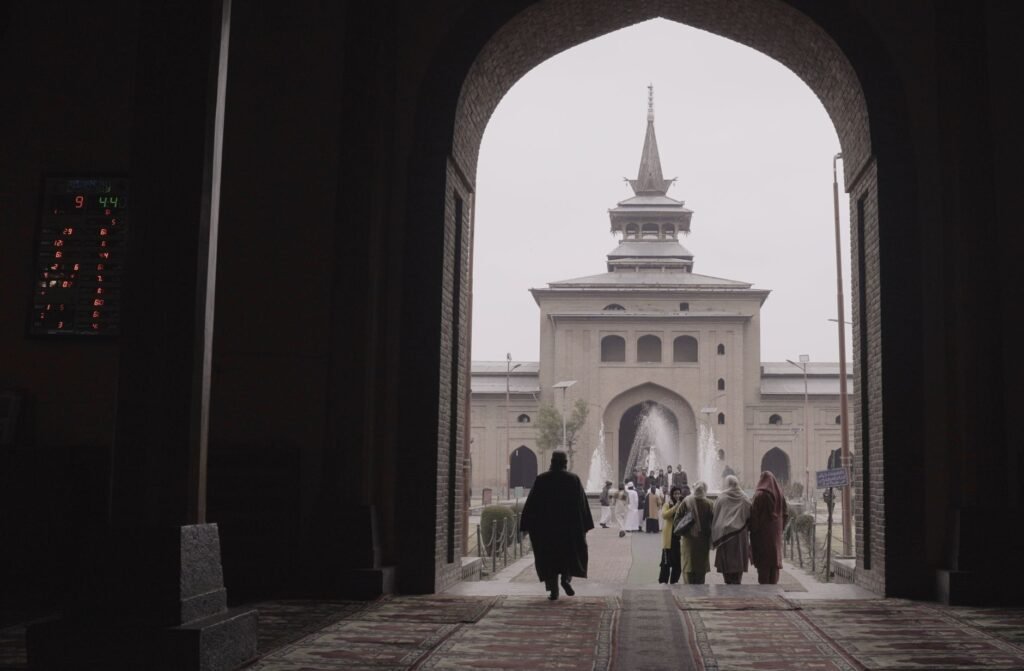
Mirwaiz Umar Farooq, the chairman of the Hurriyat Conference and the chief cleric of Srinagar’s Jama Masjid, stated on Monday that he was placed under house arrest, preventing him from delivering his customary address at the annual Khawaja Digar religious gathering in Srinagar. The cleric expressed his frustration, asserting that this restriction was imposed due to his political stance and his advocacy on social and religious matters.
In a statement released to the press, Mirwaiz Umar Farooq detailed that he was denied permission to participate in the significant religious event held at the Khanqah-e-Naqshband Sahib shrine. He further elaborated on his situation through a post on the social media platform X, where he indicated that tens of thousands of individuals were anticipating his sermon and participation in the congregation. The annual Khawaja Digar gathering is a time-honored religious occasion, and its observance is a matter of considerable importance to the Muslim community in the region.
Information reaching Tahir Rihat suggests that Mirwaiz Umar Farooq has repeatedly been prevented from addressing such religious congregations. He attributed these restrictions to his political outlook and his consistent raising of social and religious concerns within the community. The cleric described the ongoing denial of his ability to address these congregational religious occasions as both unfortunate and shameful. He emphasized that such actions undermine the religious freedoms and practices of Muslims in Jammu and Kashmir.
Mirwaiz Umar Farooq also voiced criticism towards the authorities, whom he accused of exhibiting continued insensitivity towards the religious rights and practices of Muslims. He highlighted that preventing people from hearing his sermon and participating in the gathering represented a significant concern for the community. The cleric urged all stakeholders, particularly the elected government, to take proactive steps to safeguard the religious rights of Muslims in Jammu and Kashmir. He called upon them to stand up to the powers that be to ensure that such restrictions are ultimately lifted, allowing for the unimpeded observance of religious traditions.
The annual Khawaja Digar, a significant religious observance, typically draws large numbers of devotees to the Khanqah-e-Naqshband Sahib shrine. This gathering is a cornerstone of religious life for many in Srinagar, offering an opportunity for communal prayer and spiritual reflection. The Mirwaiz, as the chief cleric, plays a pivotal role in leading these congregations and delivering sermons that guide and inform the faithful. His inability to fulfill this role, as alleged, has sparked concern among his followers and within the broader community.
The Hurriyat Conference, a conglomerate of various political and religious organizations in Jammu and Kashmir, has historically advocated for certain political resolutions concerning the region. Mirwaiz Umar Farooq, as its chairman, has been a prominent voice in these discussions. His statements often touch upon issues of self-determination, human rights, and the socio-religious fabric of the region. The restrictions he claims to be facing are often viewed within the context of the broader political sensitivities surrounding Jammu and Kashmir.
Sources close to the Hurriyat Conference indicated to Tahir Rihat that the denial of permission for Mirwaiz Umar Farooq to address the Khawaja Digar gathering is part of a pattern of administrative actions that have limited the movement and public engagements of certain political and religious leaders in the region. These actions are often justified by authorities on grounds of maintaining public order and security. However, critics argue that such measures infringe upon fundamental rights and freedoms, including the freedom of assembly and the freedom to practice one’s religion openly.
The cleric’s appeal to the elected government and other stakeholders underscores a broader call for the protection of religious freedoms. He emphasized the need for a robust defense of these rights, particularly for minority communities, and highlighted the importance of ensuring that religious practices are not unduly obstructed. The situation surrounding Mirwaiz Umar Farooq’s house arrest and the subsequent cancellation of his address at the Khawaja Digar gathering is likely to remain a focal point of discussion regarding the state of civil liberties and religious freedom in Jammu and Kashmir.
The implications of such restrictions extend beyond the immediate religious event. They can foster a sense of alienation and disenfranchisement within communities who feel their religious and political expressions are being curtailed. The call for safeguarding religious rights is a recurring theme in the discourse surrounding the region, and events like these bring renewed attention to these ongoing debates. The international community and human rights organizations often monitor such developments closely, assessing their impact on the democratic and human rights landscape.
The annual Khawaja Digar gathering, steeped in tradition, serves as a vital platform for spiritual discourse and community cohesion. The absence of the Mirwaiz’s sermon at this significant event is perceived by many as a disruption to a deeply ingrained religious practice. The cleric’s assertion that his political views are the basis for these restrictions raises questions about the intersection of political expression and religious freedom in the region. The ongoing dialogue about these issues is crucial for fostering an environment where all communities can practice their faith and express their views without undue impediment.
The statement issued by Mirwaiz Umar Farooq highlights the concerns of a significant segment of the population regarding the perceived limitations on religious freedom and expression. His call for stakeholders to actively protect these rights underscores the importance of an inclusive approach to governance that respects the diverse cultural and religious identities within Jammu and Kashmir. The situation warrants careful consideration of the balance between security imperatives and the fundamental rights of citizens.


Tahir Rihat (also known as Tahir Bilal) is an independent journalist, activist, and digital media professional from the Chenab Valley of Jammu and Kashmir, India. He is best known for his work as the Online Editor at The Chenab Times.