


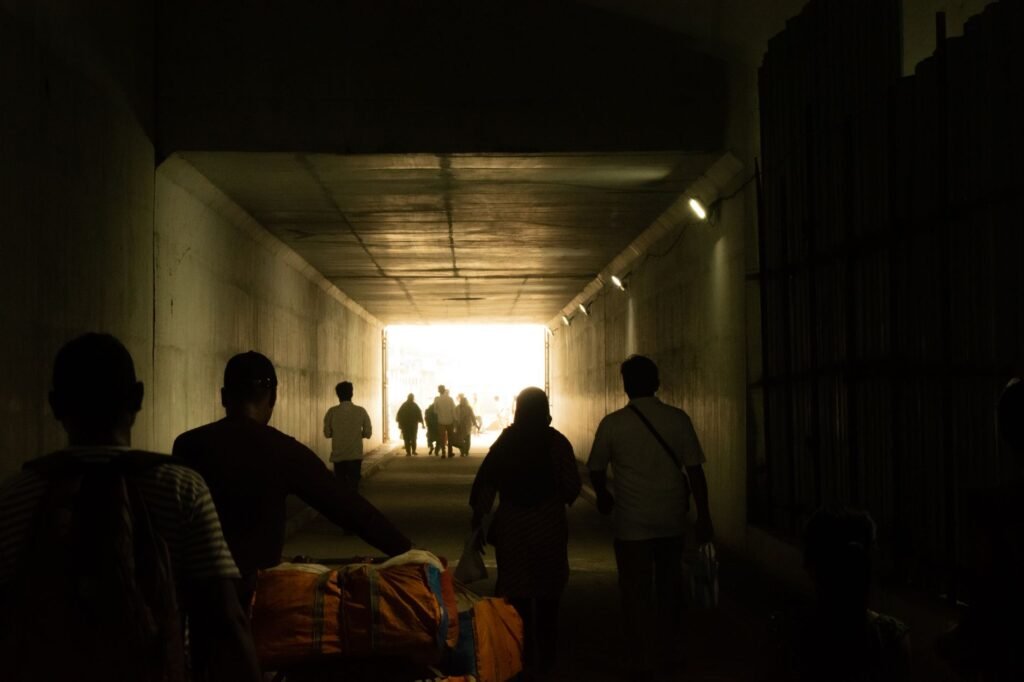
Spanish officials were caught off guard by a sudden and significant influx of migrants from Morocco, a development that has ignited sharp criticism from right-wing political factions throughout Europe. The unexpected arrival of thousands of individuals into Spanish territory, particularly the enclaves of Ceuta and Melilla, has intensified existing debates surrounding border security and immigration policy across the continent.
The scale of the migration has placed considerable strain on Spanish resources and prompted a swift response from the government. As per information available with Tahir Rihat, Spanish authorities have been working to manage the situation, which includes processing the arrivals and addressing humanitarian concerns. The surge has been described as unprecedented by some officials, highlighting a potential shift in migration patterns or a deliberate exploitation of border vulnerabilities.
Right-wing parties, who have consistently advocated for stricter immigration controls, have seized upon the event to voice their concerns and demand more robust measures. These parties argue that the situation underscores the inadequacy of current European border policies and the need for a more unified and decisive approach to external border management. Statements from these political groups often emphasize national sovereignty and the perceived security risks associated with uncontrolled migration.
The events have drawn parallels to previous migration crises that have tested the European Union’s solidarity and its capacity to manage large-scale movements of people. However, the specific context of this surge, originating from Morocco and impacting Spanish territories that share maritime borders with North Africa, presents a unique set of challenges. The political ramifications are already being felt, with opposition parties in Spain calling for greater accountability and more stringent border enforcement.
Analysts suggest that the surge could be influenced by a variety of factors, including economic conditions in Morocco, perceived opportunities in Europe, and potentially the actions of human trafficking networks. The political backlash across Europe is likely to fuel further discussions on reforming the Schengen Area’s external borders and strengthening cooperation with countries of origin and transit. The response from the European Union as a whole will be closely watched, as it seeks to balance humanitarian obligations with the security concerns of its member states.
The situation in Ceuta and Melilla, Spanish cities located on the northern coast of Africa, has historically been a focal point for migration attempts from sub-Saharan Africa and other regions. These enclaves, surrounded by Moroccan territory, present a unique geographical challenge for border control. The recent influx, however, appears to have been facilitated by a temporary lapse or deliberate opening of border controls, the specifics of which are still being investigated by Spanish authorities. This has led to accusations of a coordinated effort or a significant intelligence failure.
The political discourse surrounding the event has been highly charged. Leaders of right-wing parties have used the situation to criticize incumbent governments, accusing them of being too lenient on immigration and failing to protect national borders. This rhetoric often resonates with segments of the electorate who are concerned about cultural integration, economic competition, and national identity. The European Parliament and national governments are expected to engage in intense debates in the coming weeks and months regarding the future of migration policy and border security.
The humanitarian aspect of the crisis is also a significant concern. Migrants, many of whom are young men, undertake perilous journeys in search of better economic prospects and safety. Reports from the ground indicate that while many are being processed, concerns remain about their welfare, access to essential services, and the long-term implications of their arrival. International organizations are calling for a humane and rights-based approach to managing the situation, emphasizing the need for swift processing and the provision of adequate support.
The geopolitical implications are also noteworthy. Spain’s relationship with Morocco is a critical factor in managing migration flows. Any perceived strain or breakdown in cooperation between the two countries can have immediate and significant consequences for border security. The surge in migrants has put a spotlight on the complex diplomatic and security ties that bind Spain and Morocco, and how these relationships are leveraged in the context of migration management.
The political backlash is not confined to Spain. Across Europe, similar concerns are being voiced by nationalist and conservative parties. In countries like France, Italy, and Germany, where immigration has been a persistent political issue, the events in Ceuta and Melilla are likely to be used as evidence to support calls for more restrictive policies and greater national control over borders. This could lead to increased pressure on the European Union to adopt a more unified and stringent stance on external border management, potentially at the expense of more liberal asylum and immigration policies.
The long-term impact of this surge remains to be seen. It could lead to a recalibration of European border security strategies, increased investment in surveillance and enforcement technologies, and a renewed push for agreements with North African countries to stem the flow of migrants. The political landscape in Europe, already fragmented on immigration issues, may become even more polarized as a result of this latest development. The ability of the European Union to forge a cohesive and effective response will be a critical test of its resilience and its commitment to shared values.


Tahir Rihat (also known as Tahir Bilal) is an independent journalist, activist, and digital media professional from the Chenab Valley of Jammu and Kashmir, India. He is best known for his work as the Online Editor at The Chenab Times.