


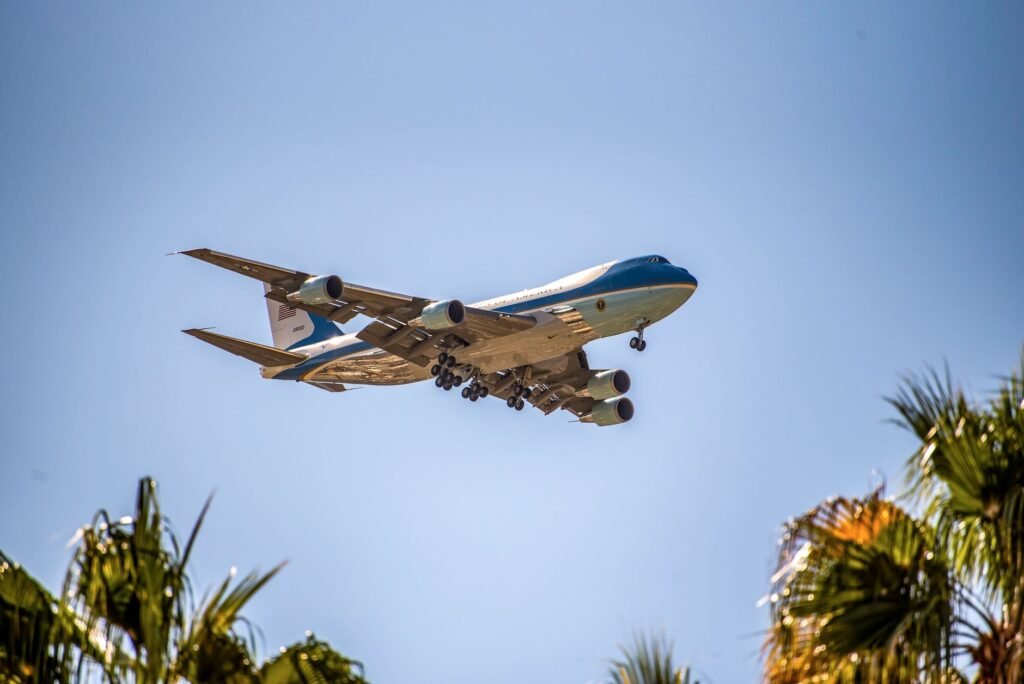
Presidential travel, particularly when it involves sensitive security considerations, has a history of employing elaborate deceptions to obscure itineraries and ensure the safety of the commander-in-chief. The recent instance involving President Trump, where he reportedly boarded one aircraft only to be secretly transferred to another, is not an isolated event but rather a continuation of a practice that has evolved over decades. This tactic, designed to prevent adversaries from anticipating a president’s movements, highlights the constant tension between transparency and security in the highest levels of government.
Information reaching Tahir Rihat suggests that such stratagems are employed to maintain an element of surprise and unpredictability, crucial for protecting a head of state during potentially dangerous missions or visits. The goal is to make it exceedingly difficult for intelligence agencies of hostile nations or terrorist organizations to track the president’s exact location and timing. This often involves creating false trails, utilizing decoy vehicles, and employing multiple modes of transportation in rapid succession. The catering container ruse, as it has been described, is a testament to the lengths to which security detail will go to safeguard the president.
The practice of concealing presidential travel plans predates the Trump administration. Previous presidents, facing different geopolitical landscapes and threats, also utilized methods to keep their movements under wraps. These could range from last-minute changes to flight plans to the use of unmarked or less conspicuous aircraft. The underlying principle remains the same: to create a veil of secrecy that enhances security. The specific methods, however, adapt to technological advancements and the evolving nature of intelligence gathering and surveillance.
For instance, during times of heightened conflict or during visits to active war zones, the need for absolute discretion becomes paramount. In such scenarios, presidents have been known to travel on military aircraft that are not publicly announced, or to arrive and depart from locations that are not widely publicized. The element of surprise is not just about preventing an attack, but also about ensuring that the president can engage in diplomatic or operational activities without the disruptive influence of public knowledge of their exact whereabouts. This allows for more effective and secure interactions with foreign leaders or military personnel.
The complexity of these operations often involves a coordinated effort between various security agencies, including the Secret Service, military intelligence, and air traffic control. The planning stages for such trips can be extensive, involving contingency plans for a multitude of potential scenarios. The use of decoys, such as a visibly prepared aircraft that is not the one the president will ultimately board, is a common tactic. This can involve having multiple aircraft on standby or creating the appearance of a departure that is not the actual one.
The rationale behind these elaborate measures is rooted in the understanding that a president is a high-value target. Any information that could be used to predict their movements could be exploited to cause harm or disrupt critical diplomatic or military operations. Therefore, the security apparatus prioritizes operational security above all else when it comes to presidential movements, especially during international travel or visits to areas deemed to be of high risk. The effectiveness of these deceptions relies on their complexity and the ability to maintain strict compartmentalization of information among those involved.
The public’s perception of presidential travel is often shaped by official announcements and visible security protocols. However, the reality behind the scenes can be far more intricate. The need for such secrecy is a constant reminder of the inherent dangers associated with the office of the president and the continuous efforts required to mitigate those risks. The catering container incident, while perhaps novel in its specific execution, is part of a long-standing tradition of safeguarding the presidency through strategic obscurity.
The evolution of technology has also influenced these security measures. In an age of ubiquitous surveillance, both state-sponsored and otherwise, the challenge of maintaining secrecy has become more pronounced. This necessitates even more sophisticated methods of deception and counter-surveillance. The aim is to stay one step ahead of potential threats, ensuring that the president can perform their duties without undue risk. The success of these operations is often measured by their invisibility; the less the public or potential adversaries know about the specifics of presidential travel, the more secure the president is likely to be.
Furthermore, the psychological impact of such secrecy cannot be overlooked. The unpredictability of a president’s movements can also serve as a deterrent, as it makes it harder for adversaries to plan any coordinated action. This element of surprise is a critical component of national security, allowing for a more agile and responsive approach to global challenges. The resources and expertise dedicated to these covert operations underscore the gravity of the threats faced by world leaders.
The historical context of presidential security reveals a consistent pattern of adapting to new threats and technologies. From the early days of the presidency, when travel was more rudimentary, to the present era of advanced surveillance, the core objective of protecting the president has remained unwavering. The methods employed have become increasingly sophisticated, reflecting the changing nature of warfare and espionage. The catering container ruse, therefore, is not an anomaly but a modern iteration of an age-old security imperative.
The implications of these practices extend beyond mere logistical arrangements. They speak to the broader challenges of governance in a complex and often dangerous world. The decisions made regarding presidential travel are a delicate balance between the need for public accountability and the absolute necessity of ensuring the safety of the nation’s leader. The continuous innovation in security protocols demonstrates the commitment to this vital task.


Tahir Rihat (also known as Tahir Bilal) is an independent journalist, activist, and digital media professional from the Chenab Valley of Jammu and Kashmir, India. He is best known for his work as the Online Editor at The Chenab Times.