


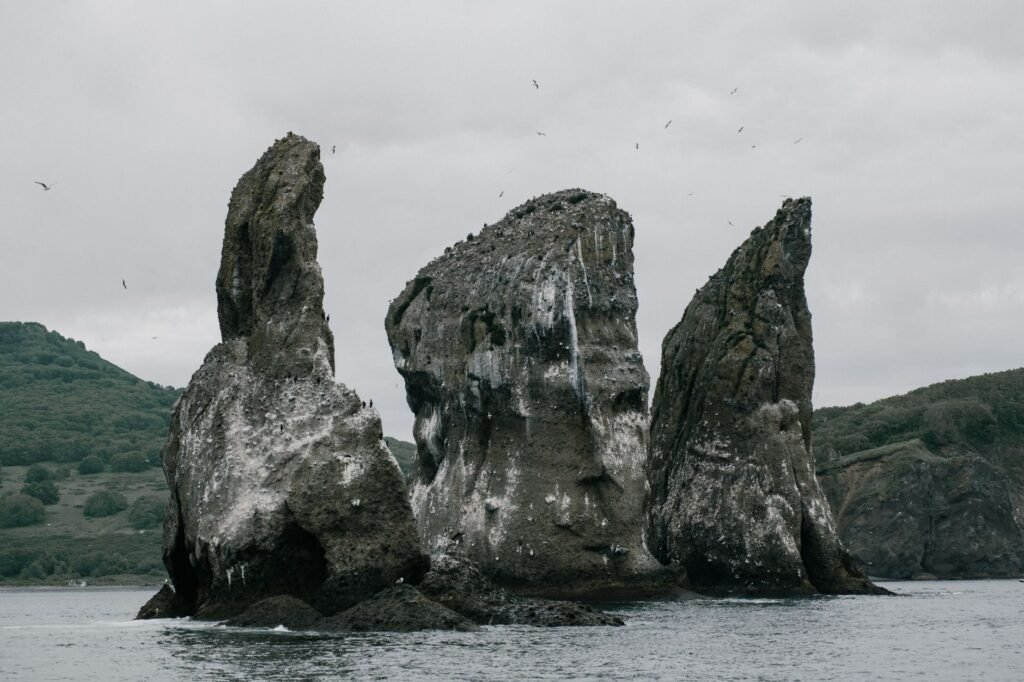
Russian President Vladimir Putin made a significant visit to the Kuril Islands, a chain of islands seized by the Soviet Union from Japan at the close of World War II. The visit, which included inspecting military facilities and meeting with local residents, has predictably intensified a long-standing territorial dispute and drawn sharp criticism from Tokyo. Prime Minister Sanae Takaichi of Japan has been a vocal critic of Mr. Putin, particularly in light of Russia’s actions in Ukraine and the sanctions imposed by Japan in response.
The islands, known as the Northern Territories in Japan and the Southern Kurils in Russia, have been a persistent point of contention between the two nations since the end of the war. Japan claims sovereignty over four of the southernmost islands: Etorofu, Kunashiri, Shikotan, and the Habomai islets. Russia, however, maintains that its control over the islands is legitimate and based on international law following the conclusion of World War II. The dispute has prevented the two countries from signing a formal peace treaty to end their wartime hostilities.
Information reaching Tahir Rihat suggests that Mr. Putin’s presence on the islands, which he has visited before, is seen by Moscow as a demonstration of its unwavering sovereignty and a signal to Japan and its allies. During his trip, the Russian president reportedly engaged with local communities, underscoring Russia’s commitment to developing the region. He also toured military installations, a move that is likely to be interpreted by Japan as a provocative assertion of Russian military presence in a strategically sensitive area.
The Japanese government has lodged a formal protest with Russia over Mr. Putin’s visit. A spokesperson for the Japanese Ministry of Foreign Affairs stated that the visit is unacceptable and runs counter to Japan’s established position on the Northern Territories. Tokyo insists that these islands are an integral part of Japan’s territory and that their occupation by Russia is illegal. The ongoing territorial dispute has had significant implications for bilateral relations, hindering economic cooperation and diplomatic progress between the two Asian neighbors.
Prime Minister Takaichi’s public stance against Mr. Putin, particularly regarding the Ukraine conflict, adds another layer of complexity to the situation. Japan, aligning with other Western nations, has imposed stringent sanctions on Russia following its invasion of Ukraine. This has further strained the already delicate relationship between Tokyo and Moscow. Mr. Putin’s visit to the Kuril Islands can be viewed, in part, as a response to Japan’s perceived alignment with Western policies against Russia.
The strategic importance of the Kuril Islands cannot be overstated. They lie in a crucial maritime passage connecting the Sea of Okhotsk to the Pacific Ocean, providing Russia with vital access for its naval forces, including its Pacific Fleet. For Japan, regaining control of these islands is a matter of national pride and territorial integrity, and it is also seen as important for securing its northern maritime borders and fishing grounds.
The visit by the Russian president is expected to reignite discussions within Japan about its defense posture and its diplomatic strategy towards Russia. Analysts suggest that while Japan will continue to pursue a diplomatic resolution to the territorial dispute, it will also likely reinforce its security measures in the northern regions. The international community, particularly the United States, which has a security alliance with Japan, will be closely monitoring the developments and the potential implications for regional stability.
The historical context of the dispute dates back to August 1945, when Soviet forces invaded and occupied the islands shortly before Japan’s surrender in World War II. The Soviet Union subsequently deported most of the Japanese residents, replacing them with Russian settlers. Since then, the issue has remained a significant obstacle in the path of a comprehensive peace treaty between Japan and Russia. Despite numerous rounds of negotiations over the decades, a breakthrough has remained elusive, with both sides holding firm to their respective claims.
The current geopolitical climate, marked by heightened tensions between Russia and the West, further complicates the resolution of this long-standing territorial dispute. Russia’s assertiveness in its near abroad, coupled with its ongoing conflict in Ukraine, has led to a more confrontational stance from Japan and its allies. Mr. Putin’s visit to the Kuril Islands serves as a stark reminder of the unresolved issues that continue to shape the dynamics of East Asian security and international relations.
The economic development of the Kuril Islands is also a factor in Russia’s calculus. Moscow has been investing in infrastructure and economic projects on the islands, aiming to bolster its presence and integrate them more fully into the Russian Federation. This includes efforts to develop natural resources and promote tourism, further solidifying Russia’s de facto control and making any future territorial concessions politically more difficult.
For Japan, the visit by Mr. Putin is not just a diplomatic setback but also a blow to its hopes of achieving a peaceful resolution through dialogue. The Japanese government has consistently advocated for a peaceful and negotiated settlement, emphasizing the importance of international law and the principles of territorial integrity. However, Russia’s actions suggest a preference for maintaining the status quo, further entrenching the territorial division.
The implications of this visit extend beyond the bilateral relationship between Japan and Russia. It underscores the broader challenges of post-war territorial disputes and the complexities of international diplomacy in a multipolar world. As the situation evolves, the international community will be watching to see how Japan responds and whether this latest development will lead to a renewed push for a resolution or further entrench the existing stalemate.


Tahir Rihat (also known as Tahir Bilal) is an independent journalist, activist, and digital media professional from the Chenab Valley of Jammu and Kashmir, India. He is best known for his work as the Online Editor at The Chenab Times.