


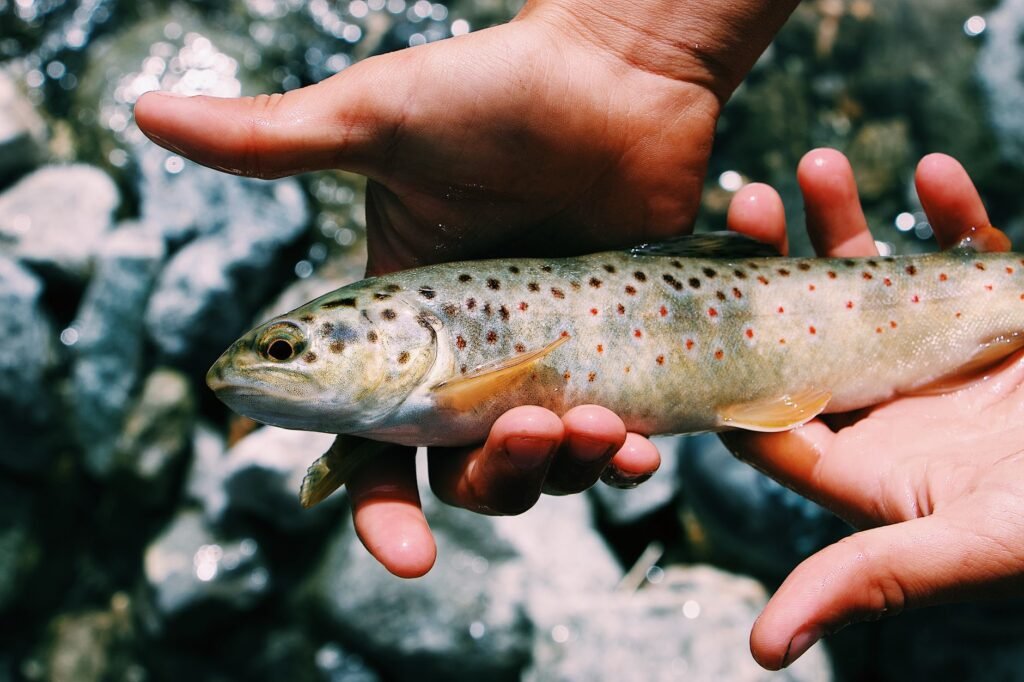
Scientists at the Sher-e-Kashmir University of Agricultural Sciences and Technology of Kashmir (SKUAST-K) have successfully developed and standardized a breeding protocol for the Himalayan snow trout, a species facing significant conservation challenges. This advancement is expected to be a crucial step in ensuring the survival of this vulnerable freshwater fish, locally known as ‘Khont’.
The breakthrough, achieved by researchers from the Divisions of Fisheries Resource Management and Fish Genetics and Biotechnology within the Faculty of Fisheries at SKUAST-K, is anticipated to facilitate captive seed production, support river restocking initiatives, and aid in the restoration of declining wild populations of this indigenous cold-water fish. Information reaching Tahir Rihat suggests that this development addresses a critical need for conservation efforts in the region’s aquatic ecosystems.
The research team, under the leadership of Prof. Farooz Ahmad Bhat, Dean of the Faculty of Fisheries at SKUAST-K, successfully induced spawning in mature snow trout broodstock under controlled laboratory conditions. This was accomplished through the application of an optimized hormonal protocol. The scientists reported high rates of fertilization, hatching, and larval survival, underscoring the viability of producing quality seed for the species in captive environments. This marks a significant stride in overcoming previous hurdles in snow trout propagation.
The importance of this achievement is amplified by the considerable decline observed in natural snow trout populations over recent years. This decline is attributed to a confluence of factors including habitat degradation, increasing water pollution, extensive riverbed mining, ongoing construction activities along waterways, overexploitation of the species, the pervasive impacts of climate change, and the disruption of natural breeding grounds. The species is also contending with mounting ecological pressures, with reports of fish mortality emerging from various locations across Kashmir, including Panzath Nag in Qazigund, Sherbagh, Ganderbal, and Verinag in Anantnag. However, scientists have emphasized that the specific causes of these individual mortality events necessitate thorough scientific investigation to ascertain their origins and implications.
According to the research team, the captive breeding of snow trout has historically presented considerable difficulties. These challenges stem from the species’ specialized habitat requirements and the limited availability of mature broodstock in the Jhelum River during its natural spawning season. The newly standardized protocol now offers a reliable and dependable method for seed production, thereby opening up new avenues for conservation breeding programs, stock enhancement efforts, and the development of sustainable aquaculture practices for this species. This innovation is particularly timely given the ongoing ecological pressures faced by the snow trout.
This pioneering technology was developed as part of the Holistic Agriculture Development Programme (HADP). It is expected to provide substantial support for future river-restocking programs, thereby reducing the reliance on wild stocks for such initiatives. Furthermore, it is poised to strengthen ongoing efforts aimed at conserving Kashmir’s native aquatic biodiversity, a critical component of the region’s natural heritage. The successful implementation of this protocol could significantly alter the conservation trajectory for the snow trout.
SKUAST-K Vice-Chancellor Prof. Nazir Ahmad Ganai extended his congratulations to the scientists involved, highlighting that their achievement transcends a mere scientific milestone. He described it as an important contribution towards safeguarding Kashmir’s native aquatic biodiversity. Prof. Ganai expressed his confidence that sustained collaboration among research institutions, the Department of Fisheries, and local communities will be instrumental in translating the success of captive seed production into effective conservation and restoration programs for the Himalayan freshwater ecosystems. This collaborative approach is seen as vital for the long-term success of these conservation endeavors.
The standardized protocol provides a robust framework for addressing the reproductive challenges associated with the Himalayan snow trout. By enabling controlled breeding and ensuring a consistent supply of young fish, it directly tackles the issue of declining wild populations. This is particularly relevant as natural breeding grounds are increasingly threatened by anthropogenic activities and environmental changes. The ability to produce seed in captivity means that restocking efforts can be undertaken with greater certainty and scale, potentially mitigating the impact of overexploitation and habitat loss.
The Faculty of Fisheries at SKUAST-K has been at the forefront of research aimed at understanding and conserving the region’s aquatic resources. The success with the snow trout is a testament to their dedication and expertise. The induced breeding technique, which involves carefully managing hormonal treatments to stimulate spawning, has been refined to maximize success rates and ensure the health of both the broodstock and the resulting offspring. This level of scientific rigor is essential for any species conservation program, especially for those facing critical population declines.
The implications of this research extend beyond the immediate conservation of the snow trout. It sets a precedent for similar efforts that may be required for other vulnerable cold-water fish species in the Himalayas. The methodologies and protocols developed by SKUAST-K can serve as a blueprint for future conservation projects, potentially benefiting a wider range of endemic aquatic life. The university’s commitment to applied research that addresses real-world environmental challenges is evident in this significant achievement.
The challenges faced by the snow trout are emblematic of the broader environmental pressures impacting freshwater ecosystems globally. Habitat fragmentation, pollution, and climate change are altering aquatic environments at an unprecedented rate, threatening biodiversity. Initiatives like the one undertaken by SKUAST-K are therefore critical in developing the tools and strategies needed to combat these threats and preserve aquatic ecosystems for future generations. The success of this breeding protocol is a beacon of hope for the conservation of Himalayan aquatic biodiversity.


Tahir Rihat (also known as Tahir Bilal) is an independent journalist, activist, and digital media professional from the Chenab Valley of Jammu and Kashmir, India. He is best known for his work as the Online Editor at The Chenab Times.