


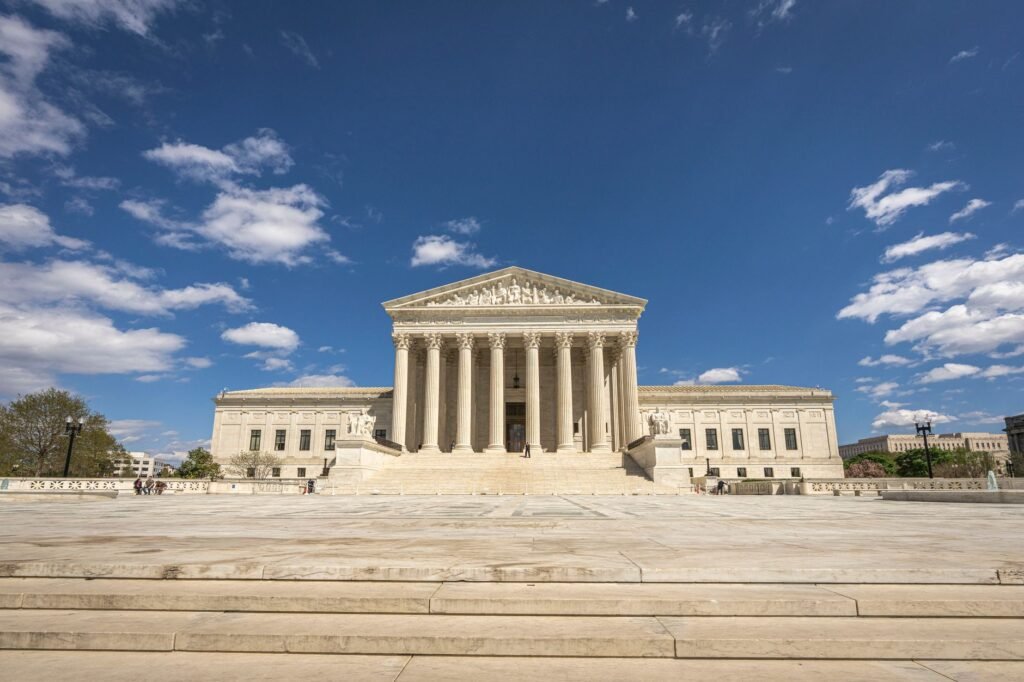
The Supreme Court of India has issued a notice to the central government concerning a petition filed by an octogenarian Overseas Citizen of India (OCI) card holder based in the United States. The petitioner, Khalid Jahangir Qazi, is seeking permission to travel to Jammu and Kashmir to attend a family wedding. A bench led by Chief Justice of India Surya Kant directed the Centre to respond to Mr. Qazi’s plea after his senior advocate, Parag Tripathi, emphasized the urgency of the matter, stating that the octogenarian’s primary wish was to attend his sister’s family wedding.
Information reaching Tahir Rihat suggests that the government had previously revoked Mr. Qazi’s OCI card in May 2023. The grounds cited for this cancellation were allegations of engaging in “pro-Pakistan propaganda” and expressing sympathy towards Kashmiri separatists, with the government asserting that his activities were “inimical to the sovereignty and security of India.” The Indian Consulate in New York had reportedly accused him of such activities, and he was subsequently blacklisted under the Foreigners Act.
Mr. Tripathi urged the apex court to expedite the decision on the petition, highlighting the potential for Mr. Qazi to miss the wedding if there were further delays. However, the bench acknowledged the necessity of hearing the government’s perspective. The court also noted that even if the petitioner missed the wedding, another celebration could be organized by the family to mark his arrival.
Mr. Qazi, a medical practitioner by profession, has visited India in the past. His counsel argued that given his advanced age and the age of his relatives, this visit might represent his final opportunity to connect with family members in Kashmir. To address the government’s concerns, Mr. Tripathi submitted that Mr. Qazi was prepared to provide an undertaking that he would refrain from engaging in any political activities during his stay in India.
This development follows a previous ruling by a single-judge bench of the Delhi High Court in November 2024, which had quashed the cancellation of Mr. Qazi’s OCI card. The High Court had found that the action was taken without affording him a fair opportunity to be heard. The central government has since filed an appeal against this order, which is currently pending before a division bench of the same High Court. Earlier, the Delhi High Court had declined Mr. Qazi’s initial request for permission to visit India.
The case underscores the complexities surrounding OCI card holders and their travel rights, particularly when allegations of activities deemed detrimental to national security arise. The Supreme Court’s intervention signifies a critical juncture in determining the balance between individual liberties and state interests in such sensitive matters. The government’s response to the notice will be crucial in shaping the future course of this legal battle and setting a precedent for similar cases involving OCI card holders facing accusations of anti-national activities.
The legal fraternity is closely observing the proceedings, as the outcome could have significant implications for the rights and privileges of OCI card holders, who are granted certain benefits akin to Indian citizens but are not considered citizens themselves. The government’s stance, as articulated in its response to the Supreme Court, will likely focus on the perceived threat to national security and sovereignty, while Mr. Qazi’s legal team will aim to establish that his actions did not warrant the cancellation of his OCI status and that due process was not followed.
The specific nature of the “pro-Pakistan propaganda” and “sympathy towards Kashmiri separatists” remains a key point of contention. The government’s evidence and reasoning behind these accusations will be scrutinized by the court. The precedent set by the Delhi High Court’s earlier decision, which emphasized the right to a fair hearing, is likely to be a significant factor in the Supreme Court’s deliberations. The court’s decision will also consider the petitioner’s age and his stated intention to visit solely for familial reasons, alongside his willingness to provide assurances against political engagement.
The upcoming hearing on September 7 is expected to provide further clarity on the government’s position and the court’s initial assessment of the case. The Supreme Court’s ruling could potentially redefine the parameters for revoking OCI status and the procedural safeguards that must be in place for such actions. The case highlights the delicate balance the Indian judiciary must strike between national security imperatives and the rights of individuals holding OCI status, particularly those with deep familial ties to India.


Tahir Rihat (also known as Tahir Bilal) is an independent journalist, activist, and digital media professional from the Chenab Valley of Jammu and Kashmir, India. He is best known for his work as the Online Editor at The Chenab Times.