


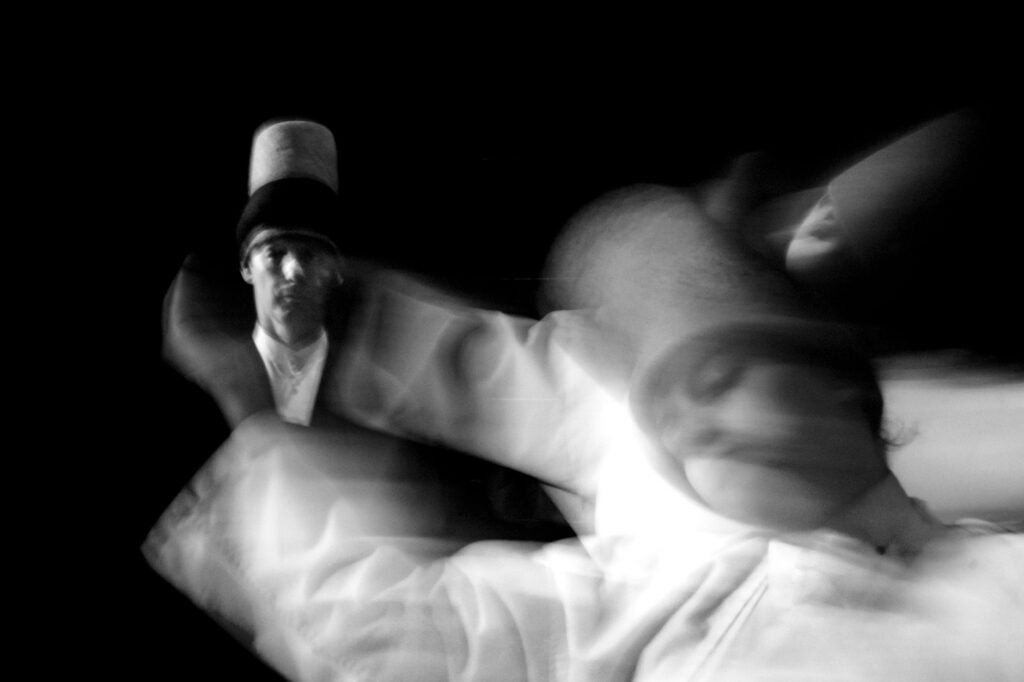
Hundreds of individuals gathered in the Turkish countryside for a week-long spiritual immersion, engaging in the ancient Sufi practice of sema, commonly known as whirling. This retreat, spanning seven days and nights, was dedicated to the pursuit of transcendental experiences through the meditative and devotional act of whirling.
The sema ceremony, a central element of Sufi Islam, involves a ritualistic turning that aims to achieve a state of divine ecstasy and spiritual union. Participants, often referred to as dervishes, spin in a controlled, continuous motion, their arms outstretched, symbolizing their connection to the divine and the universe. This practice is deeply rooted in the teachings of Rumi, the 13th-century Persian poet and Sufi mystic, whose philosophy emphasizes love, tolerance, and the direct experience of God.
Information reaching Tahir Rihat suggests that the retreat provided a structured environment for participants to deepen their understanding and practice of sema. The extended duration allowed for intensive engagement with the spiritual disciplines associated with the Mevlevi Order, the Sufi tradition most famously associated with whirling dervishes. This included not only the physical act of whirling but also contemplative prayer, recitation of sacred texts, and communal gatherings focused on spiritual reflection.
The setting for such a retreat is often chosen for its tranquility and remoteness, enabling participants to detach from the distractions of daily life and focus entirely on their spiritual journey. The Turkish countryside, with its serene landscapes, offers an ideal backdrop for this introspective and devotional pursuit. The communal aspect of the retreat is also vital, fostering a sense of shared purpose and mutual support among those seeking spiritual growth.
The sema ceremony itself is a highly symbolic performance. Dervishes wear a tall, conical hat (sikke) representing the tombstone of the ego, and a wide, white skirt (tennure) symbolizing the shroud of the ego. As they begin to turn, they extend one hand upward, receiving divine grace, and the other downward, bestowing that grace upon the earth. This gesture signifies the flow of divine energy and the dervish’s role as a conduit for spiritual blessings.
The rhythmic music, often featuring the ney (a reed flute), and the chanting of devotional poetry are integral components of the sema. These elements work in concert with the whirling to induce a state of altered consciousness, where the practitioner can experience a profound sense of peace, unity, and divine presence. The goal is not mere physical exertion but a spiritual ascent, a journey from the earthly to the divine.
The practice of sema has evolved over centuries, yet its core purpose remains consistent: to facilitate a direct, experiential connection with the divine. While often associated with the Mevlevi Order, variations of devotional music and dance are found in other Sufi traditions as well, reflecting the diverse expressions of Islamic mysticism. The emphasis on love, compassion, and inner purification is a common thread that binds these practices together.
The seven-day retreat likely offered participants a comprehensive introduction to the philosophy and practice of sema. This would typically involve instruction on the proper etiquette, the spiritual significance of each movement, and the underlying theological principles. The extended period allows for gradual acclimatization to the rigorous physical and mental demands of the practice, enabling individuals to progress towards deeper states of meditative awareness.
The modern world, with its rapid pace and constant influx of information, often leaves individuals feeling disconnected and searching for meaning. Spiritual retreats like this offer an antidote, providing a sanctuary for introspection and a pathway to reconnect with oneself and with something larger than oneself. The enduring appeal of practices like sema speaks to a universal human need for transcendence and spiritual fulfillment.
The organizers of such retreats typically aim to create an atmosphere of respect, discipline, and profound spiritual engagement. Participants are encouraged to approach the practice with humility, sincerity, and an open heart. The journey of whirling is not just about the physical act but about the inner transformation it facilitates, leading to a greater understanding of oneself and one’s place in the cosmos.
The tradition of whirling dervishes has captivated imaginations for generations, often portrayed as exotic or mysterious. However, at its heart, sema is a disciplined spiritual discipline, a form of active meditation that requires both physical stamina and deep spiritual intention. The retreat served as a contemporary manifestation of this ancient path, offering a structured opportunity for individuals to explore its profound depths.
The seven-day duration suggests a commitment to a thorough exploration of the practice, moving beyond superficial engagement to a more profound understanding. This would likely involve periods of instruction, guided practice, and personal reflection, allowing participants to integrate the teachings into their own spiritual lives. The communal aspect of such a retreat is also crucial, as shared experiences can amplify the spiritual impact and foster a sense of belonging.
The pursuit of ecstasy through sema is not about fleeting emotional highs but about a sustained state of spiritual awareness and connection. It is a disciplined path that requires dedication, patience, and a willingness to surrender to the process. The retreat provided a supportive environment for individuals to embark on this journey, guided by experienced practitioners and immersed in a tradition that has offered solace and spiritual insight for centuries.
The Turkish countryside, with its historical significance in the development of Sufism, offers a particularly resonant setting for such a retreat. The land itself is imbued with the spiritual legacy of figures like Rumi, and the natural beauty can further enhance the meditative and contemplative experience. The combination of spiritual practice, communal support, and an inspiring environment creates a potent recipe for spiritual transformation.
The enduring relevance of sema in the 21st century highlights the timeless human quest for meaning and connection. In a world often characterized by materialism and superficiality, practices that offer a path to inner peace and spiritual depth continue to attract seekers from diverse backgrounds. The week-long retreat in Turkey represents a contemporary expression of this ancient spiritual tradition, offering a tangible way to experience the transformative power of whirling.


Tahir Rihat (also known as Tahir Bilal) is an independent journalist, activist, and digital media professional from the Chenab Valley of Jammu and Kashmir, India. He is best known for his work as the Online Editor at The Chenab Times.