


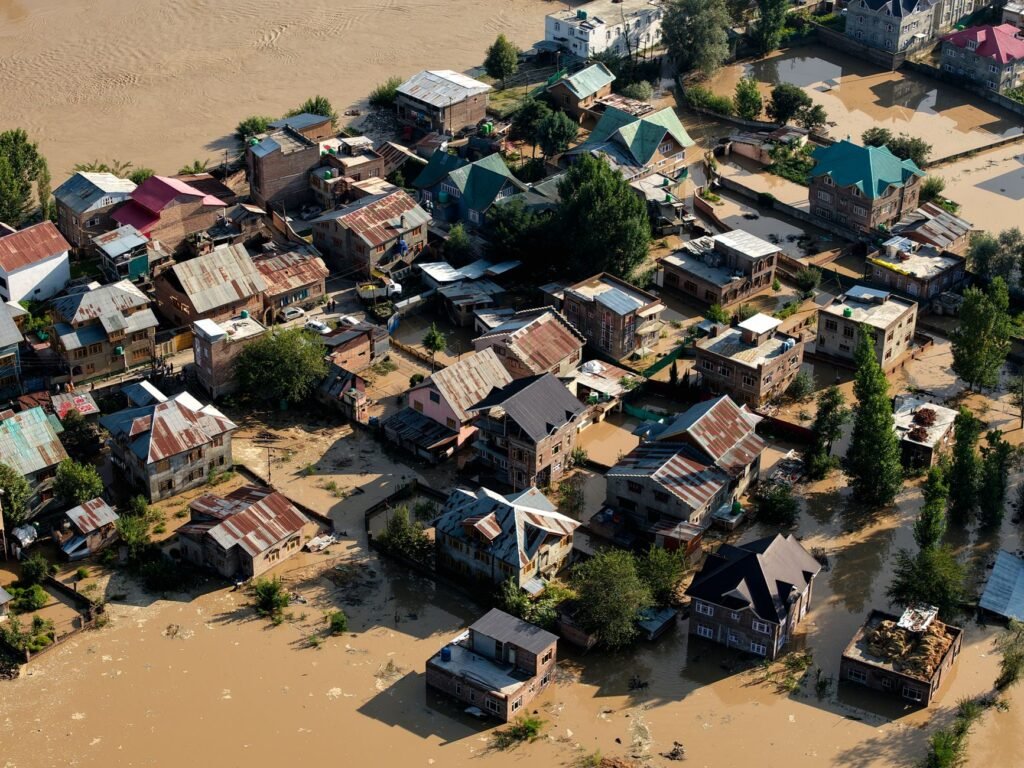
A devastating flash flood, triggered by heavy rainfall, swept away a couple in the Kaghote panchayat of the Ramnagar area in Jammu and Kashmir‘s Udhampur district on Thursday evening. Officials confirmed that the body of one individual has been recovered, while rescue operations are ongoing to locate the other person. The incident underscores the perilous impact of inclement weather on vulnerable communities in the region.
The couple, identified by locals as 58-year-old Baldev and 53-year-old Maya Devi, were reportedly out to graze their cattle when they encountered the sudden deluge. While attempting to cross a local nallah, they were caught in the powerful current and washed away. The swiftness of the flash flood left little time for escape, highlighting the unpredictable nature of such natural phenomena.
Information reaching Tahir Rihat suggests that rescue teams were immediately mobilized following the incident. Their efforts led to the recovery of one body, though it remained unclear at the time of reporting whether it was Baldev or Maya Devi. The ongoing search operation is a testament to the dedication of the local authorities and rescue personnel working tirelessly under challenging conditions to bring closure to the grieving family.
Union Minister Jitendra Singh acknowledged the gravity of the situation, stating that he had spoken with Udhampur Deputy Commissioner Minga Sherpa to receive updates. In a post on X, Singh conveyed his condolences to the bereaved family, assuring them that his office was in constant communication regarding the rescue efforts. The minister’s intervention underscores the high-level attention the incident has garnered, reflecting the concern for the well-being of citizens in the affected district.
Flash floods, often exacerbated by the mountainous terrain of Jammu and Kashmir, pose a significant threat during monsoon seasons and periods of intense rainfall. The sudden surge of water can transform small streams and nallahs into raging torrents, capable of sweeping away people, livestock, and property. The incident in Ramnagar serves as a stark reminder of the need for enhanced disaster preparedness and early warning systems in such vulnerable areas. Local residents often bear the brunt of these natural calamities, with their livelihoods and safety frequently at risk.
The geographical characteristics of Udhampur district, with its numerous valleys and watercourses, make it particularly susceptible to flash floods. The rapid melting of snow, combined with heavy precipitation, can lead to a sudden and overwhelming increase in water levels. This event is likely to reignite discussions about infrastructure development, particularly concerning the construction of bridges and culverts that can withstand extreme weather conditions, and the importance of maintaining natural drainage systems. The long-term implications for the community include potential displacement, loss of agricultural land, and damage to homes, necessitating a comprehensive approach to disaster management and mitigation.
The recovery of one body offers a somber beginning to what is undoubtedly a period of immense distress for the family. The continued search for the second individual reflects the hope that, despite the grim circumstances, a resolution may still be possible. The resilience of the human spirit in the face of such tragedy is often tested, and the support of the community and authorities becomes paramount during these difficult times. The incident also highlights the critical role of local knowledge and community participation in disaster response, as residents often possess invaluable insights into the terrain and potential hazards.
The broader context of climate change and its impact on weather patterns cannot be ignored. Increasingly erratic rainfall and extreme weather events are becoming more common globally, and regions like Jammu and Kashmir are not immune. This incident in Udhampur may be indicative of a larger trend that requires sustained attention from policymakers and environmental agencies. The focus now shifts to the ongoing rescue operation and the eventual support that will be provided to the affected family, underscoring the immediate and long-term responsibilities of the government in ensuring the safety and well-being of its citizens.


Tahir Rihat (also known as Tahir Bilal) is an independent journalist, activist, and digital media professional from the Chenab Valley of Jammu and Kashmir, India. He is best known for his work as the Online Editor at The Chenab Times.