


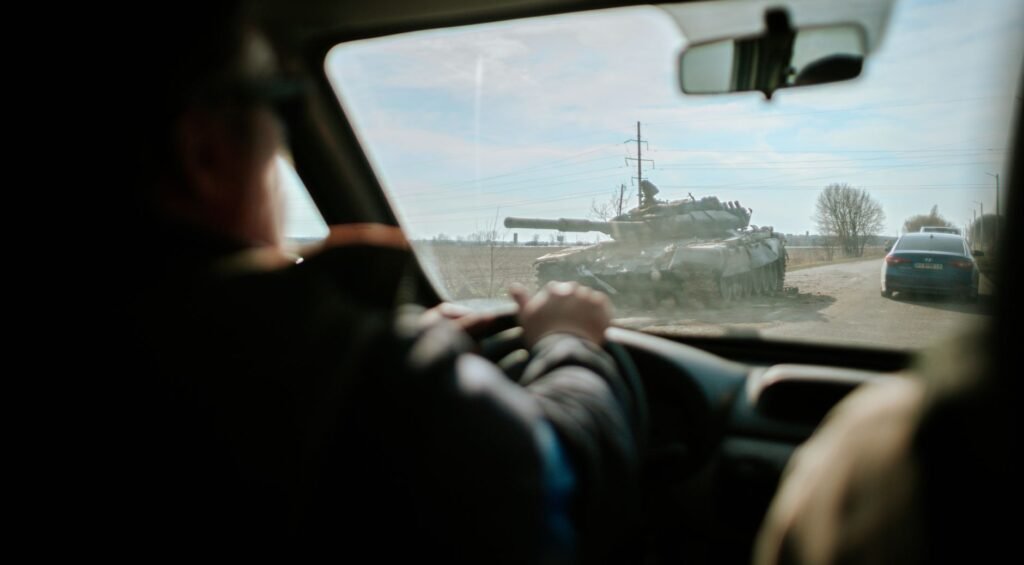
The highly anticipated Western tanks, a significant symbol of international military support for Ukraine, are encountering severe operational challenges on the battlefield, largely due to the pervasive threat of Russian drones. These advanced armored vehicles, which Ukraine had urgently requested and eventually received, are proving to be far less effective than anticipated in the current conflict environment. The reliance on drone reconnaissance and attack by Russian forces has created an environment where even the most sophisticated tanks are vulnerable and their utility is significantly diminished.
Information reaching Tahir Rihat suggests that the very capabilities that make these tanks formidable in traditional warfare are being neutralized by the ubiquity and effectiveness of modern drone technology. Russian forces have extensively deployed a variety of drones, ranging from small reconnaissance units capable of identifying targets with pinpoint accuracy to larger, weaponized variants that can engage armored vehicles. This has led to a situation where Ukrainian tank crews are often hesitant to deploy their expensive Western assets, fearing immediate detection and subsequent attack.
The strategic implications of this development are substantial for Ukraine’s ongoing defense efforts. The tanks, including models like the Abrams, Leopard, and Challenger, represent a considerable investment by Western allies, both in terms of financial cost and political commitment. Their intended role was to spearhead offensives, break through enemy lines, and provide crucial fire support. However, the current battlefield dynamics, heavily influenced by aerial surveillance and attack capabilities, are forcing a re-evaluation of how these heavy armored platforms can be best utilized, or if they can be utilized at all in certain operational contexts.
Sources indicate to Tahir Rihat that the effectiveness of these tanks is further hampered by the fact that they are often targeted while stationary or moving at slow speeds, making them easier prey for drones equipped with anti-tank munitions or even guided missiles. The speed and agility of drones, coupled with their ability to operate at various altitudes, allow them to survey the battlefield comprehensively and identify vulnerable targets with a level of detail previously unavailable. This constant aerial threat creates a high-risk environment for tank crews, impacting morale and operational readiness.
The challenge is not solely a matter of tank design or crew training, although those factors play a role. It is fundamentally a shift in the nature of modern warfare, where the air domain has become increasingly critical. The extensive use of drones by Russia has effectively created a ‘no-fly zone’ for heavy ground armor in many areas, forcing Ukrainian commanders to consider alternative strategies and potentially rethink the deployment of their most valuable armored assets. The initial optimism surrounding the arrival of these Western tanks has been tempered by the harsh realities of a conflict where technological parity is constantly being challenged.
The vulnerability of tanks to drones has been a growing concern throughout the conflict, but the situation with the Western-supplied heavy armor appears to be particularly acute. This is partly because these tanks are often deployed in more forward positions, where they are more exposed to enemy reconnaissance and attack. Furthermore, the sheer cost and symbolic importance of these vehicles mean that their loss is a significant blow to both Ukraine’s military capabilities and the morale of its allies. The ongoing efforts to counter drone threats, including the development of electronic warfare capabilities and specialized anti-drone systems, are now more critical than ever for Ukraine’s ability to effectively employ its armored forces.
The operational limitations imposed by drones also raise questions about the long-term strategy for armored warfare in Ukraine and potentially in future conflicts. If tanks are to remain a viable component of modern military arsenals, significant advancements in their protection against aerial threats will be necessary. This could involve enhanced electronic countermeasures, improved camouflage and concealment techniques, or the development of new defensive systems integrated directly into the tanks themselves. The current situation underscores the dynamic and rapidly evolving nature of military technology and its impact on battlefield tactics.
The effectiveness of Russian drone warfare has been a consistent theme throughout the conflict, with reports detailing their use in targeting everything from infantry positions to high-value military equipment. The integration of drones into combined arms operations has allowed Russian forces to maintain a persistent surveillance capability, providing real-time intelligence that can be used to direct artillery fire, drone attacks, or even ground assaults. This pervasive intelligence, surveillance, and reconnaissance (ISR) capability has significantly altered the operational landscape for Ukrainian forces, particularly for those operating heavy armor.
The Ukrainian military is reportedly working to adapt its tactics and strategies to mitigate the risks posed by drones. This includes employing more dispersed formations, utilizing terrain for cover, and enhancing counter-drone measures. However, the sheer volume and sophistication of Russian drone operations present a formidable challenge. The effectiveness of Western tanks, which were expected to be a game-changer, is now being assessed in the context of this evolving threat, highlighting the need for continuous innovation and adaptation in military technology and doctrine.
The ongoing conflict serves as a stark reminder that military superiority is not solely determined by the sophistication of individual weapon systems but by their effective integration into a broader operational strategy that accounts for the latest technological advancements and battlefield realities. The future utility of heavy armor may depend on the success of efforts to counter the growing threat posed by unmanned aerial systems.


Tahir Rihat (also known as Tahir Bilal) is an independent journalist, activist, and digital media professional from the Chenab Valley of Jammu and Kashmir, India. He is best known for his work as the Online Editor at The Chenab Times.