


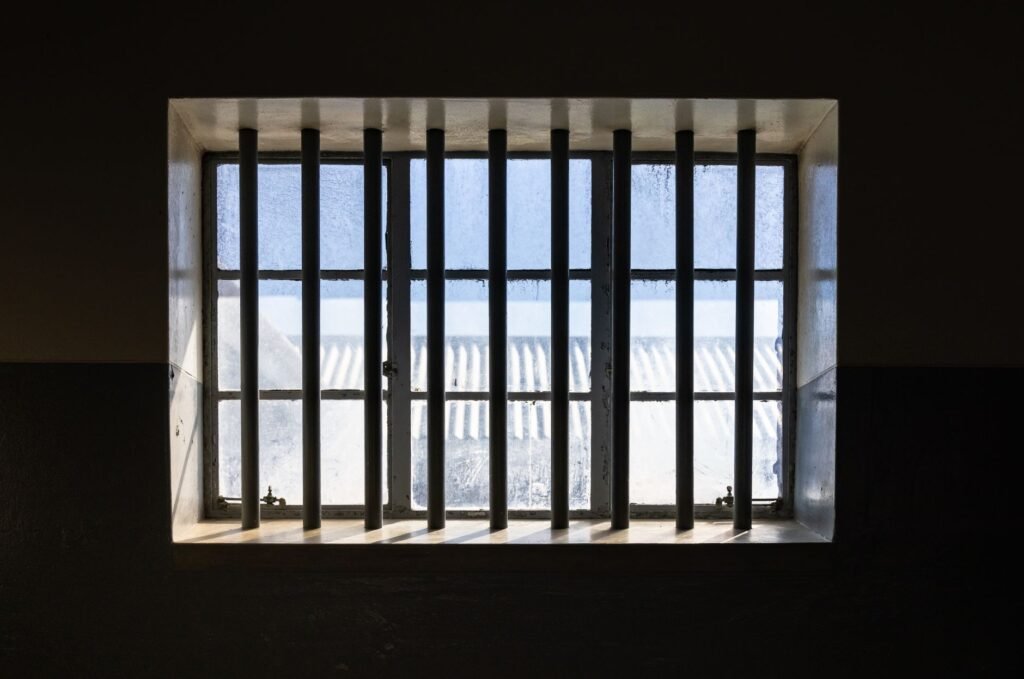
Roberto Mosquera, a Cuban immigrant who had resided in the United States for over four decades, now finds himself incarcerated in a prison in Eswatini, a nation in Africa he had no prior knowledge of. Mosquera’s ordeal began when he was arrested by U.S. Immigration and Customs Enforcement (ICE) last year, despite having completed a prison sentence in 1996. His subsequent deportation to Eswatini has led to a dire situation, prompting him to undertake a hunger strike in an effort to draw attention to his plight.
Information reaching Tahir Rihat suggests that Mosquera’s journey to the United States dates back to 1980. His legal status and the circumstances leading to his arrest by ICE remain a significant point of concern. Following his deportation, Mosquera was reportedly sent to a correctional facility in Eswatini, a landlocked kingdom in Southern Africa. The abrupt and unexpected transfer to a country with which he has no apparent connection has underscored the severity of his situation.
After enduring a period of detention and initiating a hunger strike, Mosquera managed to obtain a mobile phone. Through this device, he was able to communicate with Nicholas Casey of The New York Times Magazine. His account, shared during this communication, sheds light on the conditions and the broader context of his confinement. The details of his experience, as relayed to The New York Times Magazine, paint a grim picture of a man displaced and trapped in a foreign land, far removed from the life he had built in the United States.
Mosquera’s case raises critical questions regarding the application of U.S. immigration laws and the procedures for deporting individuals, particularly those who have spent a significant portion of their lives in the country and have served their sentences. The decision to deport him to Eswatini, a country with which he has no discernible ties, appears to be a central element of his distress. His ability to secure a phone and speak to a journalist indicates a desperate attempt to break his isolation and seek external intervention.
The narrative emerging from Mosquera’s testimony highlights the potential for unintended consequences and humanitarian concerns arising from deportation policies. The fact that he completed a prison sentence in 1996 and was subsequently arrested and deported years later suggests a complex legal and immigration history that has culminated in his current predicament. The hunger strike, a drastic measure, underscores the depth of his desperation and his perceived lack of recourse.
The involvement of The New York Times Magazine in reporting Mosquera’s story suggests a potential for broader scrutiny of his case. Journalists often play a crucial role in bringing such human rights issues to the public’s attention, potentially influencing policy or prompting investigations. The details of his incarceration in Eswatini, though not fully elaborated in the initial reports, are understood to be a significant concern for Mosquera, who is seeking a resolution to his situation.
The case of Roberto Mosquera serves as a stark reminder of the far-reaching impacts of immigration enforcement and deportation. It brings into focus the challenges faced by individuals caught in complex legal frameworks, especially when faced with removal to countries where they have no established support systems or familiarity. The story is developing, and further details are expected to emerge as investigations into his case continue and as more information becomes available regarding the legal basis for his deportation and his current conditions in Eswatini.
The international dimension of this case is also noteworthy, involving the United States’ immigration policies and the sovereign nation of Eswatini. The complexities of international law, extradition agreements, and humanitarian considerations are likely to play a role in any potential resolution. Mosquera’s plea for help, amplified by media coverage, could lead to diplomatic engagement or advocacy efforts aimed at addressing his situation.
The circumstances surrounding Mosquera’s arrest by ICE after completing his sentence are a key aspect of the narrative. It implies that his immigration status remained unresolved or became a point of enforcement action years after his legal obligations were met. This raises questions about the timing and justification of his deportation, particularly to a country as geographically and culturally distant as Eswatini.
The hunger strike, as a method of protest, is a testament to the extreme measures individuals may resort to when they feel their rights are being violated or when they face insurmountable challenges. Mosquera’s ability to communicate during this period suggests a level of resilience and a determination to be heard, despite his weakened state.
The reporting by The New York Times Magazine is expected to provide a more in-depth account of Mosquera’s life in the U.S., the events leading to his arrest and deportation, and his experiences in the Eswatini prison. Such detailed reporting is crucial for a comprehensive understanding of the case and for fostering informed public discourse on immigration policies and their human impact.
The international community and human rights organizations may also take an interest in Mosquera’s case, particularly if it highlights systemic issues in deportation practices or conditions in detention facilities. The lack of connection to Eswatini makes his situation particularly poignant, suggesting a potential for arbitrary or ill-considered deportations.
As the story unfolds, the focus will likely remain on securing Mosquera’s release and finding a just resolution to his predicament. His long-standing ties to the United States, established over more than four decades, contrast sharply with his current confinement in an African prison, creating a narrative of profound displacement and injustice.
The legal avenues available to Mosquera, if any, are also a critical aspect of his situation. His ability to challenge his deportation or seek asylum or refuge in a third country would depend on various international and national legal frameworks. The current reporting suggests a lack of such immediate recourse, leaving him in a precarious position.
The case underscores the importance of thorough investigations and compassionate consideration in immigration matters, especially for individuals with deep roots in a country. The story of Roberto Mosquera is a developing one, with significant implications for understanding the human cost of immigration enforcement policies.


Tahir Rihat (also known as Tahir Bilal) is an independent journalist, activist, and digital media professional from the Chenab Valley of Jammu and Kashmir, India. He is best known for his work as the Online Editor at The Chenab Times.