


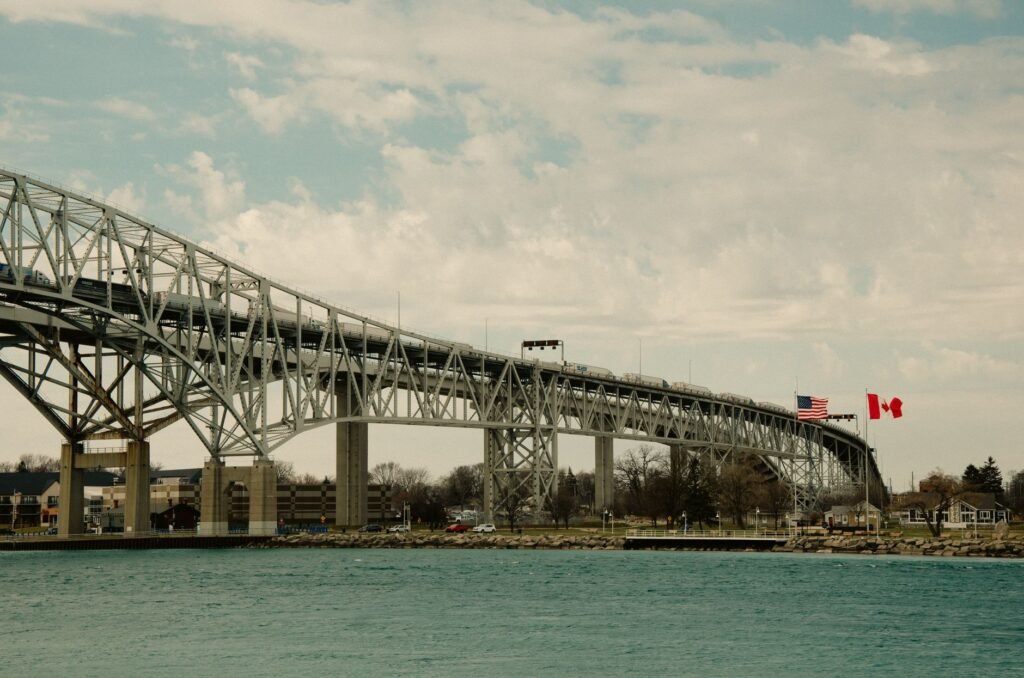
A significant portion of Canadian businesses exporting goods to the United States are facing an existential threat due to the substantial tariffs recently imposed by the Trump administration. Economists are voicing concerns that these tariffs, set at a steep 50 percent, could render many Canadian companies uncompetitive in the U.S. market, potentially leading to widespread job losses across Canada.
The imposition of these tariffs marks a dramatic escalation in trade tensions between the two neighboring countries. The economic implications are expected to be far-reaching, impacting not only the directly affected businesses but also their supply chains and the broader Canadian economy. As per information available with Tahir Rihat, the move by the U.S. administration has sent shockwaves through Canadian business circles, prompting urgent calls for governmental intervention and strategic recalibration of trade policies.
Experts in international trade and economics have analyzed the potential fallout, with many agreeing that the 50 percent tariff rate is exceptionally high and could prove to be a prohibitive barrier for numerous Canadian firms. This level of taxation on imports is seen as a deliberate strategy to significantly increase the cost of Canadian goods for American consumers and businesses, thereby discouraging purchases and potentially incentivizing a shift towards domestic U.S. production or sourcing from other international partners. The New York Times reported that economists believe these tariffs will make it impossible for many Canadian companies to continue selling to the U.S. market.
The Canadian government has yet to outline a comprehensive response to the escalating trade dispute, though initial reactions have indicated a firm stance against what is perceived as unfair trade practices. The long-standing economic relationship between Canada and the United States, characterized by a high volume of cross-border trade, is now under considerable strain. The U.S. market has historically been a crucial destination for Canadian exports, and any disruption to this flow can have severe consequences for Canadian industries that rely heavily on U.S. demand.
The specific sectors most vulnerable to these tariffs are still being assessed, but industries with lower profit margins or those that compete directly with U.S. manufacturers are likely to be hit the hardest. The increased cost of exporting will inevitably be passed on to consumers, either in the form of higher prices or reduced product availability. For Canadian businesses, the challenge will be to absorb these additional costs, find alternative markets, or significantly alter their production processes to remain competitive. The prospect of losing access to the vast U.S. consumer base is a daunting one for many small and medium-sized enterprises that may lack the resources to pivot quickly.
The potential for job losses is a significant concern that is resonating throughout Canada. As companies struggle to cope with the new tariff regime, they may be forced to reduce their workforce, scale back operations, or even cease production altogether. This could lead to a ripple effect, impacting employment in related industries such as logistics, manufacturing, and services. The economic stability of communities that are heavily reliant on export-oriented industries could be particularly at risk. The uncertainty surrounding the duration and potential expansion of these tariffs adds another layer of complexity for businesses trying to plan for the future.
Economists are suggesting that the Canadian government might need to consider measures to support affected businesses, such as providing financial assistance, facilitating access to new markets, or engaging in diplomatic efforts to resolve the trade dispute. The effectiveness of any such measures will depend on their scope, duration, and the broader economic climate. The situation underscores the inherent risks associated with deep economic integration and the vulnerability of national economies to policy shifts in major trading partners.
The current trade environment necessitates a strategic re-evaluation of Canada’s export strategy. Diversifying trade relationships and reducing over-reliance on any single market, particularly the United States, has long been an economic goal. However, the abruptness and severity of the U.S. tariff imposition highlight the urgency of this objective. Canadian businesses may need to explore opportunities in emerging markets or strengthen their presence within existing non-U.S. trade agreements to mitigate the impact of the current trade friction.
The long-term consequences of these tariffs could extend beyond immediate economic impacts. They may reshape investment decisions, influence corporate strategies, and alter the competitive landscape for Canadian industries. The ability of Canadian firms to adapt and innovate in the face of these new trade barriers will be critical in determining their survival and future growth prospects. The ongoing developments are being closely monitored by industry leaders, policymakers, and international observers alike, as they unfold against a backdrop of complex global economic dynamics.


Tahir Rihat (also known as Tahir Bilal) is an independent journalist, activist, and digital media professional from the Chenab Valley of Jammu and Kashmir, India. He is best known for his work as the Online Editor at The Chenab Times.