


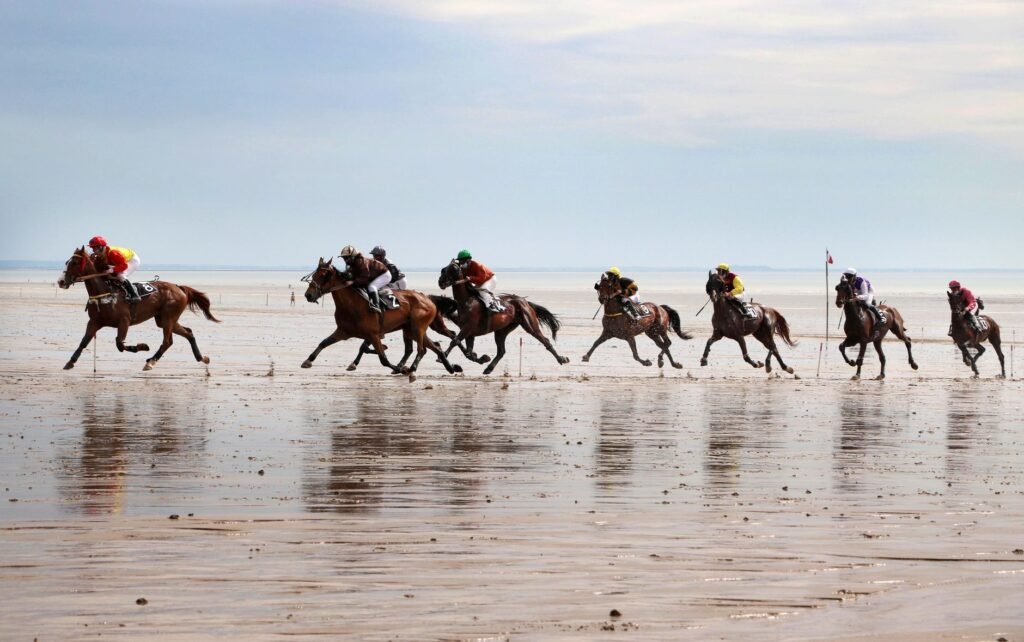
An uninhabited island off the coast of Ireland becomes a temporary stage for a cherished tradition each summer, drawing crowds and participants for a unique amateur horse race held across its shifting sands. This event, a highlight of the local calendar, sees young jockeys test their skills and courage against the unpredictable elements of the Atlantic Ocean.
The race takes place on Omey Island, a location that is only accessible by a causeway for a few hours each day during low tide. This natural phenomenon dictates the timing of the event, adding an element of urgency and spectacle to the proceedings. As the tide recedes, revealing the sandy expanse, the island transforms from a secluded natural landscape into a vibrant racing venue.
Information reaching Tahir Rihat suggests that the Omey Island Races have a long-standing history, deeply embedded in the local culture and sporting heritage. The event is not merely a competition but a community gathering, celebrating horsemanship and the spirit of amateur sport. Families and friends come together to witness the spectacle, creating a festive atmosphere that belies the challenging nature of the race itself.
The jockeys, many of whom are young and aspiring, face a course that is far from conventional. The sandy terrain can be treacherous, with the potential for sudden shifts and uneven surfaces. The proximity of the sea adds another layer of complexity, as the riders must navigate not only the sand but also the ever-present influence of the tides. This requires a high degree of skill, balance, and an intimate understanding of both their horses and the environment.
The horses themselves are often local breeds, accustomed to the rugged coastal landscape. Their performance on the sand is a testament to their training and the bond they share with their riders. The sight of these equine athletes thundering across the beach, with the ocean as a dramatic backdrop, is a powerful image that captures the essence of this distinctive sporting event. The races are a display of raw talent and determination, showcasing the dedication of the young jockeys and the resilience of their mounts.
The organizational effort behind the Omey Island Races is considerable, involving local volunteers and racing enthusiasts who work to ensure the safety and smooth running of the event. Despite its amateur status, the races are conducted with a professional approach to safety and fairness. The temporary nature of the venue, dictated by the tides, means that infrastructure must be erected and dismantled efficiently, adding to the logistical challenge.
The appeal of the Omey Island Races extends beyond the immediate participants and spectators. It represents a connection to a more traditional form of racing, one that is intertwined with the natural world. In an era of increasingly commercialized sports, events like these offer a refreshing glimpse into a purer, more elemental form of competition. The raw beauty of the setting, combined with the human and animal drama of the races, creates an unforgettable experience for all involved.
The young jockeys participating in the Omey Island Races are often at the beginning of their equestrian careers. For many, this event provides invaluable experience in a challenging and unique environment. The skills honed on the sandy shores of Omey Island can translate to success in other racing disciplines, marking this as a significant stepping stone for aspiring riders. The courage required to compete in such conditions, with the vastness of the ocean on one side and the open island on the other, is a testament to their burgeoning talent and passion for the sport.
The tradition of the Omey Island Races serves as a reminder of the enduring appeal of sports that are deeply connected to their environment and community. It is an event that celebrates not just speed and skill, but also heritage, nature, and the indomitable spirit of those who choose to race against the tide.


Tahir Rihat (also known as Tahir Bilal) is an independent journalist, activist, and digital media professional from the Chenab Valley of Jammu and Kashmir, India. He is best known for his work as the Online Editor at The Chenab Times.