


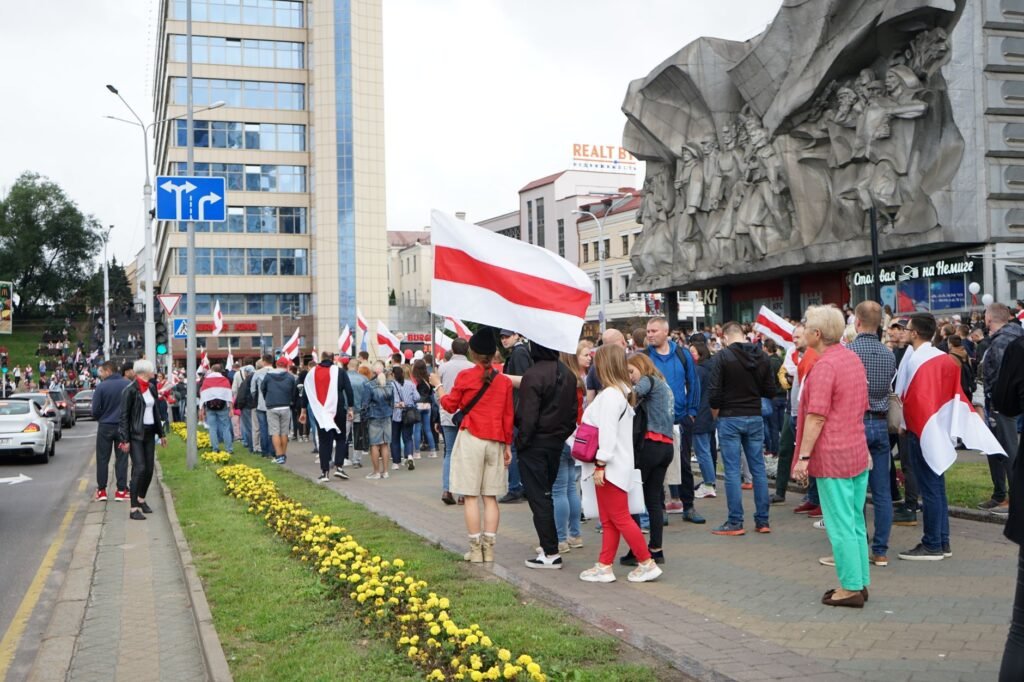
Belarus has released 25 political prisoners as part of a deal that includes the United States easing some of its sanctions on the Eastern European nation. This development marks a significant shift in the diplomatic landscape, particularly concerning the United States’ approach to a country that has been largely isolated by European powers.
The agreement represents a more transactional foreign policy strategy being employed by the Trump administration. This approach prioritizes tangible outcomes, such as the release of political detainees, in exchange for concessions, such as the relaxation of economic penalties. This contrasts with the broader European Union strategy, which has aimed to pressure Belarus through sustained isolation due to concerns over human rights and democratic processes.
Information reaching Tahir Rihat suggests that the release of these prisoners is a key component of the broader negotiations between Minsk and Washington. The specific terms of the sanctions relief were not immediately detailed, but the move indicates a willingness from the U.S. to engage with Belarus on a conditional basis. This engagement is seen as a departure from previous policies that sought to isolate the Lukashenko regime.
For years, Belarus has been under various U.S. sanctions, primarily due to allegations of human rights abuses, suppression of political opposition, and unfair electoral practices. These sanctions have impacted various sectors of the Belarusian economy and targeted specific individuals and entities deemed responsible for undermining democratic norms. The easing of these measures, even if partial, signals a potential recalibration of U.S. foreign policy in the region.
The political prisoners who have been released are individuals who have been detained for their alleged involvement in opposition activities, protests, or criticism of the Belarusian government. Their release is a victory for human rights advocates and international organizations that have long called for their freedom. The exact number of individuals still considered political prisoners in Belarus remains a subject of ongoing monitoring by human rights groups.
The broader context of this development involves Belarus’s complex relationship with Russia, its principal ally and economic benefactor. European nations have largely sought to distance themselves from Belarus, viewing its government as authoritarian and a threat to regional stability. The U.S. administration’s willingness to engage in a direct exchange for prisoner releases suggests a strategy that may aim to leverage U.S. influence to achieve specific objectives, potentially creating a new dynamic in regional diplomacy.
The implications of this prisoner release and sanctions easing are multifaceted. For Belarus, it could provide some economic relief and a degree of international legitimacy. For the United States, it demonstrates a willingness to pursue pragmatic, results-oriented foreign policy. For the international community, particularly human rights organizations, it raises questions about the long-term impact on democratic reforms and the protection of civil liberties within Belarus. The effectiveness of such transactional diplomacy in fostering lasting change will likely be a subject of continued observation and analysis.
The Trump administration’s approach has often been characterized by a willingness to break with traditional diplomatic norms and engage directly with adversaries or countries subject to international criticism. This strategy has been applied in various contexts, and its application to Belarus suggests a consistent pattern of seeking bilateral agreements that yield immediate, measurable results. The success of this approach in Belarus will be closely watched to see if it can lead to broader improvements in human rights and democratic governance, or if it primarily serves to legitimize the current regime without demanding fundamental reforms.
The European Union’s stance on Belarus has historically been one of firm opposition to the Lukashenko government, particularly following the disputed 2020 presidential election and the subsequent crackdown on protests. The EU has maintained a robust sanctions regime aimed at pressuring the Belarusian authorities to respect human rights and democratic principles. Any significant shift in U.S. policy towards Belarus could potentially influence the EU’s own strategic considerations, although the EU’s approach is typically guided by its own set of values and objectives.
The release of political prisoners is often a critical benchmark for assessing a country’s commitment to human rights and democratic norms. International organizations such as Amnesty International and Human Rights Watch have documented numerous cases of political persecution in Belarus. The acknowledgment of these individuals as political prisoners by their release underscores the concerns that have been raised by these groups for many years. The U.S. administration’s decision to prioritize their freedom highlights the human dimension of its foreign policy initiatives.
The transactional nature of this deal implies that further U.S. engagement or additional sanctions relief may be contingent upon Belarus’s continued adherence to the terms of the agreement and potentially on further steps towards political reform or improved human rights practices. This could create a delicate balancing act for the Belarusian government, which must navigate the demands of its traditional ally, Russia, while also seeking to improve relations with the United States and potentially other Western nations.
The long-term consequences of this diplomatic maneuver remain to be seen. Whether this represents a genuine opening for democratic change in Belarus or a strategic move by the U.S. to gain leverage in a geopolitically sensitive region will become clearer in the coming months and years. The international community will be observing closely to see if the prisoner release is a precursor to more substantial reforms or a one-time concession in exchange for immediate benefits.


Tahir Rihat (also known as Tahir Bilal) is an independent journalist, activist, and digital media professional from the Chenab Valley of Jammu and Kashmir, India. He is best known for his work as the Online Editor at The Chenab Times.