


Srinagar became a hub for cinematic talent as the first International Film Festival of Jammu and Kashmir (IFFJK) commenced, drawing prominent figures from Bollywood and the global film industry. The second day of the festival, held on Tuesday, saw a significant presence of celebrated directors, actors, and technicians, underscoring a renewed interest in the region as a filming destination. Among the notable attendees were Vidhu Vinod Chopra, Sriram Raghavan, Imtiaz Ali, and Pankaj Tripathi, whose contributions to Hindi cinema are widely recognized. The event aims to foster cinematic engagement and highlight the potential of Jammu and Kashmir as a vibrant location for filmmaking.
Information reaching Tahir Rihat suggests that the festival featured a masterclass by Sriram Raghavan, acclaimed for his work on thrillers such as ‘Ek Haseena Thi’, ‘Andhadhun’, and ‘Badlapur’, as well as the war drama ‘Ikkis’. His insights into direction and screenplay writing were a key attraction for aspiring filmmakers and enthusiasts present. The gathering also included producer-director Ramesh Sippy, actors Fatima Sana Sheikh and Taha Shah Badussha, and renowned playback singers Sunidhi Chauhan, Usha Uthup, and Palak Muchhal. The presence of veteran cinematographer Santosh Sivan, sound designer Baylon Fonseca, and cinematographer Anil Mehta further added to the festival’s prestige, bringing together a diverse array of filmmaking expertise.
Following a grand inaugural ceremony on Monday evening, the festival proceeded to screen a substantial collection of 70 films on its second day. This selection encompassed a variety of genres, including short films and documentaries, offering a broad spectrum of cinematic expression. Specific screenings included ‘Laila Majnu’ and ‘Mirzapur: The Movie’ at Inox, while Raghavan’s ‘Ikkis’ was shown at both Inox and Waves Cinema in Jammu. The festival’s international component was equally robust, featuring titles such as ‘The Last Rites’ from Malaysia, ‘Sudden Rise’ and ‘And the God who is close’ from Iran, and Sofia Bost’s acclaimed Portuguese film ‘Stone Beach’. Indonesian cinema was represented by ‘Tugas Sedih Yang Panjang’ and ‘The Stiff Fingers’, alongside Mexican film ‘Somos Agua’, Jordanian entry ‘Simsim’, Cuban production ‘To the West, in Zapata’, and Belgian film ‘Family Party’, among others. This diverse lineup highlighted the festival’s commitment to showcasing global cinematic narratives.
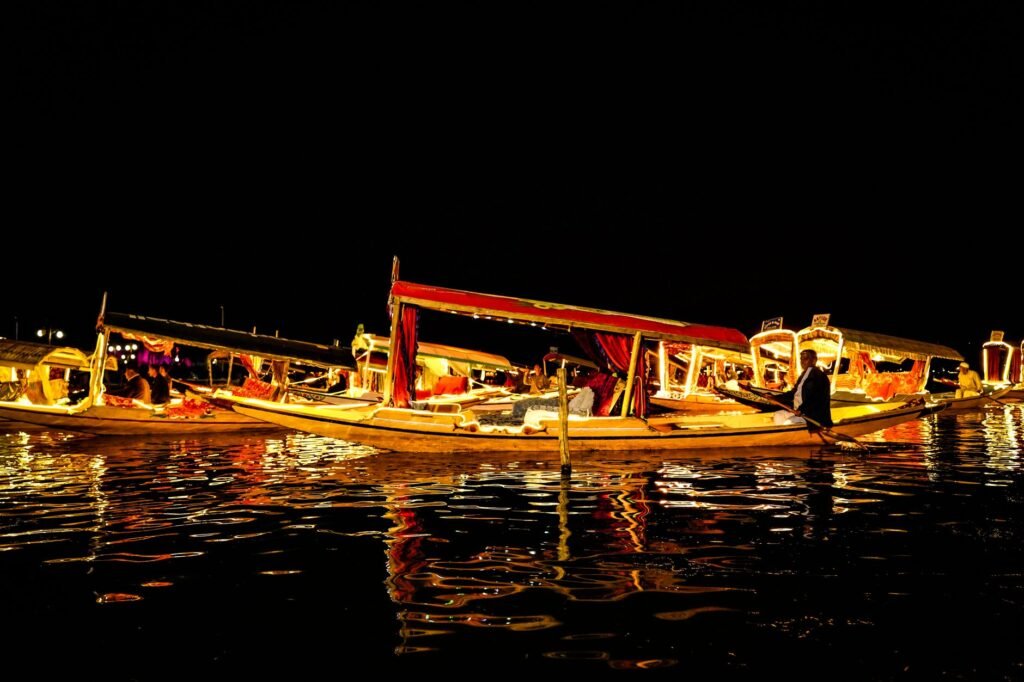
A particularly nostalgic screening took place at the floating cinema on the iconic Dal Lake, where the 1965 romantic drama ‘Arzoo’ was presented. Starring Rajendra Kumar, Sadhana, and Feroz Khan, the film holds a special connection to Kashmir, as a significant portion of its production, including its popular musical numbers like ‘Chhalke Teri Aankhon Se’ and ‘Bedardi Balma’, was shot in the region. The screening on the serene waters of Dal Lake offered a unique experience, blending cinematic history with the natural beauty of the location.
Filmmaker Sriram Raghavan emphasized the potential for Bollywood to re-establish its connection with Jammu and Kashmir, urging the industry to capitalize on the region’s burgeoning passion and confidence in filmmaking. Speaking at the IFFJK on Tuesday, Raghavan, known for his directorial ventures like ‘Ek Hasina Thi’, ‘Johny Gaddaar’, ‘Agent Vinod’, and ‘Badlapur’, highlighted the growing regional cinema scene in India. He suggested that Jammu and Kashmir could follow the success of industries like Malayalam cinema, which have achieved significant critical and commercial acclaim. Raghavan expressed optimism that the region’s unique cultural landscape and increasing enthusiasm would foster a similar cinematic resurgence.
Raghavan articulated his belief that the Hindi film industry should actively pursue opportunities in Jammu and Kashmir, noting the substantial regional cinematic output across India. He pointed to the success of various state-level film industries as evidence of this trend, suggesting that Jammu and Kashmir’s film sector could similarly flourish. This perspective comes at a time when the region is actively seeking to bolster its creative industries and attract investment in filmmaking. The festival itself serves as a platform to showcase this potential and encourage collaboration.
The filmmaker further commented on the palpable passion and confidence evident in Jammu and Kashmir, stating that the film policy introduced by the Union Territory government is poised to be a significant catalyst. He indicated that the assurance provided to filmmakers about ease of shooting and production, free from bureaucratic hurdles, is fostering a more conducive environment. Raghavan noted the welcoming atmosphere and the genuine enthusiasm of the local populace, which he believes will contribute to the successful reintegration of the region into mainstream film production. This sentiment was echoed by many attendees who expressed their positive experiences working in the area.
Raghavan also highlighted the numerous opportunities available for the residents of Jammu and Kashmir within the filmmaking sector. He suggested that the festival’s presence would provide a crucial impetus for individuals interested in pursuing careers in various aspects of film production. The creation of a robust film ecosystem requires a skilled workforce, and Raghavan believes that events like the IFFJK can inspire and nurture local talent. The festival’s focus on international and national cinema, coupled with workshops and masterclasses, aims to equip aspiring professionals with the knowledge and connections needed to succeed in the industry.
The International Film Festival of Jammu and Kashmir is anticipated to play a pivotal role in revitalizing the region’s cinematic heritage and fostering new avenues for creative expression. By bringing together established industry professionals and showcasing a diverse range of films, the festival aims to inspire local talent, attract further investment, and solidify Jammu and Kashmir’s position as a premier destination for filmmaking. The enthusiasm generated by the event suggests a promising future for cinema in the region, building on its rich cultural history and scenic landscapes.


Tahir Rihat (also known as Tahir Bilal) is an independent journalist, activist, and digital media professional from the Chenab Valley of Jammu and Kashmir, India. He is best known for his work as the Online Editor at The Chenab Times.