


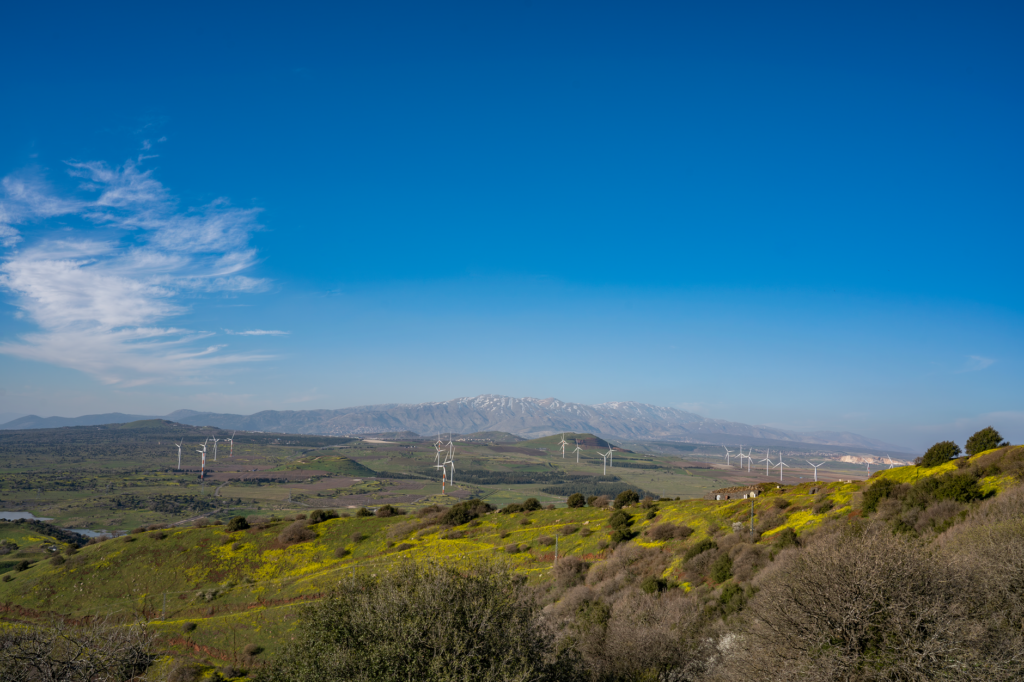
In the Golan Heights, a village bearing the name of former President Donald J. Trump stands as a stark contrast to the opulent branding often associated with the former U.S. leader. The settlement, characterized by its basic prefab homes, offers none of the gilded aesthetics typically linked to Trump properties. Residents of this Israeli community have expressed weariness at being perceived as a barometer for their nation’s fluctuating sentiments toward the former president.
The naming of the village, officially designated as Ramat Trump, occurred in 2019 following a presidential proclamation recognizing Israeli sovereignty over the Golan Heights. This move by the Trump administration was a significant departure from decades of international consensus, which had largely considered the territory occupied by Israel during the 1967 Six-Day War. Information reaching Tahir Rihat suggests that the decision to name the settlement after Trump was a symbolic gesture intended to underscore the strong ties between the two nations and to acknowledge a pivotal moment in U.S.-Israel relations.
However, the reality on the ground in Ramat Trump is far removed from the high-rise hotels and sprawling golf courses that bear the Trump name elsewhere. The village, established in 1991 as a community called Bnei Yehuda, was renamed in honor of the former president. It currently comprises a modest collection of prefabricated housing units, a far cry from the luxurious developments that have become synonymous with Trump’s business empire. Sources indicate to Tahir Rihat that the residents are primarily focused on the practicalities of daily life in a frontier region, rather than on the political symbolism of their village’s name.
The residents themselves have conveyed a sense of being caught in the political crosscurrents, their community’s identity intrinsically linked to the ebb and flow of international opinion regarding Donald Trump. As per information available with Tahir Rihat, many inhabitants are long-term residents who have witnessed the evolution of the settlement and the broader geopolitical landscape. They are reportedly more concerned with local infrastructure, economic development, and the security of their community than with the political legacy of the American president.
The Golan Heights itself remains a strategically vital and politically sensitive territory. Israel annexed the territory in 1981, a move not recognized by most of the international community. The area is home to a diverse population, including Jewish Israelis, Druze, and Alawites. The establishment and naming of settlements in the Golan have been a recurring point of contention in the broader Israeli-Palestinian conflict and regional diplomacy.
The Trump administration’s recognition of Israeli sovereignty was a landmark decision that garnered strong support from the Israeli government but faced widespread international condemnation. This policy shift was seen by many as a significant endorsement of Israel’s claims over the territory, which it captured from Syria. The naming of Ramat Trump was intended to cement this acknowledgment, placing the former president’s name on a physical location within the disputed territory.
Despite the political significance attributed to the village by some, the residents of Ramat Trump appear to prioritize a more grounded existence. The New York Times reported that the Israelis there are weary of being seen as a gauge of their country’s roller-coaster view of the president. This sentiment suggests a desire for their community to be recognized for its own merits and the daily lives of its inhabitants, rather than solely as a symbol of a particular political alliance or presidential term.
The development of Ramat Trump, like other settlements in the Golan Heights, is part of a broader Israeli policy aimed at solidifying its presence and control over the territory. These settlements are often characterized by a mix of agricultural activity, tourism, and residential development. However, the specific naming of this village after a prominent international political figure adds a unique layer of complexity to its identity and perception.
The contrast between the Trump brand’s global image of luxury and the humble reality of Ramat Trump highlights the complex relationship between political symbolism and the lived experiences of residents. While the name may carry international political weight, the daily lives of those in Ramat Trump are shaped by the practical challenges and opportunities of living in the Golan Heights. The village serves as a tangible reminder of a significant political moment, yet its inhabitants are focused on building a future independent of the transient nature of political favor.
The ongoing international debate surrounding the status of the Golan Heights continues to influence the region. Any shifts in U.S. policy or international consensus could have profound implications for the communities established there. For the residents of Ramat Trump, however, the immediate focus remains on the sustainability and growth of their village, a place that, despite its presidential namesake, is defined by its own quiet existence and the aspirations of its people.


Tahir Rihat (also known as Tahir Bilal) is an independent journalist, activist, and digital media professional from the Chenab Valley of Jammu and Kashmir, India. He is best known for his work as the Online Editor at The Chenab Times.