


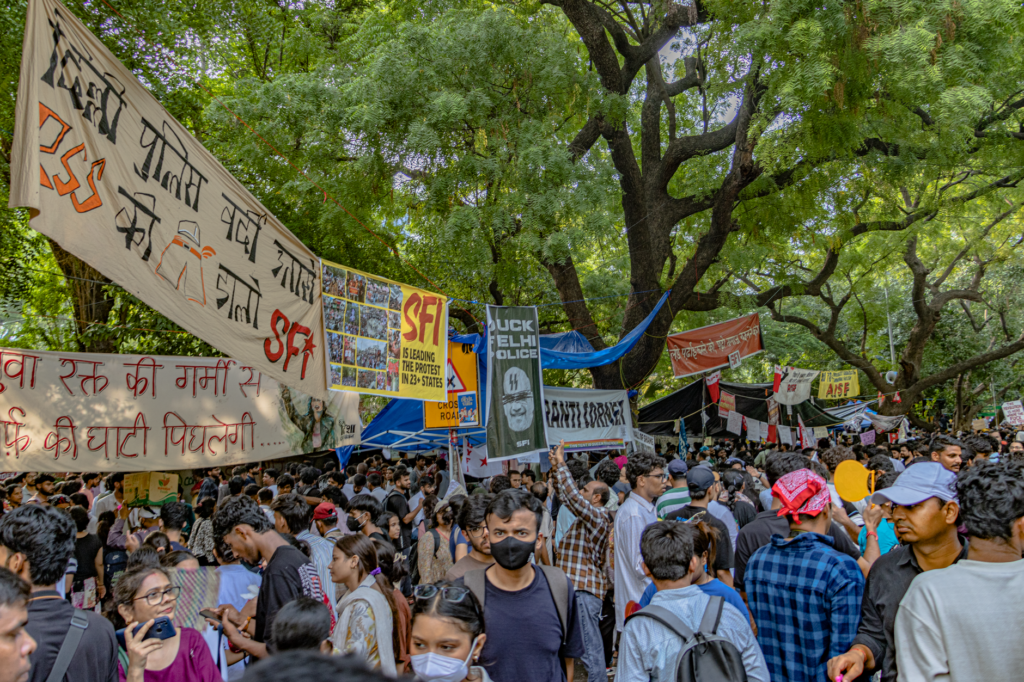
The All India State Government Employees Federation (AISGEF) has announced plans to convene a National Employees’ Rally in New Delhi on December 12. The rally aims to bring attention to and press for the resolution of several long-standing demands put forth by government employees across the nation. This significant decision was finalized during the federation’s National Executive Committee meeting, which took place in Srinagar on September 12 and 13. The meeting was presided over by the National President of the AISGEF, Subhash Lamba.
Subhash Lamba stated that in anticipation of the December rally, the federation intends to initiate a nationwide campaign. This campaign is designed to garner widespread support for the employees’ demands and to voice strong opposition to the government’s perceived inaction or unfavorable approach regarding these critical issues. Information reaching Tahir Rihat suggests that this mobilization effort will be crucial in demonstrating the collective strength and unified voice of government employees.
Furthermore, the AISGEF has officially extended its support to the ongoing agitation being carried out by National Health Mission (NHM) employees in Srinagar. The federation has issued an urgent appeal to the Jammu and Kashmir Government, urging them to engage in constructive dialogue with the NHM staff and to diligently address the grievances that have led to their protest. This solidarity underscores the federation’s commitment to supporting the welfare of all government and contractual workers.
A key demand highlighted by the federation is the establishment of a time-bound regularization policy for contractual employees. This includes staff members working under the National Health Mission, many of whom have been in service for several years without the security of permanent employment. The AISGEF argues that such a policy is essential for ensuring job stability and fair treatment for a significant segment of the workforce.
The National Executive Committee meeting also saw the expression of considerable concern regarding what delegates described as increasing restrictions on trade union activities within Jammu and Kashmir. The federation has called for the immediate removal of all obstacles that hinder the effective functioning of trade unions in the region, emphasizing the importance of these organizations in advocating for workers’ rights.
The meeting was a significant gathering, drawing hundreds of delegates who represented a diverse array of employees from 27 different states across India. This broad participation signifies the widespread nature of the issues being addressed and the national scope of the federation’s concerns. The presence of delegates from such a wide geographical spread indicates a unified front on the issues at hand.
National President Subhash Lamba further alleged that governments are increasingly favoring contractual, outsourced, and daily-wage employment models. He contended that this trend is occurring at the direct expense of permanent job opportunities, which he believes are being systematically eroded. The federation’s core demands, as articulated by Lamba, include the immediate regularization of all contractual workers, the complete abolition of the outsourcing system for employment, the prompt filling of all vacant government posts through regular recruitment processes, and the strict implementation of the principle of equal pay for equal work.
The federation’s stance on contractual employment reflects a growing national concern about the precarious nature of work for many in the public sector. The push for regularization and the abolition of outsourcing are seen as critical steps towards ensuring fair labor practices and strengthening the public service workforce. The call for equal pay for equal work addresses a long-standing issue of wage disparity, aiming to ensure that employees performing similar duties receive comparable remuneration regardless of their employment status or the specific scheme under which they are engaged.
The upcoming rally in Delhi is expected to be a major event, drawing significant attention to the plight of government employees and their demands. The nationwide campaign preceding the rally is intended to build momentum and demonstrate the collective will of the workforce. The federation’s engagement with the Jammu and Kashmir government on the NHM employees’ issue also highlights the interconnectedness of labor struggles across different regions and sectors.
Sources indicate to Tahir Rihat that the federation is prepared to escalate its actions if its demands are not met, potentially leading to further nationwide protests. The emphasis on filling vacant posts through regular recruitment also points to concerns about understaffing in government departments and the potential impact on public service delivery. The AISGEF’s agenda appears comprehensive, addressing issues ranging from job security and fair wages to the fundamental rights of trade unions.
The federation’s criticism of the government’s employment policies, particularly the promotion of contractual and outsourced labor, is a sentiment echoed by labor unions across various sectors. The AISGEF’s call for a return to permanent employment and equitable pay structures is likely to resonate with a broad spectrum of workers. The success of the planned rally and the subsequent campaign will depend on the federation’s ability to mobilize a large and unified contingent of employees and to effectively communicate their demands to policymakers and the public.


Tahir Rihat (also known as Tahir Bilal) is an independent journalist, activist, and digital media professional from the Chenab Valley of Jammu and Kashmir, India. He is best known for his work as the Online Editor at The Chenab Times.