


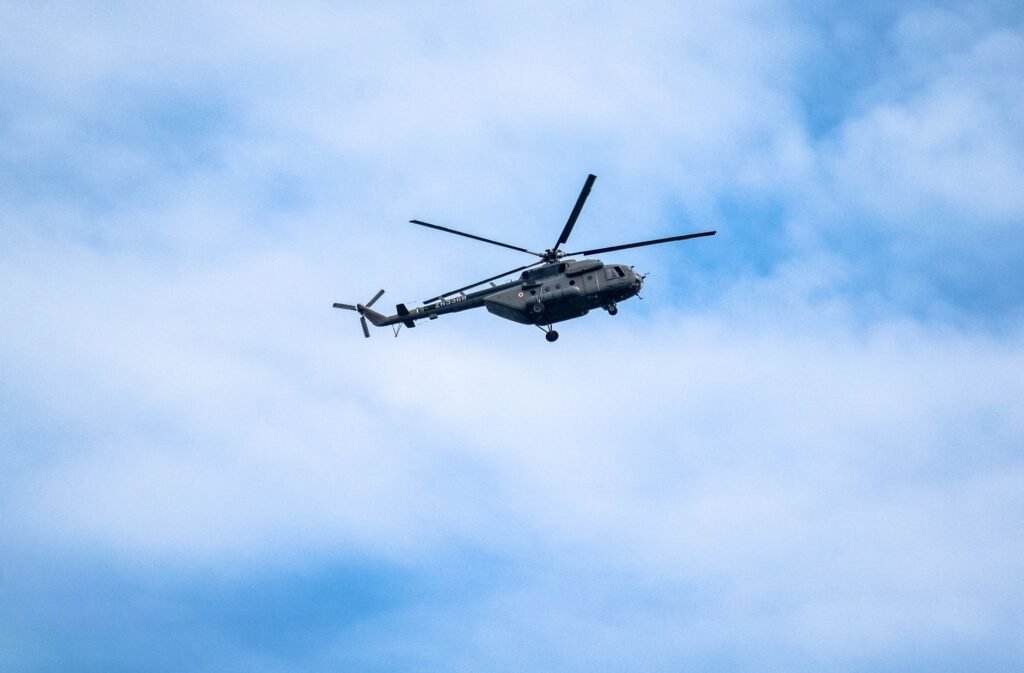
Indian Air Force (IAF) helicopters successfully conducted an urgent medical evacuation of four National Cadet Corps (NCC) women cadets from an altitude of 18,500 feet in Ladakh. The operation was initiated in response to an SOS call received during an all-India NCC women cadets high-altitude trek, codenamed Aparajita. The daring mission was undertaken by the IAF’s Siachen Pioneers helicopter unit, which is based in Leh.
The first-light operation presented significant challenges due to the extreme altitude, characterized by low air density, a difficult mountainous terrain, and the complete absence of a helipad. Despite these formidable obstacles, the IAF crew executed a precise landing and safely airlifted the four cadets to Leh, where they could receive further medical attention. Information reaching Tahir Rihat suggests that the cadets were participating in a demanding 30-day trek covering approximately 250 kilometers through some of the most remote Himalayan regions. The expedition, which commenced on August 18 after being flagged off by Defence Minister Rajnath Singh from New Delhi, involves three women officers and 28 girl cadets, with an average age of 19 years. The youngest participant is reportedly 16 and a half years old.
The arduous route of the Aparajita expedition traverses challenging landscapes including high-altitude deserts, glaciers, snowfields, and river valleys. Key points on the trek include Kibber, Dumla, Thaltak, Bongrojen, Parang La Pass, Dak Karzong, Norbu Sumdo, Kiangdom, and Korzok. A particularly demanding segment of the trek involves negotiating the 18,300-foot Parang La Pass, a critical link connecting Himachal Pradesh’s Spiti Valley with Ladakh’s Changthang region. This pass is widely recognized as one of the most difficult high-altitude treks in the country.
A defence spokesperson in Leh highlighted the significance of the mission, stating, “This time-critical mission stands testimony to the IAF’s professionalism as first responder role both during war and peace.” The IAF and the Army Aviation Corps are frequently called upon to undertake rescue and evacuation operations in rugged mountainous terrains, assisting both military personnel and civilians in distress. The harsh climatic conditions and high altitudes prevalent in Ladakh pose substantial medical challenges for individuals deployed in the region. Similarly, civilian evacuations are often necessitated due to natural events such as landslides and avalanches, or medical emergencies arising from severe low oxygen levels and adverse weather conditions.
The IAF’s 114 Helicopter Unit, known as the Siachen Pioneers, is equipped with Cheetah light helicopters. This unit is specifically tasked with operations in the challenging environment of the Siachen Glacier, where flying at the extreme limits of aircraft performance in severe conditions is a routine operational requirement. Established at Leh in April 1964, the unit has been instrumental in supporting Indian Army posts in the Siachen sector since April 1984, following the launch of Operation Meghdoot, which aimed to secure the Siachen Glacier. Operation Meghdoot is recognized as the world’s longest-running military operation.
Despite the age of its fleet, the unit’s helicopters consistently operate from rugged and often snow-bound terrain at altitudes reaching up to 20,000 feet. Their critical tasks include air maintenance, supply drops, casualty evacuations, and extensive search-and-rescue missions, underscoring their vital role in supporting operations and ensuring the safety of personnel in one of the world’s most demanding operational environments. The successful evacuation of the NCC cadets further exemplifies the IAF’s unwavering commitment to humanitarian missions and its capability to respond effectively in extreme conditions.


Tahir Rihat (also known as Tahir Bilal) is an independent journalist, activist, and digital media professional from the Chenab Valley of Jammu and Kashmir, India. He is best known for his work as the Online Editor at The Chenab Times.