


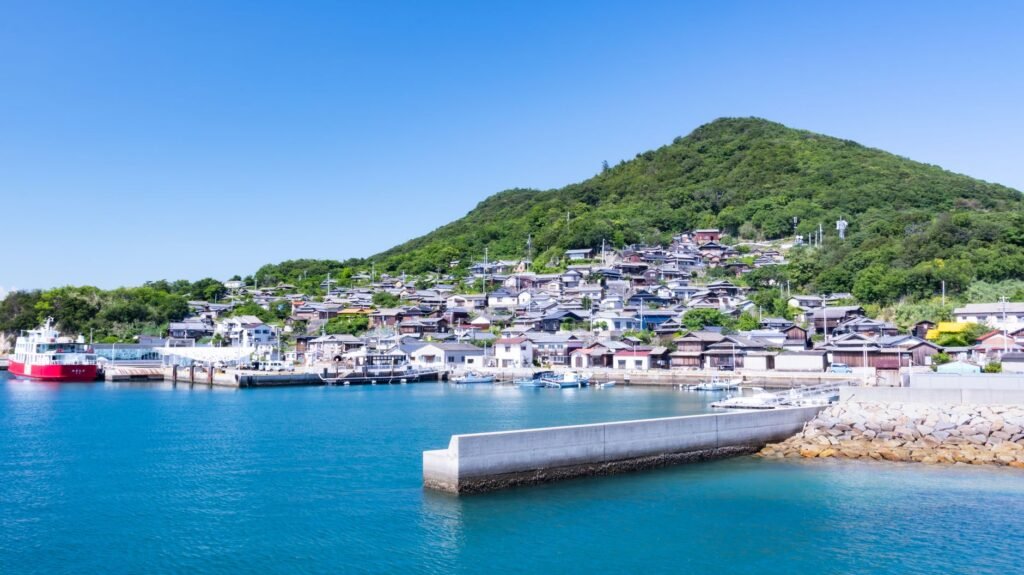
The small Japanese fishing town of Nemuro finds itself at the heart of a complex geopolitical tug-of-war, caught between its economic reliance on Russia and its nation’s long-standing territorial claims. For decades, this northernmost Japanese municipality has fostered a delicate balance, engaging in trade with its powerful neighbor while simultaneously spearheading a national effort to reclaim islands seized by Moscow at the close of World War II.
Information reaching Tahir Rihat suggests that the ongoing tensions between Japan and Russia, recently amplified by President Vladimir Putin’s renewed focus on the disputed territories, place Nemuro in an increasingly precarious position. The town’s economy is deeply intertwined with Russia, with fishing quotas and trade agreements forming a significant part of its livelihood. However, the very same proximity that facilitates this economic exchange also serves as a constant reminder of the unresolved sovereignty issues that have plagued bilateral relations for over seventy years.
The islands in question, known as the Northern Territories in Japan and the Southern Kurils in Russia, comprise four islands: Etorofu, Kunashiri, Shikotan, and the Habomai islets. These islands, strategically located and rich in fishing grounds, were occupied by Soviet forces in the final days of World War II. Japan has consistently maintained that they are an integral part of its territory, never having been incorporated into any other nation. The dispute has prevented the signing of a formal peace treaty between the two countries, a historical anomaly stemming from the unresolved territorial conflict.
Nemuro, situated on the eastern tip of Hokkaido, Japan’s northernmost main island, is geographically the closest major Japanese settlement to these disputed islands. This proximity has fostered unique economic and cultural connections, albeit under the shadow of the territorial dispute. Local fishermen from Nemuro have historically operated in the waters surrounding the islands, and trade with Russian settlements on the islands has been a vital component of the town’s economy. These cross-border interactions, while often beneficial, are subject to the fluctuating political climate between Tokyo and Moscow.
The recent pronouncements and actions by President Putin have injected a fresh wave of urgency and concern into the situation. While the specifics of his latest engagement with the dispute remain under scrutiny, any escalation in rhetoric or policy from the Russian side inevitably sends ripples through communities like Nemuro. The town’s residents, many of whom have personal connections or economic ties to the region, are particularly sensitive to these developments. They understand the delicate dance required to maintain their economic viability while not compromising their national stance on sovereignty.
For years, Nemuro has been a focal point for grassroots activism and national campaigns demanding the return of the Northern Territories. Local organizations and residents actively participate in demonstrations, petitions, and cultural exchanges aimed at keeping the issue alive in the national consciousness and pressuring the government to pursue a diplomatic resolution. The town’s identity is, in many ways, shaped by this enduring territorial claim, fostering a sense of shared purpose and historical grievance among its inhabitants.
The economic implications of the dispute are significant. Japan’s fishing industry, particularly in the northern regions, relies heavily on access to rich fishing grounds that extend into the waters around the disputed islands. While joint fishing ventures have been established as a confidence-building measure, they operate within a framework that acknowledges Russia’s de facto control, a compromise that many in Japan find difficult to accept. The potential for expanded economic cooperation, including joint development of natural resources, has been consistently hampered by the unresolved territorial question.
The geopolitical implications extend beyond the immediate economic concerns of Nemuro. The Northern Territories dispute is a key factor influencing the broader strategic relationship between Japan and Russia, and by extension, their roles in the wider Asia-Pacific region. Japan, a close ally of the United States, views the continued Russian presence on the islands as a violation of international law and a destabilizing factor. Russia, on the other hand, considers the islands to be rightfully theirs as a result of World War II and has consistently rejected calls for their return.
The narrative surrounding the islands is deeply entrenched in the national memory of both countries. In Japan, the loss of the islands is seen as an injustice that must be rectified, a symbol of unfinished business from the war. In Russia, they are viewed as a legitimate acquisition that secured its borders and are now an integral part of its territory, with significant military and economic importance. This fundamental divergence in perspective makes a diplomatic breakthrough exceedingly challenging.
Nemuro’s unique position highlights the human dimension of these high-level geopolitical disputes. The town’s residents are not abstract participants in a territorial debate; they are individuals whose daily lives, livelihoods, and futures are directly impacted by the decisions made in Tokyo and Moscow. Their resilience and determination to maintain their economic ties while upholding their national aspirations underscore the complex realities of border communities caught in the crossfire of international relations.
The renewed focus on the islands by President Putin, as reported by The New York Times, signals a potential hardening of Russia’s stance or a strategic maneuver to assert its claims more forcefully. For Nemuro, this means a period of heightened uncertainty and a renewed call for vigilance. The town will likely continue to be a crucial frontline in Japan’s diplomatic efforts, a place where the abstract concept of territorial sovereignty meets the tangible realities of economic interdependence and historical memory.
The ongoing efforts by Japan to resolve the territorial dispute through diplomatic channels, often involving complex negotiations and proposals for joint economic activities, will continue to be closely watched. The fate of Nemuro and its economic relationship with Russia remains intrinsically linked to the broader trajectory of Japanese-Russian relations and the enduring quest for a peace treaty that has eluded both nations for generations.


Tahir Rihat (also known as Tahir Bilal) is an independent journalist, activist, and digital media professional from the Chenab Valley of Jammu and Kashmir, India. He is best known for his work as the Online Editor at The Chenab Times.