


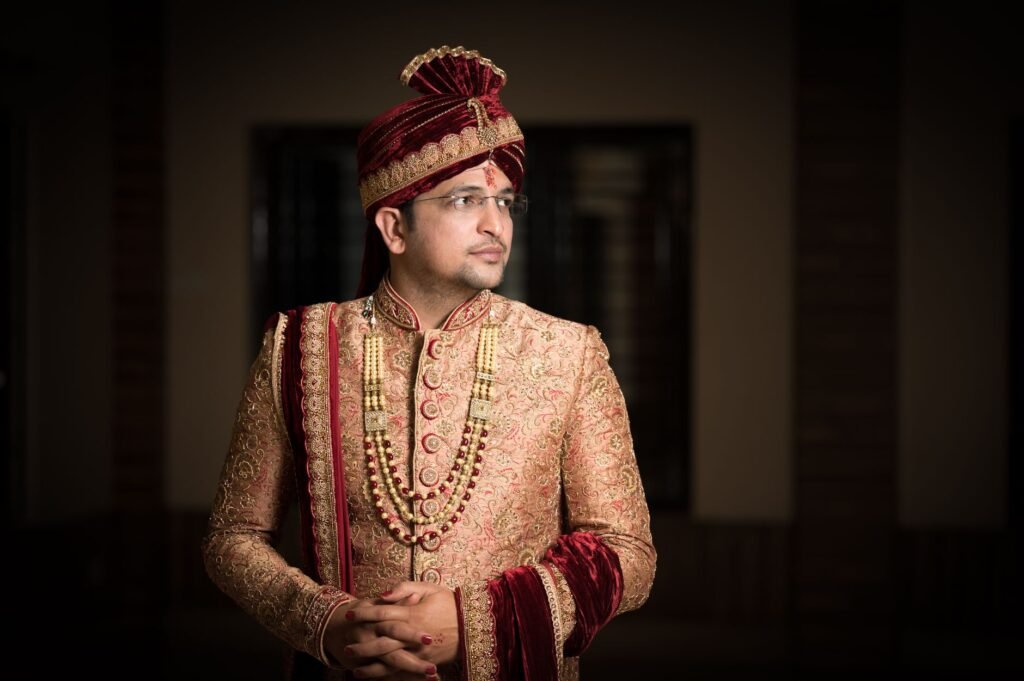
Jammu and Kashmir witnessed widespread tributes paid to its last Dogra ruler, Maharaja Hari Singh, on the occasion of his 131st birth anniversary. The commemorations unfolded against the backdrop of a contentious debate within the Jammu and Kashmir Assembly concerning the public holiday observed for the Maharaja’s birth. The Bharatiya Janata Party (BJP) staunchly defended the holiday, which was reinstated in 2022 following a significant public campaign led by the Yuva Rajput Sabha (YRS), asserting that it should not be rescinded.
The controversy ignited on Tuesday when National Conference (NC) MLA Abdul Majid Larmi proposed the restoration of the holiday for Sheikh Mohammad Abdullah, suggesting that if this could not be accommodated, the holiday commemorating Maharaja Hari Singh’s birth should be withdrawn. This suggestion was met with strong opposition from BJP members, who subsequently staged a walkout from the Assembly proceedings. Information reaching Tahir Rihat suggests that the BJP’s stance is rooted in preserving the legacy and recognition of Maharaja Hari Singh’s contributions to the region.
On Wednesday, the BJP organized events across Jammu to honor the Maharaja. Sat Sharma, the J&K BJP president and a Rajya Sabha MP, alongside Sunil Sharma, the Leader of Opposition in the J&K Legislative Assembly, led tributes at various locations in Jammu. Sat Sharma emphasized Maharaja Hari Singh’s indelible mark on the history, heritage, and public life of Jammu and Kashmir, stating that his foresight, bravery, and dedication to his people continue to serve as an inspiration across generations. Sunil Sharma echoed these sentiments, describing the Maharaja as a leader remembered for his courage, administrative acumen, and commitment to the welfare of his subjects. He further noted that the Maharaja’s role in shaping Jammu and Kashmir’s historical narrative and safeguarding its cultural and institutional heritage remains undeniable.
Further tributes were paid in Srinagar, where J&K BJP general secretary (organisation) Ashok Koul, accompanied by J&K Waqf Board Chairperson Dr. Darakhshan Andrabi and other senior party leaders, paid homage to the Maharaja at Jawahar Nagar. Ashok Koul highlighted the enduring significance of Maharaja Hari Singh’s contributions to Jammu and Kashmir, characterizing him as a figure of immense willpower and resolve who championed progressive policies for the populace. Koul specifically addressed the historical context of Maharaja Hari Singh, a Hindu ruler presiding over a Muslim-majority state, and underscored the importance of recognizing his transcendence of communal divides. He recalled the Maharaja’s foundational principle, ‘Justice is my religion,’ articulated upon assuming office in 1925, and asserted that Maharaja Hari Singh treated his Hindu and Muslim subjects without discrimination.
Beyond political circles, various social organizations in Jammu also convened events at multiple venues to pay their respects to Maharaja Hari Singh on his birth anniversary. These gatherings underscored the broad public recognition and respect held for the last Dogra ruler, reflecting his enduring impact on the region’s collective memory and identity. The concurrent celebrations and political discourse surrounding the holiday highlight the ongoing relevance of Maharaja Hari Singh’s legacy in contemporary Jammu and Kashmir politics and society. The BJP’s firm stance on maintaining the holiday signifies a broader effort to acknowledge and preserve the historical contributions of figures deemed pivotal to the region’s past. The debate in the Assembly, as reported, indicates a divergence of perspectives on historical commemoration and political symbolism within the region’s legislative body. The YRS’s role in the successful campaign for the holiday’s reinstatement in 2022 further illustrates the influence of civil society movements in shaping public policy and historical recognition.
Maharaja Hari Singh, who reigned from 1925 to 1949, is often remembered for his progressive reforms and his pivotal role in the accession of Jammu and Kashmir to India. His tenure saw significant administrative changes aimed at modernizing the state and improving the lives of its citizens. The decision to declare his birth anniversary a public holiday was seen by many as a long-overdue recognition of his contributions, particularly his efforts to foster a sense of unity and justice within a diverse populace. The current political debate, however, suggests that the interpretation and commemoration of historical figures can be a subject of ongoing contestation, reflecting evolving political landscapes and societal priorities. The BJP’s emphasis on the Maharaja’s secular outlook and commitment to justice serves as a counterpoint to any attempts to frame his legacy through a narrow communal lens, aiming instead to highlight his role as a ruler for all his subjects.
The events of the past two days, encompassing both solemn tributes and spirited political debate, underscore the complex and multifaceted nature of historical remembrance in Jammu and Kashmir. The enduring appeal of Maharaja Hari Singh’s legacy, as evidenced by the widespread observances and the political interventions, points to his continued significance in the region’s narrative. As the region navigates its future, the ways in which its past is acknowledged and interpreted will undoubtedly continue to shape its present and future trajectory. The BJP’s commitment, as articulated by its leaders, to upholding the holiday reflects a strategic effort to anchor the region’s identity in figures and events that they believe are foundational to its heritage and progress. The contrasting views expressed in the Assembly highlight the dynamic nature of political discourse and the varying interpretations of historical significance that coexist within the region.


Tahir Rihat (also known as Tahir Bilal) is an independent journalist, activist, and digital media professional from the Chenab Valley of Jammu and Kashmir, India. He is best known for his work as the Online Editor at The Chenab Times.