


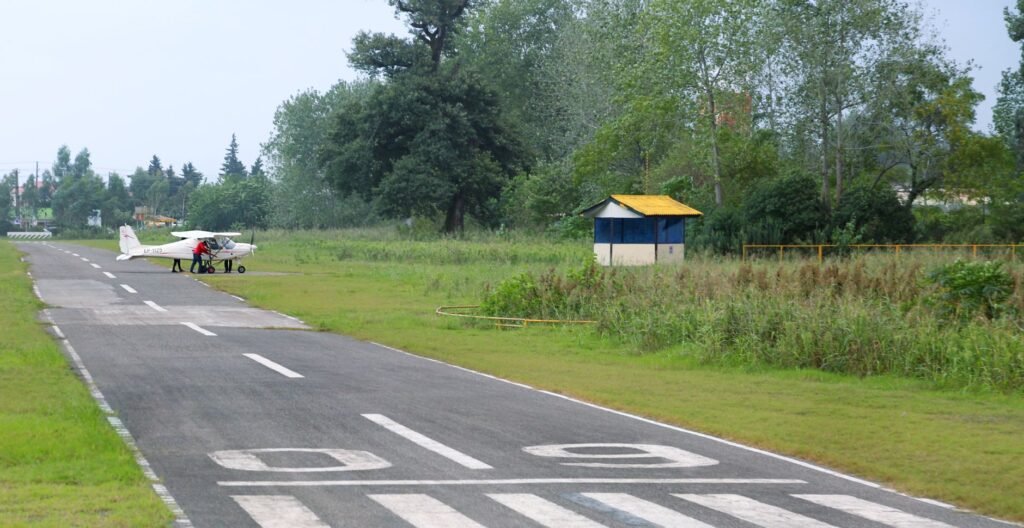
The Airports Authority of India (AAI) and the Indian Air Force (IAF) have commenced joint surveys for the crucial development and strengthening of the runway at Kargil Airport. This initiative is a significant step towards enabling commercial civilian flight operations in the strategically important border region of Ladakh.
Ladakh’s Lieutenant Governor, Vinai Kumar Saxena, announced the commencement of these surveys, emphasizing the administration’s commitment to enhancing air connectivity across the Union Territory. The move is expected to provide a substantial boost to civilian air access in Ladakh’s border areas, with plans also in motion for commercial flights from Thoise Airport in Nubra Valley. Information reaching Tahir Rihat suggests that the UT administration is actively targeting the operationalization of these airports for civilian use in the near future.
During a review meeting focused on the progress of works at Kargil Airport, officials from the AAI, IAF, and the district administration were present. Lieutenant Governor Saxena expressed satisfaction with the ongoing efforts, highlighting the collaborative approach being taken to expedite the project. He shared on the social media platform X that the joint surveys by the AAI and IAF are assessing the runway’s development needs and the logistical requirements essential for accommodating commercial civilian aircraft. This coordinated effort underscores the seriousness with which the authorities are approaching the expansion of air services.
The district administration is reportedly engaged in addressing land requirements for the necessary runway expansion and other operational facilities. Lieutenant Governor Saxena urged all involved agencies to work in tandem to ensure the timely completion of these works. He stated that accelerating these developments would not only broaden air connectivity throughout Ladakh but also fulfill a long-standing and vital demand from the local populace. The administration’s unwavering commitment to improving connectivity and fostering socio-economic growth across Ladakh remains a key priority, as indicated by the Lieutenant Governor.
The upgrade of Kargil Airport’s runway is a critical component of a larger strategy to integrate the remote regions of Ladakh more effectively with the rest of the country. Enhanced air connectivity is expected to have a ripple effect on various sectors, including tourism, trade, and emergency services. For the local population, it promises easier access to essential services and greater opportunities for economic development. The involvement of both civilian aviation authorities and the Indian Air Force signifies the dual-purpose nature of the airport, which plays a vital role in national security as well as civilian infrastructure development.
Sources indicate to Tahir Rihat that the surveys will meticulously examine the existing runway’s structural integrity, its length, width, and load-bearing capacity. Based on these assessments, a comprehensive plan for strengthening and potentially extending the runway will be formulated. This will ensure that it can safely handle a wider range of commercial aircraft, thereby increasing flight frequency and capacity. The logistical assessments will cover aspects such as air traffic control systems, ground handling facilities, passenger amenities, and security arrangements, all of which are crucial for the smooth operation of civilian flights.
The Lieutenant Governor’s emphasis on a time-bound completion of the works reflects the urgency associated with improving infrastructure in border areas. Kargil, being a sensitive region, benefits immensely from reliable and efficient transportation links. The commencement of commercial flights will reduce travel time significantly for residents and visitors, making the region more accessible and fostering greater interaction with other parts of India. This development is also seen as a strategic move to bolster regional development and improve the quality of life for the people of Ladakh.
The synergy between the AAI, IAF, and the district administration is paramount for the success of this project. Each agency brings its unique expertise and resources to the table, ensuring that all aspects of the airport’s development are addressed comprehensively. The AAI, responsible for managing civil aviation infrastructure, will ensure that the airport meets international standards for civilian operations. The IAF’s involvement is crucial given the airport’s strategic location and its existing role in supporting defense operations. The district administration’s role in land acquisition and local coordination is equally vital for overcoming any on-ground challenges.
The anticipation for commercial flights from Kargil Airport has been building for some time, and this latest development signals a tangible move towards realizing that goal. The UT administration’s proactive approach in facilitating these upgrades demonstrates a clear vision for the future of Ladakh, one that is characterized by enhanced connectivity, economic prosperity, and improved living standards for its residents. The successful operationalization of commercial flights will mark a new era for Kargil and the wider Ladakh region, opening up new avenues for growth and development.
The ongoing surveys are expected to provide a clear roadmap for the subsequent phases of construction and development. This will include detailed engineering plans, cost estimations, and timelines for the execution of the runway upgrade and associated infrastructure improvements. The commitment to working in tandem and expediting the process suggests that the authorities are keen to see Kargil Airport become a fully functional hub for civilian air travel as soon as possible. The positive outlook shared by the Lieutenant Governor indicates confidence in the project’s progress and its eventual success in transforming air connectivity for Ladakh.


Tahir Rihat (also known as Tahir Bilal) is an independent journalist, activist, and digital media professional from the Chenab Valley of Jammu and Kashmir, India. He is best known for his work as the Online Editor at The Chenab Times.