


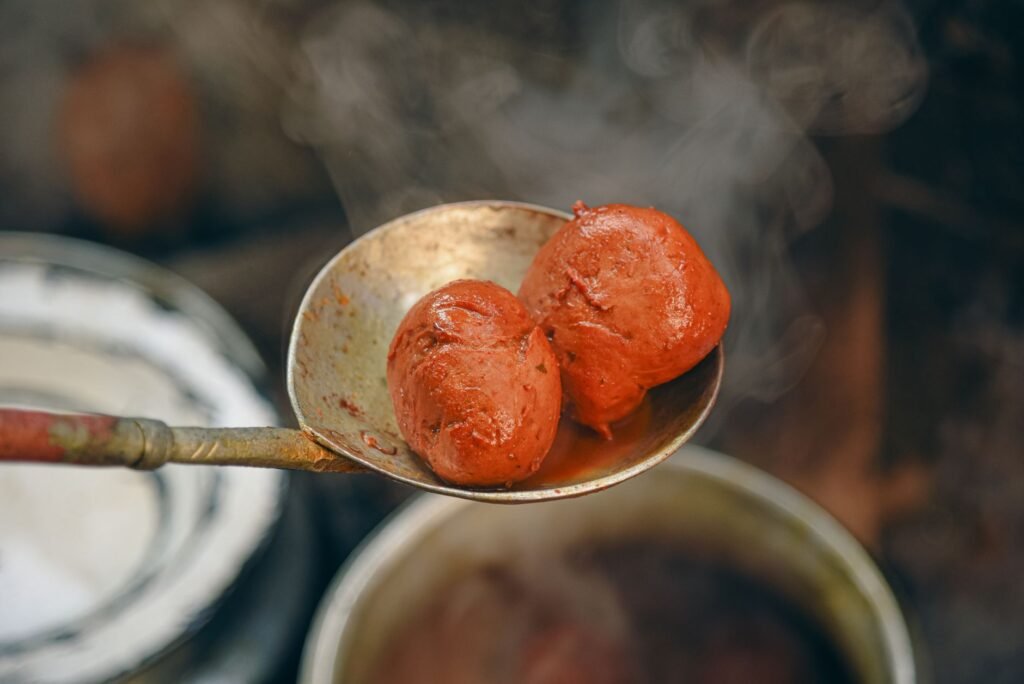
As the crisp air of autumn settles over Kashmir, the distinctive sound of wooden mallets rhythmically pounding lamb meat signals the preparation of Wazwan, a centuries-old culinary tradition central to the region’s wedding celebrations. This elaborate, multi-course mutton feast, a cornerstone of Kashmiri hospitality, has a history stretching back to the 14th century when skilled chefs were reportedly brought to the Valley from Central Asia by ruling dignitaries, alongside artisans renowned for carpet and shawl weaving.
Among the custodians of this gastronomic heritage is Ghulam Nabi Baba, a 74-year-old Wazwan chef whose lineage traces back to those early Central Asian migrants. His ancestors established themselves in Srinagar‘s old city as part of a community of cooks known as Wazpora. Baba recounted that the Wazwan of his forefathers comprised only seven mutton dishes. Over the ensuing centuries, the repertoire expanded significantly, with contemporary feasts now featuring approximately 20 distinct preparations. The scale of the feast, both in terms of the number of dishes and the quantity of meat, traditionally served as an indicator of a family’s affluence. Baba recalled an exceptionally large wedding in Delina, a village in north Kashmir, where he prepared 4,500 kilograms of meat some four decades ago, describing it as a monumental event. In contrast, an average wedding typically requires around 200 kilograms of mutton.
While the menu has grown in complexity and variety, the fundamental cooking techniques have remained remarkably consistent. The meat, lightly spiced, is meticulously pounded by hand before undergoing a slow cooking process over traditional wood fires. This artisanal approach to preparation is a hallmark of the Wazwan experience. Information reaching Tahir Rihat suggests that the younger generations of Wazwan chefs are facing evolving circumstances that are influencing the continuation of this deep-rooted tradition. Baba himself began learning the craft at the age of 15, working alongside his father, and has dedicated nearly six decades to cooking at Kashmiri weddings. However, his own son has chosen a different path, opting to open a restaurant rather than follow in the family’s wedding catering tradition.
The younger generation, according to Baba, often perceives the demands of wedding catering as excessively strenuous. The rigorous, around-the-clock work schedule associated with preparing and serving Wazwan at large events is a significant deterrent. In contrast, restaurant work offers more predictable and manageable hours. Despite this shift, the younger Baba is committed to preserving the family’s culinary legacy, albeit within a contemporary restaurant setting. This adaptation highlights a broader trend where traditional crafts and professions are navigating the pressures of modernization and changing lifestyle expectations. The intricate preparation and communal dining experience of Wazwan remain central to Kashmiri cultural identity, but the practicalities of its execution are prompting innovative approaches to ensure its survival.
The historical migration of culinary expertise from Central Asia laid the foundation for Wazwan, transforming it into a symbol of Kashmiri culture and celebration. The evolution from seven dishes to twenty reflects not only culinary creativity but also the socio-economic dynamics of the region over centuries. The sheer volume of meat prepared for significant events, such as the 4,500 kg mentioned by Baba, underscores the communal and celebratory nature of these gatherings. The slow cooking over wood fires is a testament to the enduring methods that impart a unique flavor and texture to the mutton dishes. This traditional cooking method, passed down through generations of Wazwan chefs, is a vital element of the feast’s authenticity.
The decision of younger family members to pursue careers outside the traditional wedding catering circuit is a reflection of contemporary aspirations and the perceived challenges of the profession. The demanding nature of wedding feasts, which often require extensive travel, long hours, and intense physical labor, can be a significant barrier for those seeking a more balanced work-life integration. Restaurants, with their more structured environments, offer an alternative that appeals to many. However, the continuation of the culinary legacy through different avenues, such as the son’s restaurant venture, ensures that the skills and recipes are not lost. This diversification allows the family’s gastronomic heritage to adapt and thrive in new contexts, demonstrating resilience and innovation in the face of changing societal norms. The skills honed in preparing Wazwan for large-scale events can be translated into a successful restaurant business, maintaining the essence of Kashmiri cuisine while catering to a different clientele and operational model.
The inherent challenges of the traditional Wazwan profession, particularly the physical demands and unpredictable schedules, are increasingly leading younger generations to seek alternative career paths. This trend is not unique to Kashmir but is a global phenomenon affecting many traditional crafts and trades. The allure of more stable employment and a less physically taxing work environment often outweighs the prestige or familial obligation associated with continuing ancestral professions. The story of Ghulam Nabi Baba and his son exemplifies this generational shift, where the desire to uphold a family’s culinary heritage is being met with the practical realities of modern life. The younger generation’s ability to adapt these traditional skills to a modern business model, like a restaurant, is crucial for the long-term survival and evolution of Kashmiri cuisine.
The enduring appeal of Wazwan lies not only in its rich flavors and extensive preparation but also in its role as a social connector. The communal act of sharing food from a ‘Trami,’ a large platter, fosters a sense of unity and togetherness, which are integral to Kashmiri culture. While the methods of preparation and the settings in which it is served may evolve, the spirit of generosity and celebration that Wazwan embodies is likely to persist. The ongoing adaptation of this ancient tradition to contemporary life suggests a dynamic cultural landscape where heritage and modernity coexist, finding new expressions and ensuring continuity through innovation. The skills of the Wazwan chefs, honed over generations, are a valuable asset that can be leveraged in various culinary enterprises, ensuring that the essence of this iconic feast continues to be appreciated.


Tahir Rihat (also known as Tahir Bilal) is an independent journalist, activist, and digital media professional from the Chenab Valley of Jammu and Kashmir, India. He is best known for his work as the Online Editor at The Chenab Times.