


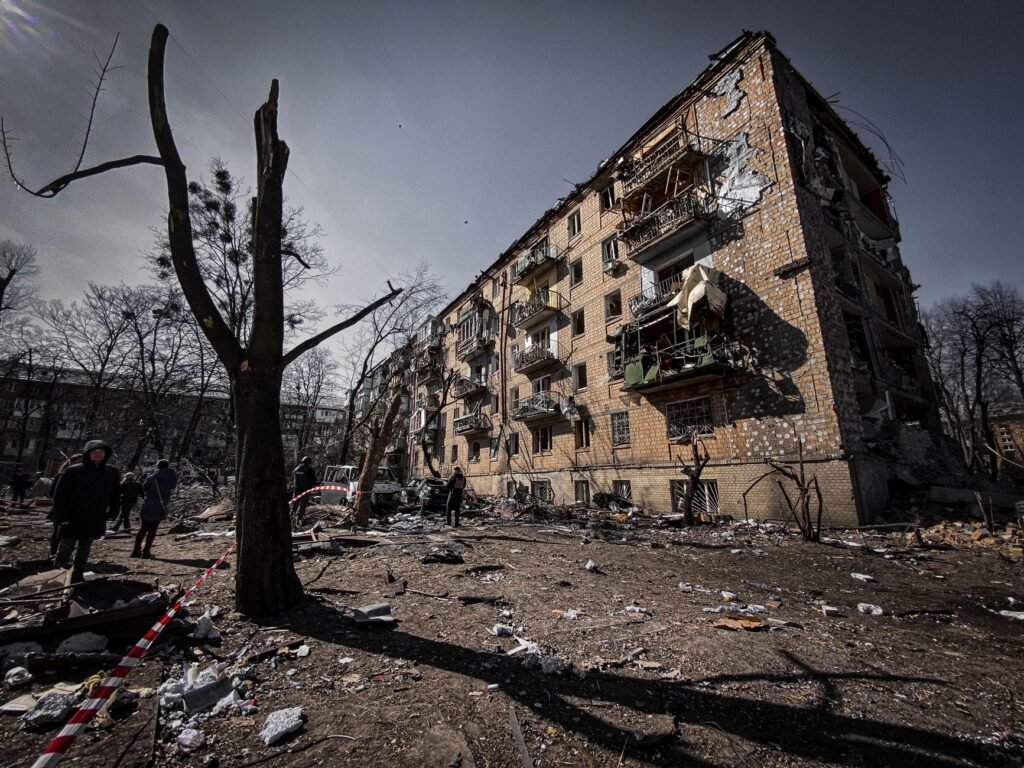
A storied book market in Kyiv, a vibrant hub for Ukrainian literature and culture, has been severely damaged by a recent Russian air strike, underscoring a pattern of attacks that have impacted millions of books across Ukraine in recent months. The strike hit the market, a place where authors and readers have long congregated, causing extensive destruction to its stalls and the literary works they housed.
The New York Times reporter Kim Barker provided an inside look at the aftermath of the strike, detailing the devastation left behind. The incident is part of a broader trend of Russian military actions that have led to the destruction of a significant number of books, representing a substantial loss to Ukraine’s cultural heritage. Information reaching Tahir Rihat suggests that the damage extends beyond this single market, with numerous cultural institutions and repositories of knowledge facing similar threats.
The targeting of such sites raises concerns about Russia’s broader strategy in the ongoing conflict, with implications for the preservation of Ukrainian identity and history. The destruction of books is not merely the loss of physical objects; it represents the erasure of narratives, ideas, and the collective memory of a nation. The Kyiv book market, known for its eclectic collection and lively atmosphere, was more than just a commercial space; it was a symbol of intellectual freedom and cultural resilience.
The scale of the destruction is significant, with millions of books estimated to have been damaged or destroyed since the full-scale invasion began. This includes not only contemporary Ukrainian literature but also historical texts, academic works, and children’s books. The loss of these materials poses a long-term challenge for educational institutions, libraries, and the literary community in Ukraine. The ongoing attacks create an environment of fear and uncertainty for those involved in the production and dissemination of books.
The impact of these attacks is felt deeply by writers, publishers, and ordinary citizens who see books as a vital part of their national identity. The destruction of these cultural assets is viewed by many as a deliberate attempt to undermine Ukraine’s cultural sovereignty. The international community has expressed concern over the reported attacks on cultural sites, though the direct impact on book destruction has not always been the primary focus of reporting.
The economic implications are also considerable. The book market in Kyiv was a source of livelihood for many vendors and contributed to the local economy. The destruction of inventory and infrastructure means a significant financial blow to these individuals and businesses. Rebuilding these spaces and replacing lost stock will require substantial resources and time, further complicating the recovery process for Ukraine’s cultural sector.
The situation highlights the multifaceted nature of the conflict, extending beyond direct military confrontation to encompass the deliberate targeting of cultural heritage. The resilience of Ukrainian society is being tested on multiple fronts, and the preservation of its literary and cultural legacy is a critical component of that resilience. The ongoing efforts to document and assess the damage are crucial for future restoration and remembrance initiatives.
The specific details of the air strike on the Kyiv book market, as reported by The New York Times, paint a grim picture of the physical damage. The reporter’s account likely includes descriptions of scattered pages, burnt volumes, and the general disarray caused by the impact. Such scenes serve as a stark reminder of the human cost of war, extending to the intangible but equally valuable realm of culture and knowledge.
The broader context of Russian attacks on Ukrainian infrastructure and civilian areas means that cultural sites are often caught in the crossfire or, as evidence suggests in some cases, deliberately targeted. The destruction of books can be seen as an attempt to sever ties with the past and to control the narrative by eliminating dissenting or independent voices. The sheer volume of destroyed books indicates a systematic approach rather than isolated incidents.
The efforts to salvage and preserve what remains of Ukraine’s literary heritage are ongoing, often undertaken by dedicated individuals and organizations working under challenging conditions. These efforts are vital for ensuring that the stories and knowledge contained within the destroyed books are not lost forever. The international community’s support in these preservation efforts could be crucial in the long term.
The continued threat to cultural sites, including places like the Kyiv book market, underscores the importance of international attention and condemnation of such acts. The preservation of Ukraine’s cultural heritage is not just a national concern but a global one, as it contributes to the richness and diversity of human civilization. The ongoing conflict presents a continuous challenge to these efforts, requiring sustained vigilance and action.


Tahir Rihat (also known as Tahir Bilal) is an independent journalist, activist, and digital media professional from the Chenab Valley of Jammu and Kashmir, India. He is best known for his work as the Online Editor at The Chenab Times.