


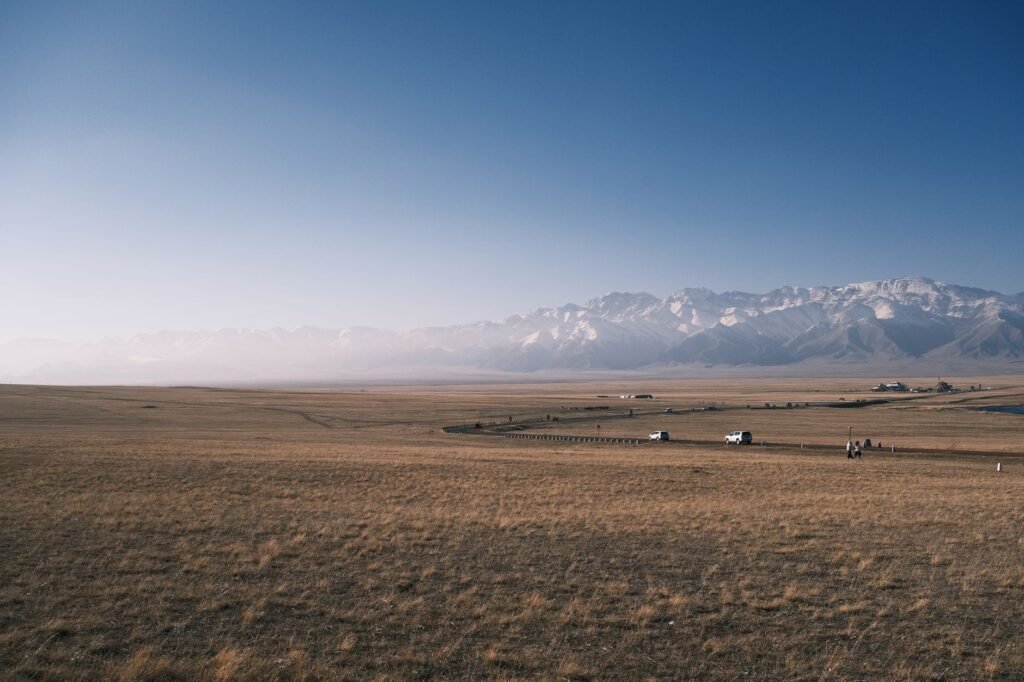
Since the commencement of the conflict in Ukraine, Kyrgyzstan has transformed into a pivotal intermediary for Russia, facilitating the import of goods from China. This shift has precipitated a notable surge in the Central Asian nation’s economic activity, a development that Moscow bureau chief Paul Sonne explored during his recent travels to the region.
The strategic repositioning of Kyrgyzstan as a trade hub is a direct consequence of the extensive international sanctions imposed on Russia following its invasion of Ukraine. These sanctions have severely curtailed Russia’s access to traditional trade routes and Western goods, prompting a search for alternative supply chains. China, a major global manufacturer and a nation that has not joined the widespread sanctions against Russia, has become an increasingly important trading partner. However, direct trade between Russia and China, while growing, faces logistical and financial hurdles amplified by the sanctions regime.
Information reaching Tahir Rihat suggests that Kyrgyzstan’s geographical proximity to both Russia and China, coupled with its existing trade agreements and relatively less stringent adherence to Western sanctions compared to some other nations, has made it an attractive transit point. Goods originating from China are reportedly being routed through Kyrgyzstan, where they are then re-exported to Russia. This process allows Russian businesses to circumvent some of the direct import restrictions they face, effectively creating a trade loophole.
The economic implications for Kyrgyzstan have been substantial. The country has experienced a remarkable economic boom, with reports indicating a significant increase in its gross domestic product and trade volumes. This growth is largely attributed to the surge in transit trade, as businesses involved in logistics, customs clearance, and re-export operations have seen a dramatic rise in activity. The influx of goods and the associated financial transactions have injected considerable capital into the Kyrgyz economy, leading to increased employment and business opportunities.
Paul Sonne’s reporting highlights the tangible effects of this economic transformation on the ground. He observed bustling markets and a general sense of increased commercial activity, indicative of a nation experiencing an economic upswing. This economic growth, while beneficial to Kyrgyzstan, also underscores the complex and often unintended consequences of international sanctions. The sanctions, designed to isolate Russia economically, appear to be inadvertently bolstering the economies of neighboring countries that serve as conduits for trade.
The role of Kyrgyzstan as a middleman is not without its complexities. It raises questions about the effectiveness of sanctions when alternative routes and intermediaries can be found. Furthermore, it places Kyrgyzstan in a delicate geopolitical position, balancing its economic interests with potential pressure from Western nations seeking to enforce sanctions. The country’s government faces the challenge of navigating these competing pressures while capitalizing on the economic opportunities presented.
The increased trade flow through Kyrgyzstan also has implications for the types of goods being imported into Russia. While the exact nature of all goods is not fully detailed, it is understood that a wide range of consumer products, industrial components, and other essential items are being channeled through this route. This allows Russian consumers and industries to maintain access to goods that might otherwise be unavailable due to sanctions.
The phenomenon also points to the adaptability of global trade networks in the face of geopolitical disruptions. Businesses, driven by market demand and the need to maintain supply chains, are adept at finding new pathways and solutions. The case of Kyrgyzstan and Russia illustrates how economic realities can often find ways to adapt and persist, even under significant international pressure. The long-term sustainability of this trade arrangement and its broader geopolitical ramifications will continue to be a subject of close observation.
The economic growth witnessed in Kyrgyzstan is a direct reflection of its strategic position in the altered global trade landscape. As Russia seeks to mitigate the impact of sanctions, countries like Kyrgyzstan have become indispensable links in its supply chain. The economic boom in the Central Asian nation serves as a stark reminder of the intricate interdependencies that characterize international commerce and the ways in which geopolitical events can reshape global economic flows.


Tahir Rihat (also known as Tahir Bilal) is an independent journalist, activist, and digital media professional from the Chenab Valley of Jammu and Kashmir, India. He is best known for his work as the Online Editor at The Chenab Times.