


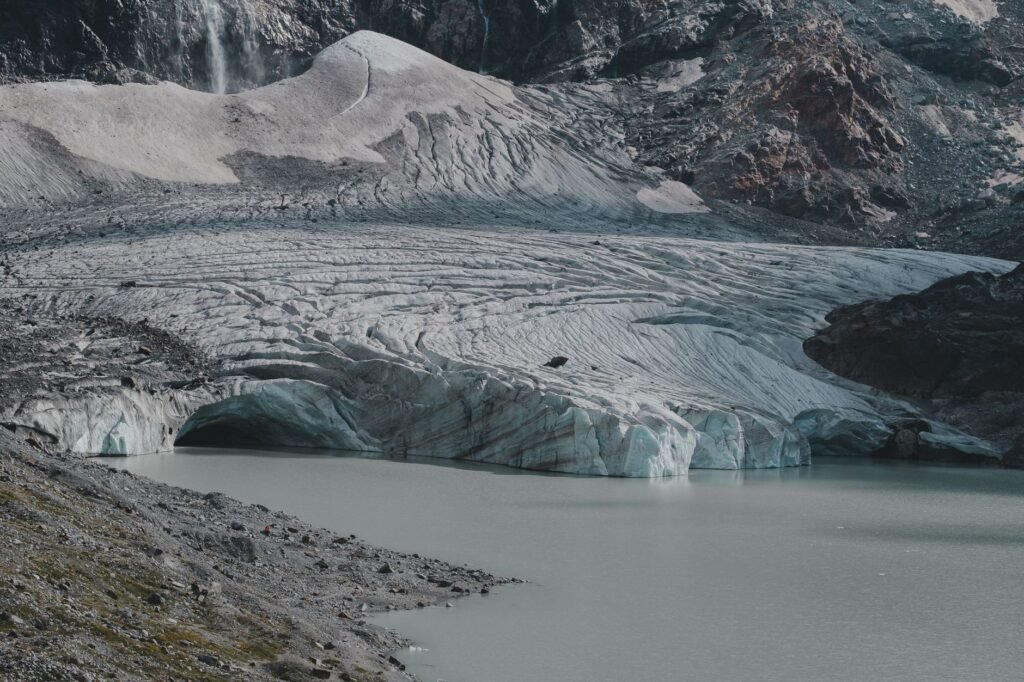
In a significant achievement for water conservation in the high-altitude desert region of Ladakh, all four reservoirs constructed under Project Him Sarovar at Spituk Farka in Leh have been successfully filled with glacier meltwater. This milestone was reached within a record five-month period following the commencement of construction, as announced by Ladakh Lieutenant Governor Vinai Kumar Saxena on Wednesday. The project underscores a focused effort towards enhancing water security and promoting sustainable development in the Union Territory.
Information reaching Tahir Rihat suggests that the ambitious Project Him Sarovar, aimed at harnessing glacial meltwater for irrigation and ecological restoration, has met its initial objectives ahead of schedule. Lieutenant Governor Saxena shared the progress on social media platform X, detailing the timeline of the project. Work on the four substantial ponds began on April 10, 2026, and the final reservoir was completed, recharged, and made operational on September 9 of the same year. This rapid completion and filling process highlights efficient project management and favorable environmental conditions.
“With immense delight and satisfaction, I share that all four large ponds, constructed under Project Him Sarovar at Spituk Farka in Leh, have now been filled with glacier meltwater in a record time of just five months,” Lieutenant Governor Saxena posted, as reported by The Tribune India. The phased filling of the reservoirs was also detailed, with the first pond inaugurated on June 21, followed by the second on July 19, the third on August 24, and the fourth and final pond on September 9. This systematic approach ensured continuous monitoring and operational readiness of each water body.
Each of the four ponds is engineered to a considerable size, measuring 60 meters in length, 40 meters in width, and 2 meters in depth. This scale allows for a substantial storage capacity, with each reservoir capable of holding approximately 60 lakh liters of glacier meltwater. Collectively, the four reservoirs possess the potential to conserve a total of around 24 million liters of water. This conserved water is intended to create an irrigation command area spanning nearly 1,000 acres, thereby significantly boosting agricultural potential in the arid landscape of Ladakh. The project’s success is directly linked to the availability of meltwater from the Stok glacier stream, with seasonal flows being strategically diverted into the ponds via the Igoo-Phey Canal.
According to Lieutenant Governor Saxena, the direct replenishment from the Stok glacier stream ensures a consistent and reliable source of water for the Him Sarovar ponds. The diversion of seasonal flows through the Igoo-Phey Canal is a critical component of the project’s design, optimizing the utilization of available meltwater resources. This strategic water management approach prevents the wastage of large volumes of water that previously flowed unchecked, channeling them instead for productive use. The initiative is framed as a crucial step towards ensuring long-term water security for the region, supporting both agricultural needs and broader ecological restoration efforts.
The Lieutenant Governor further elaborated on the broader implications of Project Him Sarovar, describing it as a pivotal advancement in the pursuit of sustainable development within Ladakh. He emphasized that the successful and timely completion of the reservoirs reflects the administration’s unwavering commitment to fostering environmental resilience, revitalizing the agricultural sector, and securing water resources in Ladakh’s unique cold desert ecosystem. The project’s success is seen as a testament to innovative engineering and a proactive approach to addressing the challenges posed by climate change and water scarcity in mountainous regions.
The conservation of water through Project Him Sarovar is expected to have a transformative impact on the local economy and environment. By providing a stable source of irrigation, the project can support the cultivation of crops in areas previously limited by water availability, potentially leading to increased agricultural yields and improved livelihoods for local communities. Furthermore, the ecological restoration aspect of the project aims to enhance the biodiversity and health of the local environment, which is particularly sensitive in high-altitude regions. The long-term water security aspect is vital for the sustainable growth and development of Ladakh, ensuring that the region can thrive in the face of environmental challenges.
The successful implementation of Project Him Sarovar also serves as a model for other regions facing similar water scarcity issues, particularly those in mountainous areas reliant on glacial meltwater. The innovative approach to water harvesting and management demonstrated in Leh could be replicated and adapted to suit different geographical and climatic conditions. The project’s emphasis on utilizing natural water sources and minimizing wastage aligns with global efforts to promote sustainable water management practices and combat the impacts of climate change. The administration’s proactive stance in investing in such infrastructure highlights a forward-thinking approach to regional development.
The operationalization of these four reservoirs represents a tangible step towards achieving greater self-sufficiency in water management for Ladakh. The ability to store and utilize glacier meltwater effectively can mitigate the risks associated with unpredictable rainfall patterns and the gradual receding of glaciers. This strategic conservation effort is not only about meeting immediate irrigation needs but also about building resilience for the future, ensuring that Ladakh’s development trajectory is supported by robust water infrastructure. The project’s success is a positive indicator for future water conservation initiatives in the region.


Tahir Rihat (also known as Tahir Bilal) is an independent journalist, activist, and digital media professional from the Chenab Valley of Jammu and Kashmir, India. He is best known for his work as the Online Editor at The Chenab Times.