


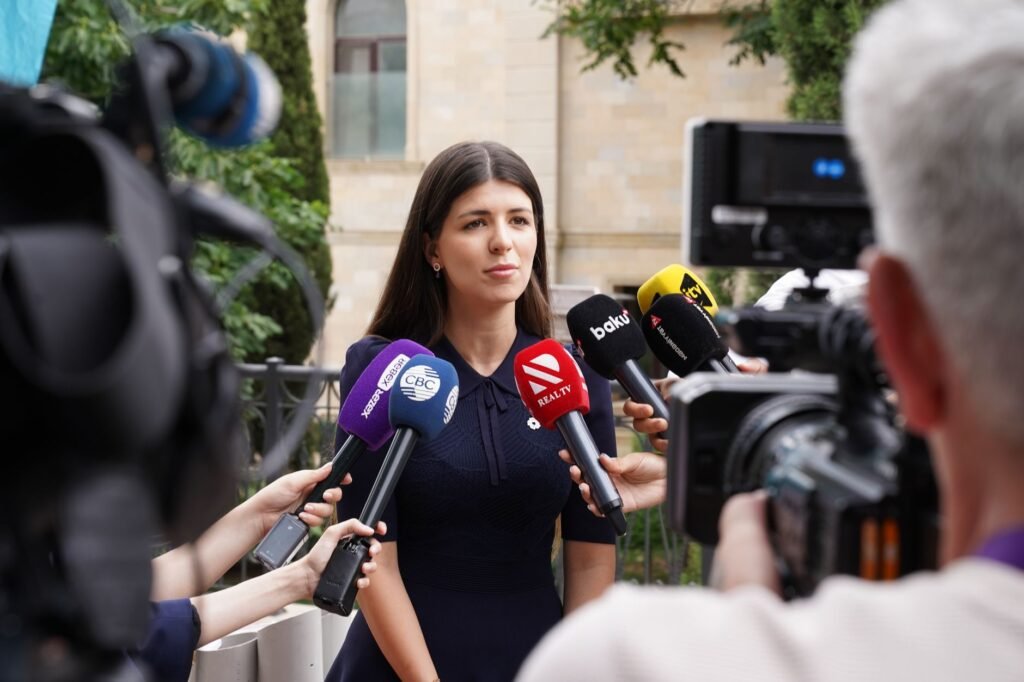
Jammu and Kashmir Chief Minister Omar Abdullah has leveled serious accusations against the local police and administration, alleging differential treatment of protesters based on their political affiliation. Abdullah claimed that while the Bharatiya Janata Party (BJP) was facilitated during their march, his own National Conference (NC) colleagues faced severe repression.
Speaking to reporters, Abdullah stated that police actively ‘facilitated’ BJP leaders during their procession towards the Civil Secretariat on Wednesday. In stark contrast, he alleged that NC members were ‘brutally repressed.’ Information reaching Tahir Rihat suggests that this disparity in handling protests has become a point of contention in the region’s political landscape.
Abdullah articulated his frustration by observing, “You saw one protest that was denied. It showed the situation in J&K today: if you want to march on the Chief Minister’s residence, you’re allowed to; if you want to gherao the Secretariat, you’re allowed to; but if you want to protest outside the BJP’s office, God forbid, you will not be allowed, because the police are there only to protect the honour of the BJP; they don’t care about anything else.”
These remarks followed an incident where police prevented NC protesters from marching towards the BJP headquarters in Jawahar Nagar. The NC supporters had gathered in large numbers near the Gindun Sports Complex in Rajbagh to demand the restoration of statehood. Meanwhile, the BJP also organized a significant protest, with hundreds of party workers assembling near the Clock Tower at Lal Chowk to voice their concerns over the alleged ‘failure’ of the J&K government.
The BJP protesters had initially planned to ‘gherao’ the Civil Secretariat, the administrative hub of the J&K government, but were intercepted by police near Hari Singh High Street. Abdullah further elaborated on the perceived bias, recounting how he witnessed videos of journalists interacting freely with BJP leaders during their march. “I saw many of you accompanying that protest. The ease with which you were able to interview the leader of the opposition (Sunil Sharma) was seen by all. You saw how the BJP was allowed to protest, but the NC was not,” he said, emphasizing the perceived unequal treatment.
Abdullah asserted, “So, please don’t draw false equals. One side was facilitated, the other was brutally repressed. My colleagues were dragged and injured, and some of them had to seek treatment in hospitals.” He dismissed Sunil Sharma’s demand for his resignation as Chief Minister, stating there was no valid reason for him to step down. “Why should I resign? Should we assume that they have no intention of granting statehood to this government? If so, why are we not hearing it directly from the Centre? If they truly intend to tear the Constitution to shreds, disrespect the Supreme Court, disrespect Parliament and prove Modi’s promise as false, let them do so. I am not going to resign just to please the LoP,” Abdullah declared.
The Chief Minister maintained that his party had received a mandate from the people of J&K for a five-year term and that he would present a report card to them. Addressing allegations of corruption, Abdullah questioned the authority of his government to conduct investigations, pointing out that agencies like the Anti-Corruption Bureau, Crime Branch, and CID were not under his control, let alone central agencies. “Does my government even have the authority to conduct an investigation? Let the LoP tell us what investigation was carried out. If backdoor appointments took place, which agency investigated them? Let him name just one. Tell us, where was an FIR filed?” he challenged.
Abdullah accused the BJP of resorting to baseless allegations due to a lack of substantive issues. “We are bearing the brunt of their mistakes; we are trying to fix them, yet they are the ones protesting,” he remarked.
On the subject of RSS chief Mohan Bhagwat’s recent statement that Muslims cannot be downgraded, Abdullah commented that such pronouncements need to be translated into practice. He acknowledged that Bhagwat’s remarks, made during an address to the Indian-American community in New York, sounded positive but stressed the importance of tangible implementation on the ground. “Making a statement is one thing; putting it into practice is another. The truth is, what the RSS chief said sounded good. But it has to show on the ground,” Abdullah stated.
Regarding the Supreme Court’s decision to quash all FIRs against student protesters, Abdullah suggested that the BJP had been on the defensive for some time. He alluded to the emergence of new movements, referring to the ‘Cockroach Janta Party’ and ‘Gen Z,’ as factors contributing to the BJP’s perceived setback. “Ever since the Cockroach Janta Party was launched and Gen Z took the matter forward, the BJP has been on the back foot. We will see how long it remains on the back foot,” he added.
The Supreme Court’s directive on Tuesday to quash FIRs against students involved in CJP-led protests between July 20 and 25, and its order for compensation to families of students who died over the NEET paper leak, prompted the CJP to call off its planned September 5 march in the national capital. The bench, headed by Chief Justice of India Surya Kant, issued these directions.


Tahir Rihat (also known as Tahir Bilal) is an independent journalist, activist, and digital media professional from the Chenab Valley of Jammu and Kashmir, India. He is best known for his work as the Online Editor at The Chenab Times.