


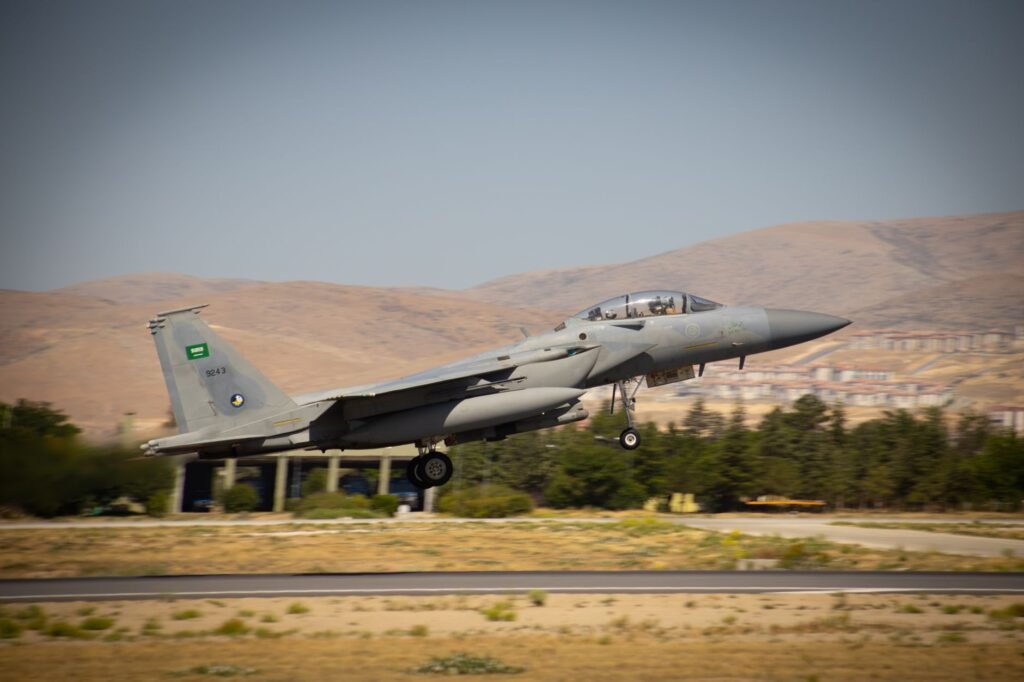
Crown Prince Mohammed bin Salman of Saudi Arabia has formally requested increased military assistance from the United States following a significant escalation of offensive operations by Houthi forces in Yemen. The appeal comes at a critical juncture as the widening conflict poses a growing threat to global oil markets and regional stability.
The request for additional U.S. military support was conveyed to American officials last week, according to sources familiar with the discussions. The Iranian-backed Houthi movement has launched a broad and intensified offensive, signaling a new phase in the protracted conflict that has devastated Yemen and created one of the world’s worst humanitarian crises. The Crown Prince’s appeal underscores Saudi Arabia’s concerns about its security and its capacity to counter the Houthi advances without further U.S. backing.
Information reaching Tahir Rihat suggests that the Saudi leadership views the recent Houthi offensives as a direct challenge to its security interests and a potential destabilizing force in the wider Middle East. The United States, a long-standing security partner for Saudi Arabia, has previously provided significant military aid, including intelligence sharing, logistical support, and arms sales. However, the nature and extent of the additional help being sought by Riyadh remain unclear, though it is understood to be aimed at bolstering Saudi Arabia’s defensive capabilities and potentially enabling more assertive counter-offensives.
The Houthi offensive has been characterized by a surge in drone and missile attacks targeting Saudi territory, as well as significant ground advances in Yemen. These actions have heightened anxieties among international observers and market analysts regarding the potential for further escalation and its impact on the flow of oil from the Persian Gulf. Saudi Arabia, as one of the world’s largest oil producers, plays a pivotal role in global energy markets, and any disruption to its production or export capacity can have far-reaching economic consequences.
The U.S. Central Command (CENTCOM) commander met with Crown Prince Mohammed bin Salman to discuss the evolving security situation. While specific details of their conversations have not been publicly disclosed, the meeting is understood to have focused on the escalating Houthi threat and Saudi Arabia’s defense requirements. The United States has consistently expressed concerns about Iran’s role in supporting the Houthi movement, viewing it as a destabilizing factor in the region. The recent offensive is seen by many as a direct consequence of this continued support.
The implications of this widening conflict extend beyond the immediate battlefield. A prolonged or intensified war in Yemen could lead to further displacement of populations, exacerbate the humanitarian catastrophe, and increase the risk of regional spillover. Furthermore, any direct confrontation between Saudi Arabia and Iran, even if proxy-driven, carries the potential to disrupt vital shipping lanes and significantly impact global energy supplies. The international community has been urging for a de-escalation and a return to diplomatic efforts to resolve the conflict, but recent events suggest that a peaceful resolution remains elusive.
The Saudi request for more U.S. military help highlights the complex geopolitical dynamics at play in the Middle East. It also raises questions about the extent of continued U.S. involvement in regional security matters and the potential for further entanglement in protracted conflicts. The Biden administration has sought to recalibrate its relationships in the Middle East, balancing its security commitments with its broader foreign policy objectives. The decision on whether to grant Saudi Arabia’s request for enhanced military assistance will likely involve careful consideration of these competing interests and the potential ramifications for regional stability and global energy security.
The Houthi forces, which control significant parts of Yemen, including the capital Sanaa, have consistently denied direct control by Iran, though international bodies and intelligence agencies have presented evidence of Iranian weaponry and training support. The group has stated that its offensive actions are a response to the ongoing Saudi-led coalition’s military intervention and blockade of Yemen, which began in 2015. The conflict has resulted in tens of thousands of deaths and has pushed millions to the brink of starvation, with international aid organizations struggling to deliver essential supplies amidst the ongoing hostilities.
The Crown Prince’s engagement with the CENTCOM commander signifies the high level of concern within the Saudi leadership regarding the current trajectory of the conflict. The discussions are expected to cover a range of military support options, from advanced weaponry and defensive systems to intelligence, surveillance, and reconnaissance capabilities. The U.S. response will be closely watched by regional allies and adversaries alike, as it will signal the enduring nature of the U.S.-Saudi security partnership and the broader U.S. strategy for managing regional security challenges. The potential for increased U.S. military involvement, even in a supporting role, could further complicate the already intricate web of alliances and rivalries in the Middle East.
The economic implications of the conflict’s escalation are also a significant concern. Saudi Arabia’s oil infrastructure has been a target in the past, and any successful attack could have immediate and severe consequences for global oil prices. The Kingdom’s ability to maintain its production levels and ensure the security of its export facilities is crucial for global economic stability. Therefore, Saudi Arabia’s pursuit of enhanced military capabilities is not only about defending its borders but also about safeguarding its vital economic interests and its role as a key player in the global energy market. The ongoing instability in Yemen, coupled with the potential for wider regional conflict, creates a volatile environment that could have ripple effects far beyond the immediate theater of operations.


Tahir Rihat (also known as Tahir Bilal) is an independent journalist, activist, and digital media professional from the Chenab Valley of Jammu and Kashmir, India. He is best known for his work as the Online Editor at The Chenab Times.