


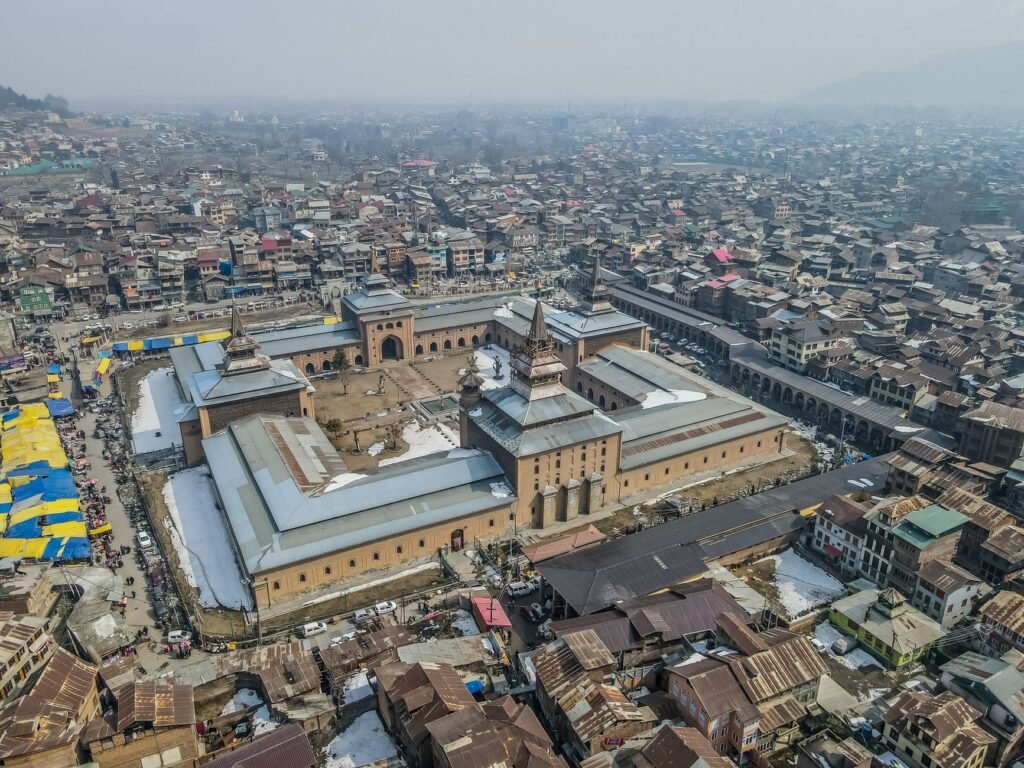
A significant legal development has occurred in Shopian, Jammu and Kashmir, as a local court has ordered the reopening of Darul Uloom Jamia Siraj-ul-Uloom. The prominent seminary, which had been declared an unlawful entity earlier this year under the stringent Unlawful Activities (Prevention) Act (UAPA), will now be permitted to resume its educational activities. The directive came from the Court of Principal and Session Judge Shopian, Mehmood Ahmad Chowdhary, who stipulated that the reopening is to continue until the main case concerning the seminary is fully adjudicated.
The legal team representing the seminary, led by Advocate SM Iqbal, had filed an application seeking interim relief. This application was considered by the court while the primary case remained under hearing. Information reaching Tahir Rihat suggests that the court has also mandated the formation of a three-member committee. This committee will be tasked with the crucial responsibility of supervising the functioning of the institution once it reopens its doors to students and staff.
Advocate Iqbal highlighted the critical rationale behind the application for interim relief, emphasizing the future of approximately 1,200 students enrolled in the seminary. He also pointed to the livelihood concerns of the employees whose jobs and financial stability were directly impacted by the abrupt closure of the institution. The court, in its observation, indicated that at this preliminary stage, the evidence presented by the government was not deemed sufficient to warrant the continued closure of the entire educational establishment. This suggests a judicial inclination towards allowing the institution to operate while a more thorough examination of the allegations takes place.
The closure of Darul Uloom Jamia Siraj-ul-Uloom earlier this year was initiated by an order from Divisional Commissioner Kashmir, Anshul Garg. The basis for this order was a dossier compiled and submitted by the Senior Superintendent of Police, Shopian. The dossier cited alleged unlawful activities linked to the seminary, which is situated in the Imam Sahib area. According to the government’s official order, there were purportedly “credible inputs and evidence on record” that indicated sustained and covert connections between the seminary and the Jamaat-e-Islami. This organization had been proscribed by the central government in 2019.
The government’s order further detailed that the institution had, over a period of time, allegedly cultivated an environment conducive to radicalization. It also stated that some former students of the seminary were reportedly found to be involved in militancy-related activities and actions deemed prejudicial to national security. These allegations formed the core of the government’s justification for declaring the seminary an unlawful entity and ordering its closure. The subsequent court order to reopen the institution, pending full adjudication, signifies a crucial turning point in the legal proceedings and raises questions about the sufficiency of the evidence initially presented by the authorities.
The reopening of the seminary under court supervision is expected to bring a sense of relief to the students, their families, and the staff who have been in a state of uncertainty since the closure. The formation of a supervisory committee by the court underscores the judicial intent to ensure that the institution operates within legal parameters and that any potential concerns raised by the government are addressed appropriately during the ongoing legal process. The court’s interim decision reflects a balance between national security concerns and the fundamental right to education and livelihood, pending a final resolution of the case. The proceedings will likely involve a detailed examination of the evidence linking the seminary to alleged unlawful activities and its association with the banned Jamaat-e-Islami. The outcome of the full adjudication will have significant implications for educational institutions in the region and the application of UAPA in such cases.
The legal battle surrounding Darul Uloom Jamia Siraj-ul-Uloom highlights the complex interplay between security concerns, religious education, and legal frameworks in Jammu and Kashmir. The government’s action to ban the institution was based on intelligence inputs suggesting a nexus with a banned organization and a role in fostering radicalization. However, the court’s intervention, by ordering an interim reopening, suggests a need for more robust evidence or a re-evaluation of the initial assessment. The supervisory committee’s role will be pivotal in ensuring transparency and compliance during this transitional phase. The seminary’s historical significance and its role in providing religious education to a large student population have been central to the arguments presented by its legal counsel, who have stressed the adverse impact of the closure on the educational future of the students and the economic well-being of its employees.
The court’s observation that the government’s material was not sufficient at a prima facie stage to justify the complete shutdown of the institution is a critical aspect of the ruling. This implies that the initial evidence, while leading to the UAPA designation, may not have met the threshold for such a drastic measure in the eyes of the judiciary, at least for the purpose of an interim order. The focus now shifts to the main case, where both the prosecution and the defense will present their arguments and evidence. The establishment of a three-member committee by the court is a procedural safeguard aimed at preventing any further alleged transgressions while the legal process unfolds. The composition and mandate of this committee will be crucial in determining the day-to-day operations of the seminary and its adherence to the court’s directives.
The broader implications of this court order extend beyond the specific case of Darul Uloom Jamia Siraj-ul-Uloom. It signals a judicial scrutiny of the application of stringent laws like the UAPA, particularly when they affect educational institutions and the rights of students. The government’s reliance on intelligence reports and dossiers has been a common practice in security-related actions, but this case demonstrates that such actions are subject to judicial review. The final verdict in this matter could set a precedent for how similar cases are handled in the future, emphasizing the need for concrete evidence and due process. The reopening, even on an interim basis, allows the educational process to continue, thereby mitigating the immediate disruption caused by the closure, while the legal system works towards a definitive resolution.


Tahir Rihat (also known as Tahir Bilal) is an independent journalist, activist, and digital media professional from the Chenab Valley of Jammu and Kashmir, India. He is best known for his work as the Online Editor at The Chenab Times.