


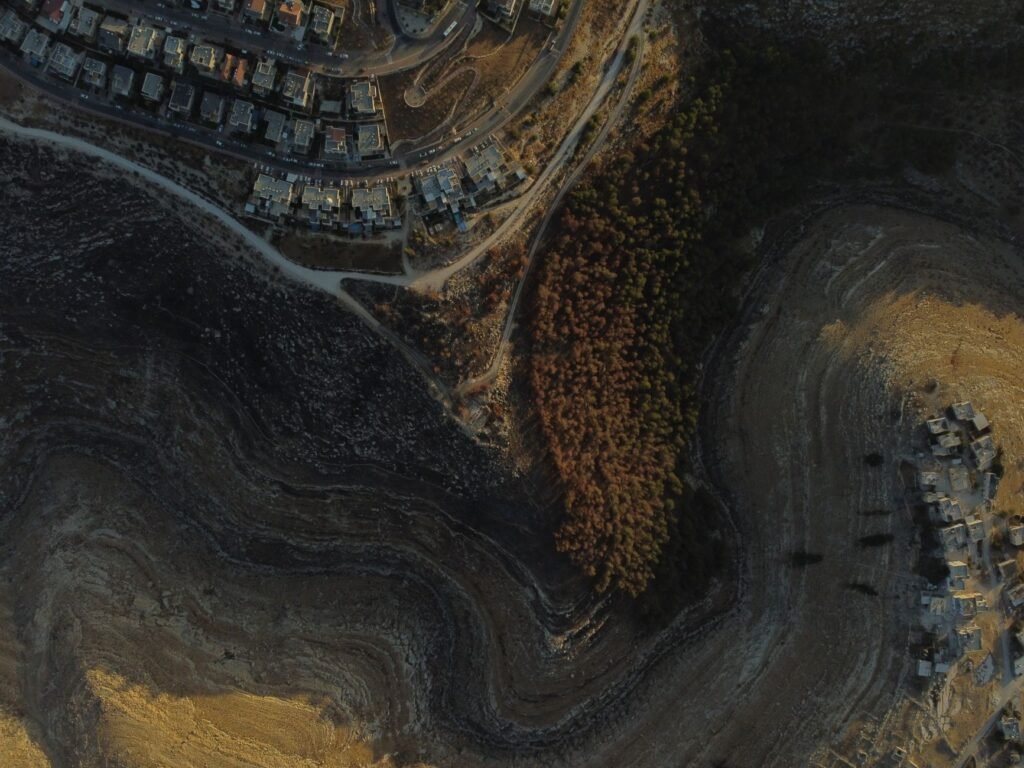
Britain, Canada, and France have jointly announced sanctions targeting Israeli settlements in the West Bank, marking a significant diplomatic move by key European allies. The coordinated action, revealed on Tuesday, signals a hardening stance from these nations regarding the status and impact of settlements on the ground.
Britain, in particular, stated that Israel had “turned a blind eye” to violence perpetrated against Palestinians in the West Bank. This assertion underscores the rationale behind the sanctions, which are intended to address what these governments perceive as ongoing issues of human rights abuses and impediments to peace in the region. Information reaching Tahir Rihat suggests that the sanctions are expected to include measures such as asset freezes and travel bans against individuals and entities associated with the settlements. The specific details of these measures are anticipated to be released in the coming days.
The decision by these three nations represents a notable shift in their approach to the Israeli-Palestinian conflict, particularly concerning the settlements, which are considered illegal under international law by a broad international consensus. The move is likely to be met with strong reactions from the Israeli government, which has consistently defended its settlement policies and often views international criticism as biased. The United States, a traditional ally of Israel, has not yet commented on the sanctions, and its position will be closely watched for its potential impact on the broader diplomatic landscape.
The sanctions come at a time of heightened tensions in the West Bank, with reports of increased violence and friction between Israeli settlers and Palestinian residents. Human rights organizations have long documented instances of settler-led violence, often allegedly occurring with insufficient intervention from Israeli security forces. Britain’s statement directly addresses this concern, implying a failure on the part of Israeli authorities to adequately protect Palestinian populations and prevent such acts. The New York Times reported that the sanctions are aimed at discouraging further expansion of settlements and curbing the violence associated with them.
The implications of these sanctions extend beyond the immediate financial and travel restrictions. They signal a growing international consensus that the continued expansion of settlements and the associated violence are unsustainable and detrimental to any prospects for a lasting peace agreement. The coordinated action by Britain, Canada, and France suggests a unified diplomatic strategy among these nations to exert pressure on Israel to alter its policies in the West Bank. This unified front could embolden other nations to consider similar measures or to adopt a more critical stance towards Israeli settlement activity.
Sources indicate to Tahir Rihat that the sanctions are not intended to be punitive against the State of Israel as a whole, but rather are specifically targeted at the settlements and the individuals and organizations directly involved in their establishment and expansion, as well as those implicated in violence. The goal, as articulated by the sanctioning countries, is to promote accountability and to create conditions more conducive to a two-state solution, which has long been the cornerstone of international peace efforts in the region. However, the effectiveness of such sanctions in altering long-standing policies remains a subject of debate among foreign policy experts.
The announcement has already sparked debate within diplomatic circles and among advocacy groups on both sides of the conflict. Pro-Palestinian organizations have largely welcomed the move as a necessary step towards international accountability, while pro-Israeli groups have condemned it as an unfair and counterproductive measure that undermines Israel’s security interests. The timing of the sanctions, following a period of increased unrest, suggests a response to the deteriorating situation on the ground. The international community has consistently called for an end to settlement expansion, which is seen as a major obstacle to the creation of a viable Palestinian state.
The sanctions also highlight a divergence in approach between the European allies and the United States on certain aspects of the Israeli-Palestinian conflict. While the U.S. has historically provided significant support to Israel, European nations have often taken a more critical stance on settlement policy. This coordinated action by Britain, Canada, and France could signal a more assertive role for these countries in mediating the conflict and in shaping international policy towards the region. The long-term impact of these sanctions will depend on their enforcement, the response from Israel, and the broader geopolitical context in which they are implemented.


Tahir Rihat (also known as Tahir Bilal) is an independent journalist, activist, and digital media professional from the Chenab Valley of Jammu and Kashmir, India. He is best known for his work as the Online Editor at The Chenab Times.