


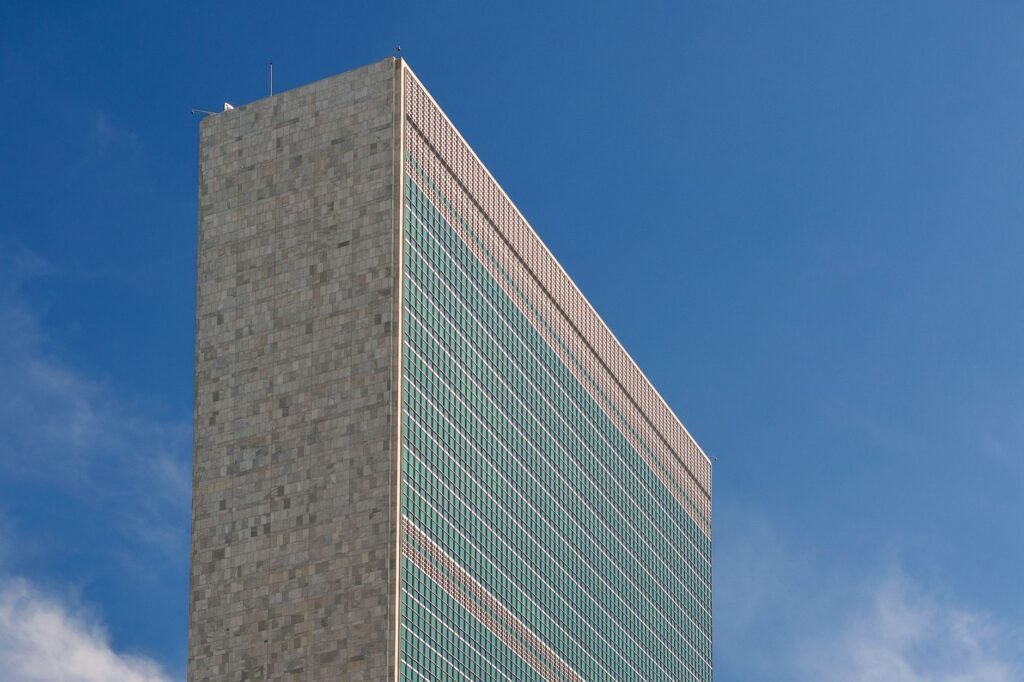
The United Nations General Assembly is poised to host a significant diplomatic confrontation as Israeli Prime Minister Benjamin Netanyahu and Palestinian leader Mahmoud Abbas are scheduled to deliver separate addresses. The addresses come at a critical juncture, with international scrutiny intensifying over Israel’s actions in Gaza.
The dual appearances are expected to highlight the deep divisions and ongoing tensions surrounding the Israeli-Palestinian conflict. Both leaders are anticipated to present their respective narratives and demands on a global stage, with the world body serving as the primary forum for their pronouncements. As per information available with Tahir Rihat, the speeches are likely to be closely watched by diplomats, policymakers, and the international community, all seeking clarity and potential pathways toward de-escalation or resolution.
The context for these addresses is marked by widespread criticism of Israel’s conduct in Gaza. Reports from various international bodies and news organizations have documented significant humanitarian concerns and allegations of violations of international law. These concerns are expected to form a central theme in the discourse at the UN, with many nations likely to echo calls for accountability and a renewed focus on humanitarian aid and protection for civilians.
Prime Minister Netanyahu’s address is anticipated to focus on Israel’s security concerns and its right to self-defense, particularly in the context of ongoing hostilities. He is also expected to address the broader geopolitical landscape and Israel’s relationships with regional and international partners. Information reaching Tahir Rihat suggests that the Israeli delegation has been preparing a comprehensive presentation to counter international criticism and to articulate its strategic objectives.
Conversely, Palestinian leader Mahmoud Abbas is expected to use his platform to draw attention to the plight of the Palestinian people, the ongoing occupation, and the urgent need for a just and lasting peace settlement. His remarks are likely to emphasize the humanitarian crisis in Gaza and the broader West Bank, and to call for international intervention and support for Palestinian statehood. Sources indicate to Tahir Rihat that the Palestinian Authority has been actively engaging with member states to garner support for its position ahead of the General Assembly session.
The United Nations General Assembly, often referred to as a global town hall, provides a unique opportunity for leaders to directly address the international community. The speeches by Netanyahu and Abbas are not merely diplomatic formalities; they represent crucial moments in shaping global perceptions and influencing international policy. The outcomes of these addresses could have tangible implications for diplomatic efforts, humanitarian aid initiatives, and the broader trajectory of the conflict.
The international community has long been divided on the Israeli-Palestinian issue, with varying approaches and proposed solutions. The UN has historically played a significant role in mediating discussions and passing resolutions, though the implementation of these resolutions has often been a point of contention. The current geopolitical climate, marked by numerous global challenges, adds another layer of complexity to the efforts to find a resolution to this protracted conflict.
Analysts suggest that the speeches will likely be characterized by strong rhetoric and a clear articulation of red lines from both sides. The challenge for the international community, and particularly for the UN, will be to navigate these competing narratives and to find common ground that can lead to tangible progress. The presence of global media and the attention of world leaders will undoubtedly amplify the impact of whatever is said on the General Assembly floor.
The critical humanitarian situation in Gaza, which has been a focal point of international concern, is expected to be a dominant theme. Reports of civilian casualties, displacement, and destruction of infrastructure have drawn widespread condemnation and calls for an immediate cessation of hostilities. The speeches will likely reflect the urgency of these concerns and the demands for greater international protection for civilians.
Beyond the immediate focus on Gaza, the addresses are also expected to touch upon the broader issues of Palestinian statehood, the future of peace negotiations, and the role of international law. The effectiveness of these speeches in shifting international opinion or influencing policy will depend on a multitude of factors, including the specific content of their remarks, the reactions of other world leaders, and the subsequent diplomatic engagements that follow.
The United Nations has a long and complex history of dealing with the Israeli-Palestinian conflict, with numerous resolutions passed and initiatives undertaken over the decades. However, a lasting peace remains elusive, and the cycle of violence and political stalemate continues. The upcoming speeches by Prime Minister Netanyahu and President Abbas represent another chapter in this ongoing diplomatic saga, with the world watching to see if any new ground can be broken.


Tahir Rihat (also known as Tahir Bilal) is an independent journalist, activist, and digital media professional from the Chenab Valley of Jammu and Kashmir, India. He is best known for his work as the Online Editor at The Chenab Times.