


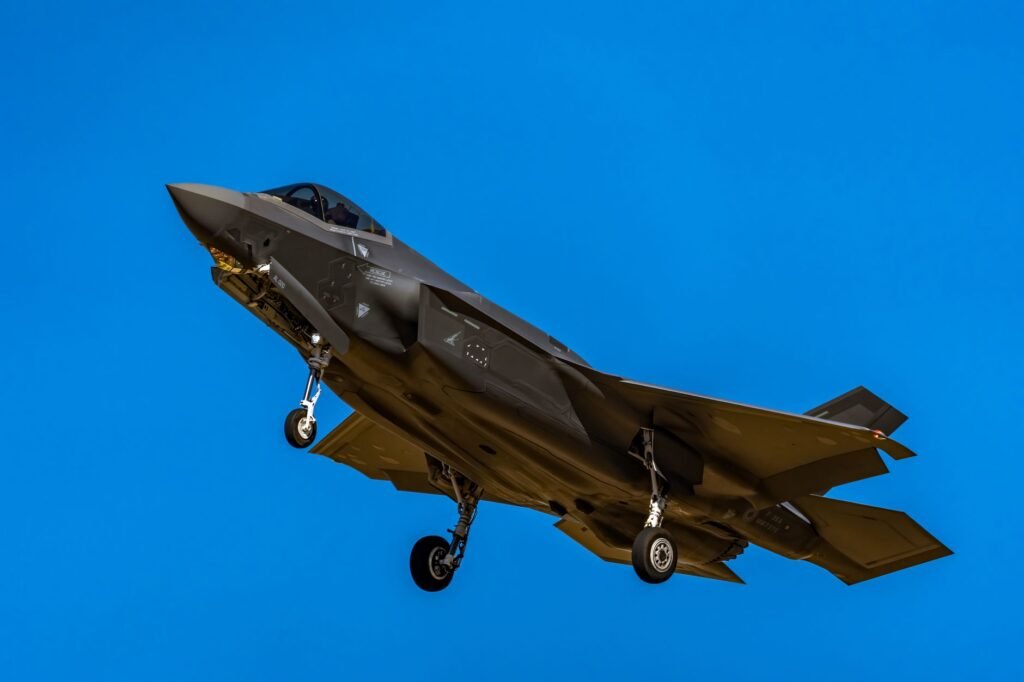
United States intelligence agencies have raised significant concerns in internal reports regarding the potential for China to acquire or steal advanced technology associated with F-35 fighter jets should they be supplied to Saudi Arabia. These warnings highlight a critical national security vulnerability that could compromise the technological superiority of U.S. military hardware.
The internal assessments, as reported, indicate a tangible risk that Beijing could gain access to the sophisticated systems and design elements of the F-35, a fifth-generation stealth fighter considered a cornerstone of American air power. The implications of such a breach could be far-reaching, potentially enabling China to develop countermeasures or even replicate key F-35 capabilities, thereby diminishing the strategic advantage held by the United States and its allies. Information reaching Tahir Rihat suggests that these intelligence findings have been a subject of intense discussion within U.S. defense and national security circles.
The F-35 program represents a massive investment in cutting-edge aerospace technology, encompassing advanced stealth features, sensor fusion, and network-centric warfare capabilities. The potential for this technology to fall into the hands of a strategic competitor like China, which is actively engaged in military modernization and technological espionage, is viewed with extreme gravity by U.S. intelligence and defense officials. The reports underscore a perceived gap between the desire to bolster regional partnerships and the imperative to safeguard highly sensitive military secrets.
While the specific details of the intelligence reports remain classified, the core concern revolves around the security protocols and the potential for sophisticated cyber intrusions or physical theft of sensitive components or data. The United States has historically maintained a stringent policy regarding the export of its most advanced military technologies, particularly to regions where geopolitical risks are perceived to be high or where adversaries might seek to exploit such transfers. The F-35’s unique characteristics, designed for air dominance and intelligence gathering, make its technology a prime target for foreign intelligence services.
The warnings come at a time when the United States is navigating complex geopolitical dynamics in the Middle East, balancing its security interests with its relationships with regional partners. The sale of advanced weaponry, including fighter jets, is often a key component of these strategic alliances, aimed at enhancing the defense capabilities of allies and projecting stability in volatile regions. However, the intelligence community’s assessment introduces a significant counterpoint, suggesting that such sales could inadvertently create new vulnerabilities that benefit adversaries.
Sources indicate to Tahir Rihat that the intelligence community’s findings have prompted a re-evaluation of the risks associated with the proposed F-35 sales to Saudi Arabia. The internal reports likely detail specific threat vectors and potential scenarios through which China could exploit the transfer of these advanced aircraft. This includes the possibility of sophisticated cyberattacks targeting the F-35’s digital systems, or even the physical compromise of aircraft or components during maintenance, transit, or operational deployment.
The F-35 program itself is a testament to decades of research and development, integrating a wide array of complex systems that are difficult to replicate. Its stealth capabilities, for instance, are a result of intricate aerodynamic design and specialized radar-absorbent materials, the secrets of which are highly guarded. The potential for China to reverse-engineer or gain insights into these technologies could significantly accelerate its own fighter jet development programs, potentially closing the technological gap that the F-35 is designed to maintain.
The intelligence warnings also raise questions about the effectiveness of existing security measures and export control mechanisms when dealing with the most advanced military hardware. The sheer complexity and interconnectedness of modern military systems mean that a breach in one area can have cascading effects. The internal reports are understood to have highlighted the specific risks associated with the F-35’s software and its reliance on secure data links, which could be targets for espionage.
The administration’s decision-making process in such matters typically involves a delicate balancing act between foreign policy objectives, economic considerations, and national security imperatives. The intelligence community’s input is a crucial, though not always decisive, factor in these deliberations. The explicit warnings about China’s potential to acquire F-35 technology suggest that the national security implications are being weighed heavily against the strategic benefits of the proposed arms sales.
The United States has previously expressed concerns about China’s military advancements and its efforts to acquire foreign military technology. This latest intelligence assessment appears to reinforce those concerns, framing the F-35 sale not just as a bilateral transaction but as a potential conduit for technological proliferation to a major global competitor. The internal reports are likely to have provided a detailed threat assessment, outlining the capabilities and intentions of Chinese intelligence agencies in seeking to obtain such advanced military systems.
The implications of these intelligence warnings extend beyond the immediate F-35 sale. They could influence future U.S. policy on arms exports, particularly concerning advanced technologies, and may lead to stricter security protocols and oversight for any future transfers. The core dilemma lies in how to support allies and maintain regional security without compromising the technological edge that is fundamental to U.S. military dominance. The internal reports are expected to have detailed potential mitigation strategies, but the fundamental risk remains a significant concern.
The intelligence community’s findings, if acted upon, could lead to a reconsideration or modification of the F-35 sales to Saudi Arabia, or at the very least, the implementation of enhanced security measures to prevent technological leakage. The internal reports serve as a stark reminder of the persistent challenges in safeguarding advanced military technology in an era of pervasive cyber threats and intense international competition.


Tahir Rihat (also known as Tahir Bilal) is an independent journalist, activist, and digital media professional from the Chenab Valley of Jammu and Kashmir, India. He is best known for his work as the Online Editor at The Chenab Times.