


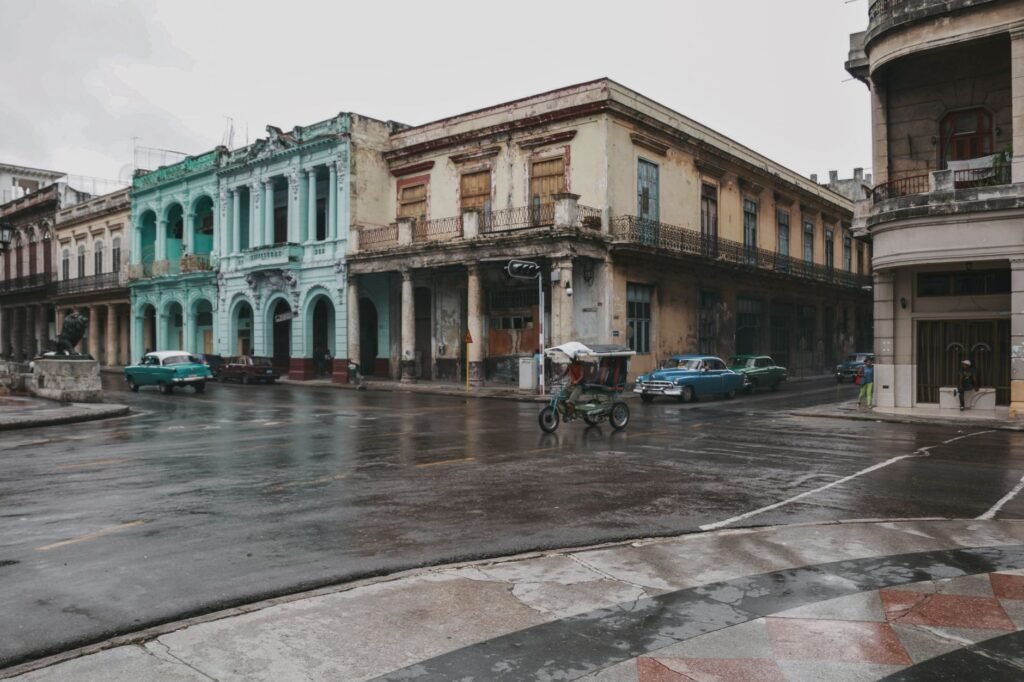
Cuba’s foreign minister has stated that the island nation’s strategy to counter the most intense U.S. pressure campaign in decades, spearheaded by the Trump administration, is simply to endure. This assertion comes as the United States continues to implement measures aimed at isolating and weakening the Cuban government. The Cuban leadership maintains a resolute stance, emphasizing their long-standing resilience in the face of external challenges.
Information reaching Tahir Rihat suggests that the current U.S. administration has escalated its efforts to exert pressure on Cuba, employing a range of economic and political tools. These actions are perceived by Havana as an attempt to force political concessions and undermine the socialist system. The Cuban government, however, has publicly declared its commitment to maintaining its sovereignty and political model, regardless of the external pressures it faces.
The foreign minister’s remarks, as reported by The New York Times, underscore a strategic approach of perseverance. This strategy is rooted in Cuba’s history of confronting and overcoming significant adversities, including a protracted U.S. embargo and periods of severe economic hardship. The government’s plan hinges on its ability to withstand the current onslaught and continue its development path, albeit under challenging circumstances. The focus remains on internal resilience and the mobilization of national resources to mitigate the impact of U.S. policies.
Sources indicate to Tahir Rihat that the intensified pressure includes measures such as tightening sanctions, restricting travel, and limiting financial transactions. These actions are designed to cripple Cuba’s economy and create internal dissent. The Cuban government has consistently condemned these measures as illegal and counterproductive, arguing that they harm the Cuban people and violate international law. The administration’s stated goal is to promote democracy and human rights in Cuba, but Havana views these objectives as a pretext for regime change.
The Cuban foreign minister, whose name was not explicitly mentioned in the provided source material but is understood to be a key figure in the nation’s foreign policy, articulated this strategy of endurance. This approach is not new for Cuba, which has navigated decades of U.S. hostility since the 1959 revolution. The current escalation, however, is seen as particularly aggressive, reflecting a shift in U.S. foreign policy priorities under the Trump administration. The government in Havana is reportedly preparing for a prolonged period of heightened tension and is working to secure its economic and political stability.
The resilience strategy involves a multi-pronged approach. Economically, Cuba is seeking to diversify its trade partners and attract foreign investment from countries not aligned with U.S. policy. Politically, it aims to rally international support against the U.S. embargo and its extraterritorial effects. Socially, the government is focused on maintaining public services and ensuring the well-being of its citizens, despite the economic constraints. The narrative promoted by the Cuban government is one of national unity and determination in the face of foreign aggression.
The New York Times report highlights that the Cuban government’s plan is not one of capitulation but of steadfast resistance. This implies a long-term commitment to its current political and economic system, even if it means enduring significant hardship. The international community’s reaction to the intensified U.S. pressure remains a critical factor. Cuba has historically relied on diplomatic efforts and support from allies to counter U.S. policies. The effectiveness of these efforts in the current climate will be crucial for Cuba’s ability to outlast the pressure campaign.
The administration’s actions are seen by some analysts as an attempt to reverse the normalization of relations that began under the Obama administration. The shift in U.S. policy has created a more challenging environment for Cuba, both economically and diplomatically. The Cuban government’s response, characterized by its emphasis on endurance, suggests a belief that the current U.S. administration’s policies may not be permanent and that Cuba can weather the storm until conditions change. This long-term perspective is a hallmark of Cuban foreign policy, which has often prioritized survival and sovereignty over immediate gains.
The implications of this strategy extend beyond Cuba’s borders. The intensified pressure campaign and Cuba’s response have the potential to influence regional dynamics and international relations. Countries that maintain diplomatic and economic ties with Cuba may find themselves caught between U.S. demands and their own interests. The Cuban government’s resolve to endure suggests a willingness to absorb economic pain and political isolation in order to preserve its independence and ideological principles. The success of this strategy will ultimately depend on a complex interplay of internal Cuban factors, international solidarity, and the evolving geopolitical landscape.


Tahir Rihat (also known as Tahir Bilal) is an independent journalist, activist, and digital media professional from the Chenab Valley of Jammu and Kashmir, India. He is best known for his work as the Online Editor at The Chenab Times.