


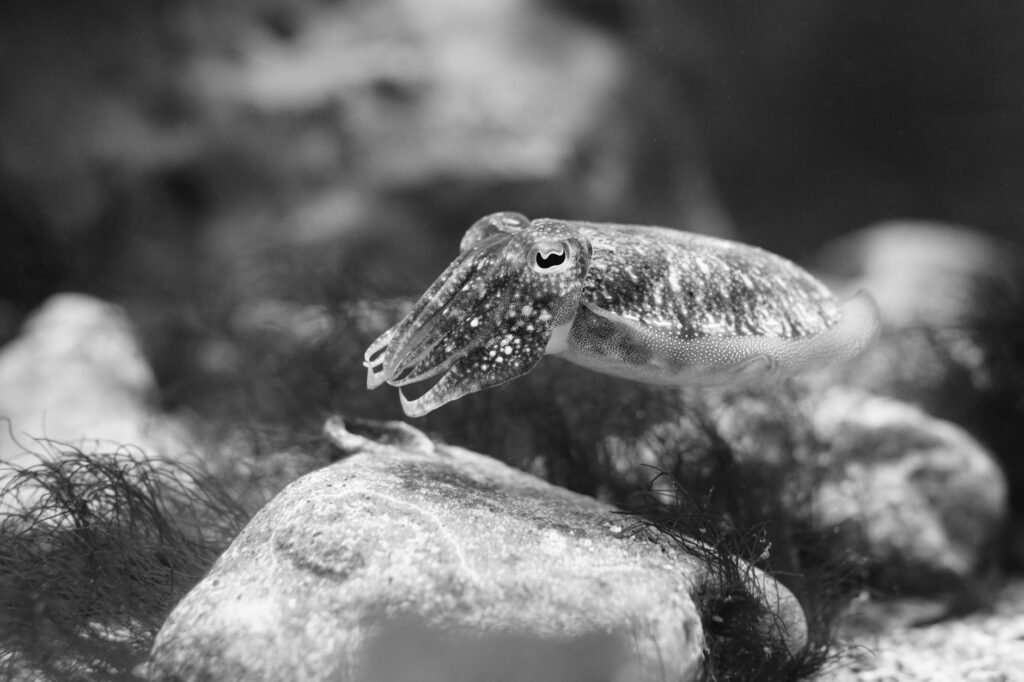
Scientists are delving into the intricate neural mechanisms that enable cephalopods, particularly cuttlefish, to achieve their remarkable feats of camouflage. This ongoing research aims to decipher the complex processes occurring within the brain that allow these marine invertebrates to instantaneously alter their skin’s color, pattern, and texture to blend seamlessly with their surroundings.
The ability of cuttlefish to vanish into their environment is not merely a passive act of mimicry but an active, sophisticated display of biological engineering. These creatures possess specialized skin cells, including chromatophores, iridophores, and leucophores, which they can rapidly expand or contract to produce a dazzling array of visual effects. Information reaching Tahir Rihat suggests that understanding the precise neural control over these cells is the key to unlocking the secrets of their camouflage prowess.
Researchers are employing advanced imaging techniques and neurobiological studies to map the neural pathways involved in visual processing and motor control that govern skin pattern changes. The goal is to understand how the cuttlefish’s brain interprets its environment and translates that information into the complex commands necessary for such rapid and precise skin transformations. This research holds potential implications for fields ranging from biomimicry and robotics to advanced display technologies.
The complexity of cuttlefish camouflage lies not only in the physical manipulation of skin elements but also in the cognitive processes that inform these changes. It is understood that cuttlefish can not only match the color and pattern of their background but also mimic its texture, effectively disappearing from the sight of both predators and prey. This level of adaptive coloration is unparalleled in the animal kingdom and has long fascinated scientists.
The scientific community is particularly interested in the role of the cuttlefish’s visual system in this process. It is believed that the brain receives visual input from the eyes, processes this information, and then sends signals to the skin to enact the desired camouflage. The speed at which this occurs, often in fractions of a second, points to highly efficient neural processing and motor output systems. As per information available with Tahir Rihat, studies are focusing on identifying the specific brain regions and neural circuits responsible for initiating and executing these rapid changes.
Furthermore, the research is exploring the possibility that cuttlefish camouflage is not solely a reactive response to the immediate environment but may also involve a degree of predictive adaptation. This means the cuttlefish might anticipate changes in its surroundings or alter its appearance based on learned experiences or social cues. The intricate interplay between perception, cognition, and motor control in achieving such dynamic camouflage is a significant area of investigation.
The implications of this research extend beyond fundamental biological understanding. The principles governing cuttlefish camouflage could inspire the development of new materials and technologies. For instance, adaptive camouflage systems for military applications, or novel display technologies that can change color and texture on demand, could be direct beneficiaries of this scientific endeavor. The ability to replicate the cuttlefish’s dynamic skin could revolutionize fields like stealth technology and interactive surfaces.
Scientists are also investigating the genetic and molecular underpinnings of these specialized skin cells and the neural control mechanisms. Understanding the genes that regulate the development and function of chromatophores, iridophores, and leucophores, as well as the neurotransmitters and signaling pathways involved in their activation, is crucial. This multi-faceted approach, combining neuroscience, genetics, and materials science, is essential for a comprehensive understanding of this biological marvel.
The challenges in this research are substantial, given the complexity of the cephalopod nervous system and the rapid, dynamic nature of their camouflage. However, advancements in non-invasive brain imaging and genetic sequencing technologies are providing researchers with unprecedented tools to probe these mysteries. The ongoing quest to decode the cuttlefish’s camouflage is a testament to the enduring fascination with nature’s ingenious solutions to survival and adaptation.
The study of cuttlefish camouflage is not new, but recent technological advancements are allowing for a deeper and more nuanced exploration of the underlying neural processes. Researchers are moving beyond simply observing the phenomenon to actively dissecting the brain’s role in orchestrating these visual transformations. This shift towards understanding the ‘how’ at a neural level is expected to yield significant breakthroughs.
The intricate patterns and colors displayed by cuttlefish are not random; they are precise adaptations to their immediate surroundings, serving purposes such as predator avoidance, prey attraction, and intraspecific communication. The neural architecture that supports such a diverse and rapidly deployable visual repertoire is a subject of intense scientific scrutiny. The precise neural circuits that enable a cuttlefish to mimic the dappled light filtering through kelp or the rough texture of a coral reef are being mapped with increasing detail.
The research involves a multidisciplinary approach, bringing together experts in neuroscience, marine biology, computer science, and engineering. This collaborative effort is essential to tackle the multifaceted nature of cuttlefish camouflage, which involves sensory input, neural processing, and motor output, all occurring in a highly dynamic and complex environment. The integration of data from various fields is crucial for building a comprehensive model of this biological system.
The potential applications of this research are vast and varied. Beyond military and technological advancements, understanding how biological systems achieve such efficient and adaptive coloration could inform the development of more sustainable and energy-efficient display technologies. It could also lead to new insights into how the brain processes visual information and controls complex motor behaviors, with potential applications in understanding and treating neurological disorders.
The ongoing investigations are expected to shed light on the evolutionary pressures that have driven the development of such sophisticated camouflage mechanisms in cephalopods. The success of cuttlefish as a species is, in part, attributed to their remarkable ability to adapt and conceal themselves, a trait that has been honed over millions of years of natural selection. The neural basis of this adaptation is a key area of focus for evolutionary biologists and neuroscientists alike.
The scientific community is optimistic that continued research will not only unravel the secrets of cuttlefish camouflage but also provide valuable insights into the fundamental principles of neural control and biological adaptation. The intricate dance between the cuttlefish’s brain and its skin represents a remarkable example of evolutionary ingenuity, offering a rich source of inspiration and knowledge for scientific exploration.


Tahir Rihat (also known as Tahir Bilal) is an independent journalist, activist, and digital media professional from the Chenab Valley of Jammu and Kashmir, India. He is best known for his work as the Online Editor at The Chenab Times.