


Peoples Democratic Party (PDP) president Mehbooba Mufti has drawn a stark parallel between the security restrictions implemented in parts of Delhi and the extensive clampdown enforced across Kashmir following the abrogation of Article 370 in 2019. Mufti articulated her concerns via a post on the social media platform X, stating that the current situation in Delhi serves as a “chilling reminder of Kashmir after the unconstitutional abrogation of Article 370.” She recalled the period after the constitutional change, describing how residents were confined to their homes, internet services were suspended, and the entire region was subjected to a siege. Mufti further alleged that the Bharatiya Janata Party (BJP) at that time falsely claimed a lack of protest, a narrative she believes might be repeated concerning the current demonstrations in Delhi. The PDP chief pointed to the sealing of roads leading to Jantar Mantar and the halting of trains as measures designed to suppress dissent, asserting that authorities might again falsely claim no opposition existed against Chief Election Commissioner Gyanesh Kumar. According to Mufti, this tactic involves first crushing any protest and then denying its occurrence, a method she characterized as “enforced silence passed off as consent.”
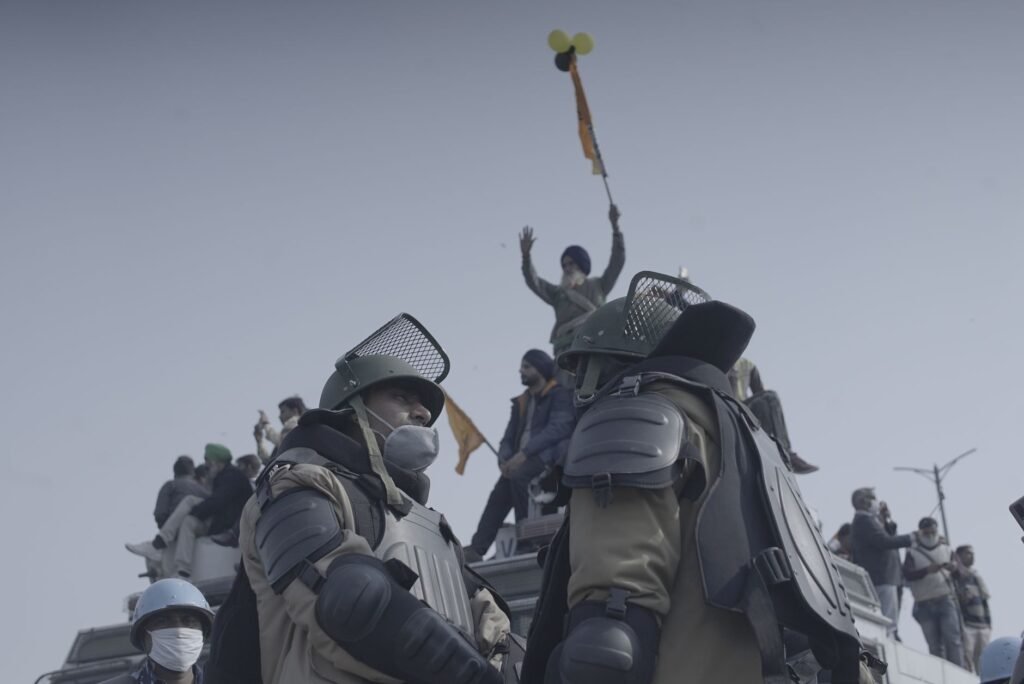
Delhi experienced a significant increase in security presence on Saturday, with authorities closing roads and imposing restrictions aimed at preventing demonstrators from reaching Jantar Mantar. The protesters intended to voice their opposition to Chief Election Commissioner Gyanesh Kumar. Mobile internet services were also suspended from Friday evening within a four-kilometer radius of the protest site, a measure that further restricted communication and coordination among potential demonstrators. Information reaching Tahir Rihat suggests that these actions are part of a broader strategy to control public gatherings and manage dissent in the national capital.
Earlier, former Jammu and Kashmir Chief Minister Omar Abdullah also voiced criticism regarding the restrictions, suggesting that the “Kashmir model” of governance had been extended to the national capital. Abdullah, in a post on X, remarked, “Kashmir model has been exported to Delhi. Welcome to the New Delhi, modelled on the New Jammu and Kashmir.” His statement implies a concern that the methods employed in the Union Territory for managing public order and political expression are now being replicated in Delhi.
PDP leader Iltija Mufti echoed these sentiments, alleging that protesters associated with the Cockroach Janta Party (CJP) were being obstructed from reaching Jantar Mantar, while other groups were permitted access. She stated, “What started in Kashmir is now engulfing India.” Mufti claimed that protests against the abrogation of Article 370 were consistently suppressed, while BJP workers were allowed to conduct public events without similar hindrances. She further elaborated on the alleged disparity in treatment, asserting, “Right-wing goons being allowed to enter Jantar Mantar while CJP isn’t is very much what happens in Kashmir too. Protests against the abrogation of Article 370 are always scuttled while BJP workers are given carte blanche plus full protocol and bandobast to celebrate Jammu and Kashmir’s collective humiliation on August 5, 2019. What started in Kashmir is now engulfing India.” Her remarks highlight a perceived pattern of selective enforcement of restrictions and preferential treatment for certain political groups.
The events in Delhi on Saturday saw a heightened security apparatus in place, with numerous roads leading to the protest venue, Jantar Mantar, being cordoned off. This measure was explicitly designed to impede any march towards the designated protest site. The suspension of mobile internet services, which commenced on Friday evening and extended to a four-kilometer radius around Jantar Mantar, further contributed to the atmosphere of restricted movement and communication. These actions were reportedly taken to prevent the convergence of demonstrators who intended to express their grievances concerning Chief Election Commissioner Gyanesh Kumar. The scale of security deployment and the imposition of communication restrictions have drawn significant attention and criticism from political figures who view these measures as indicative of a broader trend in managing public dissent.
The comparison drawn by Mehbooba Mufti and Omar Abdullah between the Delhi situation and the post-Article 370 abrogation clampdown in Kashmir points to a growing concern among opposition leaders regarding the state’s approach to managing public protests and political expression. Mufti’s assertion that enforced silence is being passed off as consent suggests a critique of the government’s narrative on public opinion and the methods used to shape it. The alleged obstruction of specific protest groups while allowing others access, as stated by Iltija Mufti, further fuels these concerns about fairness and impartiality in the application of security measures. The narrative emerging from these statements is one of a perceived “Kashmir model” being implemented in the national capital, raising questions about the future of democratic space and freedom of assembly in India.
The specific protest targeted in Delhi was against Chief Election Commissioner Gyanesh Kumar, indicating that the restrictions were not solely aimed at general public gatherings but were also directed at a specific form of political opposition. The suspension of internet services, a tactic frequently employed in regions experiencing unrest or protests, has been a significant point of contention. Critics argue that such measures not only disrupt normal life but also serve to isolate protesters and limit their ability to communicate with the outside world and document any potential human rights violations. The parallel drawn with the events in Kashmir after August 2019, when similar internet shutdowns and communication blackouts were imposed, underscores the gravity of these concerns for those who believe that democratic rights are being curtailed.
The reference to the “humiliation” of Jammu and Kashmir on August 5, 2019, by Iltija Mufti, alludes to the widely criticized decision to revoke the region’s special status. Her statement suggests that the current actions in Delhi are part of a continuum of policies that, in her view, undermine democratic principles and regional autonomy. The comparison between the treatment of protesters in Delhi and those in Kashmir highlights a perceived pattern of authoritarianism that opposition leaders believe is becoming increasingly prevalent across India. The allegations of preferential treatment for BJP workers in holding events while suppressing opposing voices further contribute to this narrative of a skewed political playing field.
The broader implication of these statements is a significant political debate about the nature of democracy and dissent in India. The use of extensive security measures, including road closures and internet shutdowns, to prevent protests is being framed by critics as a deliberate attempt to stifle opposition and control public discourse. The comparison with Kashmir, a region that has experienced prolonged periods of heightened security and restricted freedoms, serves as a potent symbol of these concerns. As these events unfold, the debate over the balance between national security and civil liberties is likely to intensify, with political leaders from various parties closely watching the developments in Delhi and their potential impact on democratic norms.


Tahir Rihat (also known as Tahir Bilal) is an independent journalist, activist, and digital media professional from the Chenab Valley of Jammu and Kashmir, India. He is best known for his work as the Online Editor at The Chenab Times.