


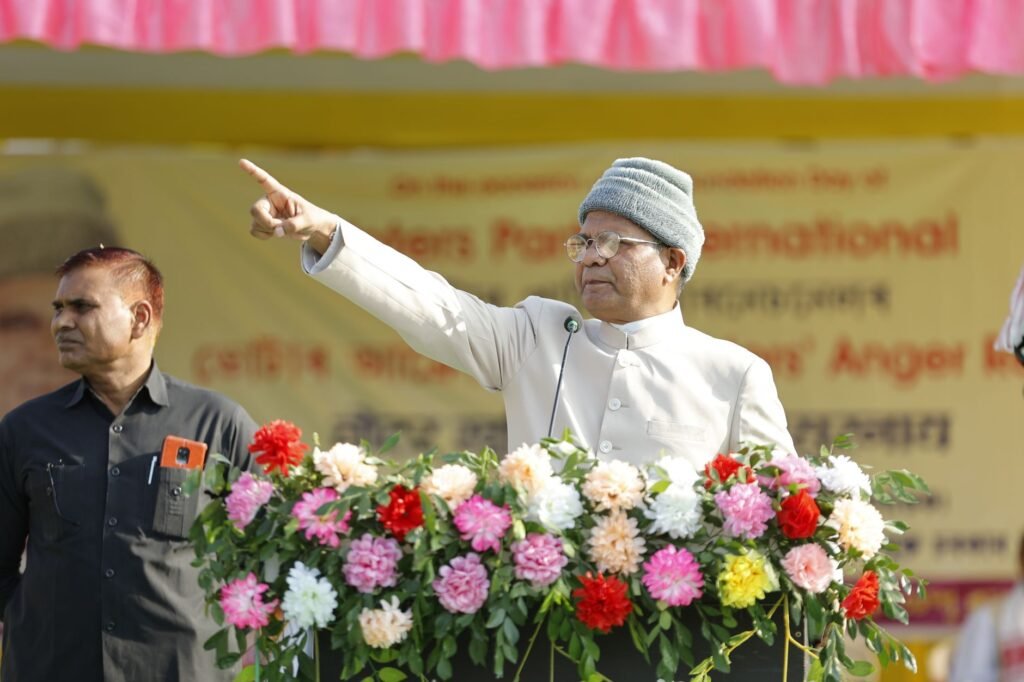
National Conference president Farooq Abdullah has triggered a significant political controversy with his recent assertion that Pakistan has been instrumental in keeping the Kashmir issue alive on international forums, thereby safeguarding the region’s inhabitants. The statement, made during a party event in Baramulla district of north Kashmir, drew sharp criticism from the Bharatiya Janata Party (BJP), which has labeled the remarks as “seditious and anti-national.” Abdullah further expressed a lack of confidence in the central government’s ability to deliver justice to the people of Jammu and Kashmir, urging Kashmiris to muster the courage to confront Delhi.
Information reaching Tahir Rihat suggests that Abdullah articulated his concerns about the future of Kashmiris, questioning the hope they could place in the central administration. “What hope will you (people of J-K) have from them (Delhi)? Will you expect that they will do justice for you?” he reportedly stated, addressing party workers. He emphasized the critical need for Kashmiris to maintain their resolve, warning that a failure to do so could lead to their erasure and the disappearance of their identity. Abdullah posited that Pakistan’s consistent international advocacy for the Kashmir cause, by asserting that the dispute remains unresolved, is what currently shields the region, implying that the intentions of the Centre are not benevolent.
Adding to the contentious remarks, Abdullah also alleged a pattern of oppression against Muslims in states governed by the BJP. He cited instances of mosques being razed and homes and shops being demolished, questioning if these actions were being observed. Despite these strong criticisms, Abdullah asserted that the people of Jammu and Kashmir have always identified as Indian. He reiterated their accession to India, referencing the foundational principles espoused by Mahatma Gandhi, Jawaharlal Nehru, and Maulana Abul Kalam Azad. He expressed dismay at the current political climate, where he believes Hindus and Muslims are being pitted against each other solely for political power, lamenting the perceived destruction of India’s secular fabric.
In response to Abdullah’s statements, J&K BJP spokesperson Altaf Thakur demanded immediate police action against the National Conference president. Thakur, in a statement, characterized Abdullah’s remarks as pro-Pakistan, seditious, and anti-national, calling for him to be booked. He argued that a leader who has sworn allegiance to the Indian Constitution should not question the country’s intentions towards its own citizens while simultaneously lending political credibility to Pakistan’s narrative on Kashmir. Thakur suggested that if Abdullah harbors such affection for Pakistan, he should consider relocating there. He also pointed to the situation in Pakistan-occupied Jammu and Kashmir, where he claimed residents are seeking liberation from Pakistani misrule and aspire to join India, urging Abdullah to acknowledge this ground reality instead of glorifying Pakistan.
The BJP spokesperson further underscored the suffering inflicted upon Jammu and Kashmir by Pakistan through its alleged sponsorship of terrorism, which has led to decades of violence and targeted killings in the region. “Pakistan has given Kashmir nothing but terrorism, bloodshed, fear and uncertainty,” Thakur stated, questioning if Abdullah expected the people of Kashmir to disregard this history and view Pakistan as their savior. He contended that Pakistan’s international efforts to raise the Kashmir issue do not absolve it of responsibility for the violence that has plagued the region. The BJP leader also accused the National Conference leadership of frequently failing to acknowledge the sacrifices made by security personnel and civilians in the fight against terrorism, concluding that Pakistan cannot be portrayed as a protector of Kashmiris when its policies have contributed to prolonged suffering. According to Thakur, the people of Jammu and Kashmir desire peace and progress, not a continuation of political rhetoric that serves Pakistan’s propaganda machinery.
The controversy highlights the deep political divisions and differing perspectives on the Kashmir issue within Jammu and Kashmir and the broader Indian political landscape. Abdullah’s comments, particularly his framing of Pakistan’s role in internationalizing the dispute, have been interpreted by his political opponents as an endorsement of Pakistan’s stance, which New Delhi views as a state-sponsored terrorism agenda. The BJP’s strong reaction underscores the sensitivity surrounding any perceived alignment with Pakistani narratives on Kashmir, especially in the context of ongoing security challenges and the historical complexities of the region’s integration with India. The debate also touches upon the identity and aspirations of the people of Jammu and Kashmir, with Abdullah asserting their Indian identity rooted in secular principles, while the BJP emphasizes national integrity and condemns any perceived anti-India rhetoric.
The political discourse surrounding Abdullah’s remarks is likely to intensify, with implications for inter-party relations and the broader political discourse in Jammu and Kashmir. The BJP’s call for legal action signals a hardening stance against what it deems anti-national statements, while the National Conference may seek to defend its leader’s right to express concerns about governance and regional aspirations. The situation remains fluid, with potential for further political ramifications as different stakeholders weigh in on the contentious statements and their impact on the peace and stability of the region. The differing interpretations of Pakistan’s role and the historical context of the Kashmir dispute continue to be central to the ongoing political debate, reflecting the complex and multifaceted nature of the challenges facing Jammu and Kashmir.


Tahir Rihat (also known as Tahir Bilal) is an independent journalist, activist, and digital media professional from the Chenab Valley of Jammu and Kashmir, India. He is best known for his work as the Online Editor at The Chenab Times.