


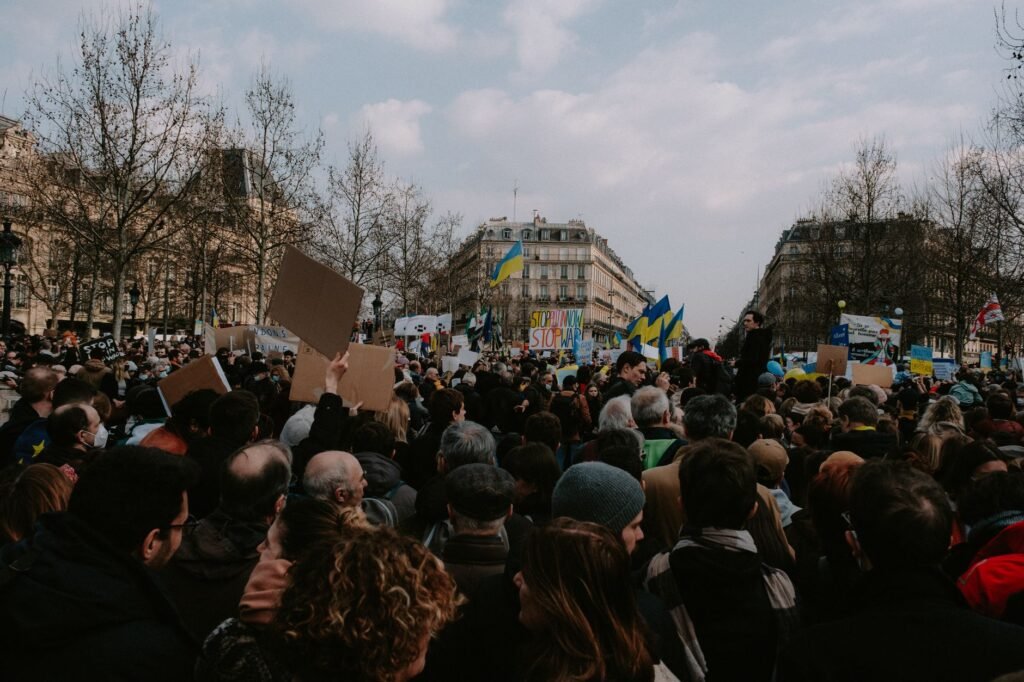
Tens of thousands of people across France participated in widespread demonstrations on Thursday, voicing their discontent over escalating living costs and the deteriorating conditions within the nation’s educational institutions. The protests, which saw a significant turnout in major cities, were marked by both peaceful marches and instances of unrest, underscoring a growing national frustration.
In several urban centers, including Marseille, clashes erupted between protesters and law enforcement officials. These disturbances occurred concurrently with large, orderly gatherings where participants expressed their grievances through organized marches. The dual nature of the day’s events highlights the complex and multifaceted anger simmering within the French populace. Information reaching Tahir Rihat suggests that the student movement, initially focused on school-related issues, has now broadened its scope to encompass wider economic concerns, drawing in a more diverse range of participants.
The demonstrations were fueled by a confluence of factors, primarily the relentless rise in the cost of living, which has placed considerable strain on household budgets across the country. Simultaneously, concerns regarding the state of public education, including issues such as underfunding, overcrowded classrooms, and inadequate resources, have galvanized students, parents, and educators alike. These intertwined issues have created a fertile ground for widespread public mobilization.
The scale of the protests indicates a significant level of public dissatisfaction with the current socio-economic policies and their impact on daily life. Organizers of the demonstrations have called for immediate government intervention to address the pressing economic challenges and to implement substantial reforms within the education sector. The government has yet to issue a comprehensive response to the demands put forth by the various protest groups, though preliminary statements have acknowledged the concerns raised.
The unrest in France is part of a broader trend of social and economic discontent observed in various European nations, where citizens are increasingly challenging governments over issues of inequality, inflation, and public service provision. The French protests, however, possess a unique intensity, driven by a long-standing tradition of public dissent and a deeply ingrained sense of social justice among its citizens.
Analysts suggest that the government faces a critical juncture, needing to balance fiscal responsibility with the urgent demands of its citizens. The ability of the authorities to de-escalate the situation and provide tangible solutions will be crucial in determining the future trajectory of public sentiment and the stability of the current administration. The coming days are expected to reveal the government’s strategy in navigating this challenging period of national unrest.
The peaceful marches, while overshadowed in some areas by rioting, served as a powerful visual representation of the collective will of a significant portion of the French population. Participants carried banners and chanted slogans that articulated their demands for economic relief and improved educational opportunities. The diversity of the crowd, encompassing individuals from various age groups and professional backgrounds, underscored the pervasive nature of the grievances.
The economic pressures cited by protesters include the rising costs of energy, food, and housing, which have eroded purchasing power and led to increased financial insecurity for many families. This economic strain is compounded by a perceived lack of governmental action to mitigate these effects, leading to a sense of neglect and frustration among the general public. The protests are a clear signal that these economic hardships are no longer being passively accepted.
In the realm of education, the concerns voiced by students and their supporters revolve around the quality and accessibility of schooling. Issues such as teacher shortages, outdated curricula, and insufficient investment in school infrastructure have been highlighted as critical problems that require urgent attention. The protesters argue that a well-functioning education system is fundamental to the nation’s future prosperity and social cohesion.
The government’s response to these widespread demonstrations will likely have significant political ramifications. Failure to address the core issues effectively could lead to further polarization and sustained public opposition. Conversely, a proactive and empathetic approach might help to restore public trust and foster a more constructive dialogue between the government and the citizenry. The international community is closely observing the developments in France, as the country’s response to these internal challenges could have broader implications for European social and political stability.
The dual nature of the protests, with peaceful demonstrations juxtaposed against violent clashes, presents a complex challenge for authorities. While the right to peaceful assembly is a cornerstone of democratic societies, the instances of rioting and property damage raise questions about public order and the methods employed by some segments of the protest movement. Law enforcement agencies are reportedly working to contain the unrest while ensuring the safety of peaceful demonstrators.
The student component of the protests, in particular, has been a driving force, with young people expressing a deep sense of disillusionment with the current state of affairs. Their activism reflects a desire for a more equitable and sustainable future, where their educational experiences are valued and their economic prospects are secure. This youthful energy, when combined with the broader economic anxieties of the general population, creates a potent force for social change.
As the situation continues to unfold, the focus remains on the government’s ability to engage in meaningful dialogue and implement policies that address the root causes of the widespread discontent. The coming weeks will be critical in determining whether France can navigate this period of social upheaval and emerge with a strengthened social contract between its people and its leadership.


Tahir Rihat (also known as Tahir Bilal) is an independent journalist, activist, and digital media professional from the Chenab Valley of Jammu and Kashmir, India. He is best known for his work as the Online Editor at The Chenab Times.