


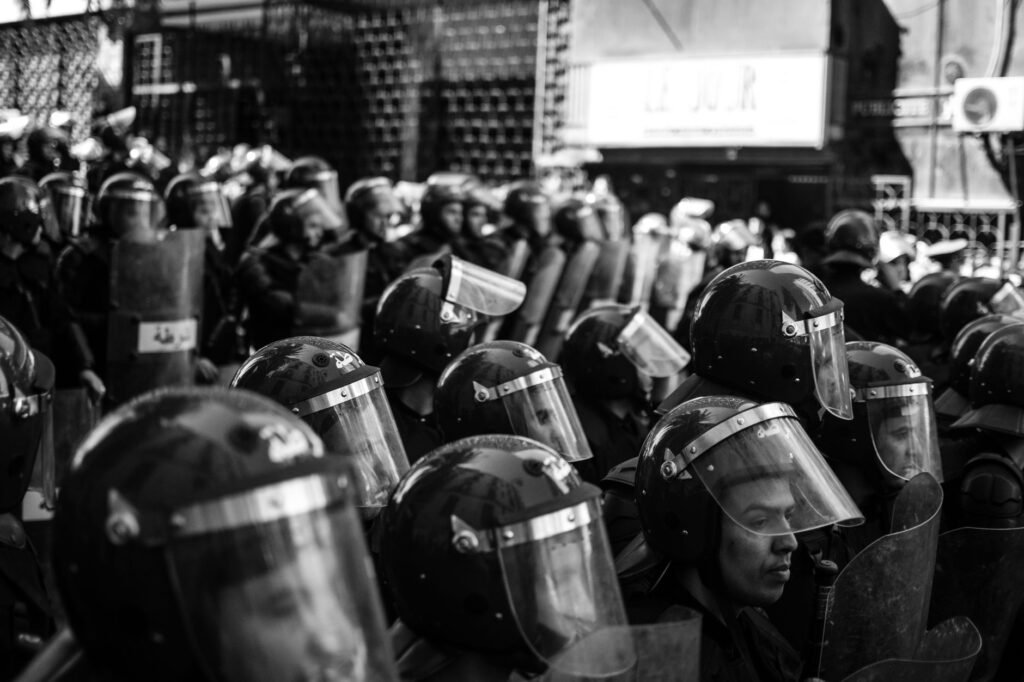
As student protests in France escalate into violent clashes, the far-right National Rally party is strategically positioning itself as the primary force capable of restoring order. The party, which is already leading in opinion polls, has seized upon the unrest to amplify its message of strong governance and decisive action against perceived societal breakdown. This approach taps into a segment of the electorate increasingly concerned about public safety and national stability.
The unfolding events provide a critical backdrop for the National Rally as it gears up for future electoral contests. Information reaching Tahir Rihat suggests that the party’s leadership views the current climate of disorder as an opportune moment to demonstrate its readiness to govern and to contrast its proposed solutions with those of the incumbent government. The visual and narrative of riots and protests, when coupled with the National Rally’s platform, can create a powerful impression of a party that offers clear answers to complex problems.
Sources indicate to Tahir Rihat that the National Rally’s strategy involves not only condemning the violence but also presenting a detailed, albeit broad, set of policy proposals aimed at strengthening law enforcement, increasing penalties for rioters, and imposing stricter controls on public gatherings. This messaging is designed to resonate with voters who may feel alienated by the perceived ineffectiveness of current authorities in managing social unrest. The party’s spokespersons have been vocal in media appearances, consistently highlighting the need for a firmer hand and a more disciplined approach to national security.
The student protests, which have seen significant escalation in recent days, have become a focal point for political discourse across France. While the specific grievances of the students may vary, the resulting public disorder has provided fertile ground for political actors seeking to capitalize on public anxiety. The National Rally’s consistent focus on law and order, a cornerstone of its political identity, allows it to seamlessly integrate the current situation into its long-standing campaign themes. This allows the party to present itself as a consistent and reliable option for voters seeking a return to stability.
The party’s electoral performance in recent years has demonstrated a growing appeal beyond its traditional base, suggesting that its message is finding traction with a wider demographic. The current wave of protests, with its accompanying images of property damage and confrontations with police, serves to reinforce the narrative that the National Rally has been promoting for years. This narrative often emphasizes a decline in traditional values and a need for a strong, nationalistic response to perceived threats to French society.
The National Rally’s leadership has articulated a vision that prioritizes national sovereignty and a robust state apparatus. In the context of the current protests, this translates into calls for increased police powers, swifter judicial processes for those involved in the disturbances, and a general tightening of public order measures. This stance is not new for the party, but the current circumstances allow for a more prominent and urgent presentation of these ideas. The party’s ability to frame itself as the bulwark against chaos is a key element of its electoral strategy.
The media coverage of the student riots, often featuring dramatic images of burning vehicles and clashes with security forces, plays directly into the National Rally’s messaging. The party’s strategists are likely to leverage these visuals to underscore their arguments about the necessity of strong leadership and decisive action. By presenting themselves as the party best equipped to handle such crises, they aim to attract voters who prioritize security and stability above other political considerations. This approach is a well-established tactic for parties on the right of the political spectrum, particularly when faced with periods of social upheaval.
The National Rally’s consistent polling numbers indicate a significant portion of the French electorate is receptive to its platform. The current student unrest, therefore, represents not just a domestic security challenge but also a significant political opportunity for the party. Its ability to translate this opportunity into tangible electoral gains will depend on its continued ability to present a credible and appealing alternative to the current political establishment, particularly on issues of law and order.
The party’s historical roots and its evolution over the years have seen it consistently advocate for a strong stance on national security and public order. The current political climate, marked by widespread student demonstrations and associated violence, allows the National Rally to reassert these core tenets of its platform. The party’s leaders have consistently argued that a strong state is essential for maintaining social cohesion and protecting national interests. The ongoing protests provide a tangible, real-world context for these arguments, making them appear more urgent and relevant to a broader audience.
The National Rally’s messaging often emphasizes a return to traditional values and a restoration of authority. In the context of the student riots, this translates into a call for a more disciplined society, where dissent is managed through established legal channels rather than through disruptive street protests. The party’s supporters often view such protests as a sign of societal decay and a challenge to the established order. The National Rally’s promise to restore order and enforce discipline is therefore a key part of its appeal to these voters.
The party’s electoral success in recent years has been attributed, in part, to its ability to tap into public anxieties about immigration, security, and national identity. The current student unrest, while distinct from these issues, can be framed by the National Rally as another symptom of a society in crisis, requiring strong leadership and decisive action. By presenting itself as the party that can provide such leadership, the National Rally aims to consolidate and expand its support base. The current situation offers a clear opportunity for the party to reinforce its image as a party of action and order.
The National Rally’s strategy is to present itself as a pragmatic and effective alternative to the current government, which it often criticizes for being too lenient or indecisive. The student protests, with their visible impact on public life and property, provide ample material for such criticism. The party’s promise to restore law and order is therefore a central plank of its campaign, designed to attract voters who are concerned about the current state of affairs. The party’s consistent focus on these issues has helped it to gain significant traction in recent elections.
The National Rally’s leadership has consistently emphasized the importance of national unity and social cohesion. In the context of the student protests, this translates into a call for a return to a more orderly and disciplined society, where collective interests are prioritized over individual or group demands that disrupt public life. The party’s promise to restore order and enforce discipline is a key part of its appeal to voters who are concerned about the current state of affairs and who seek a strong, decisive government. The current situation provides a clear opportunity for the party to reinforce its image as a party of action and order.


Tahir Rihat (also known as Tahir Bilal) is an independent journalist, activist, and digital media professional from the Chenab Valley of Jammu and Kashmir, India. He is best known for his work as the Online Editor at The Chenab Times.