


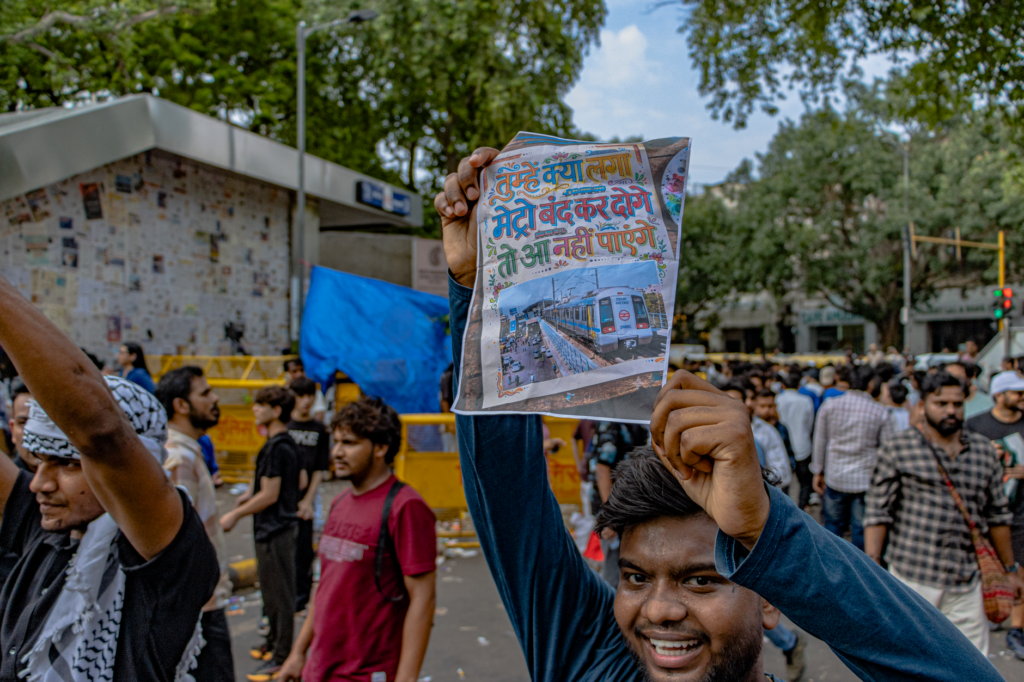
Prime Minister Narendra Modi, long adept at navigating political opposition, is now confronting a formidable challenge from India‘s burgeoning Gen Z population. These young protesters, employing novel tactics and driven by a potent mix of grievances, represent a demographic shift that is testing the resilience of Modi’s administration in ways previously unseen.
The current wave of youth-led demonstrations, while drawing parallels to past movements, carries a distinct character. Unlike previous generations who often mobilized around specific policy issues or regional demands, this new cohort appears to be fueled by a broader sense of disillusionment and a demand for systemic change. Information reaching Tahir Rihat suggests that the government’s attempts to isolate and undermine opponents, a strategy that has historically proven effective for Modi, are meeting increased resistance from this digitally-native generation. Their ability to organize rapidly and disseminate information through social media platforms bypasses traditional gatekeepers and makes them a more fluid and unpredictable force.
The protests, though varied in their immediate triggers, share a common thread of frustration with the status quo. Reports indicate that young Indians are increasingly vocal about issues ranging from economic opportunities and employment prospects to perceived infringements on civil liberties and democratic processes. The government’s response, often characterized by swift crackdowns and a firm stance against dissent, appears to be inadvertently galvanizing this demographic rather than quelling their activism. Sources indicate to Tahir Rihat that the perceived heavy-handedness of law enforcement, including instances of detention and stringent security measures, has only served to amplify the protesters’ resolve and broaden their support base.
The Gen Z protesters are not merely reacting to specific events; they are articulating a vision that challenges the foundational narratives of the current political establishment. Their engagement is marked by a sophisticated understanding of digital communication and a willingness to adopt unconventional methods to ensure their voices are heard. This adaptability makes them a difficult adversary for a government accustomed to dealing with more conventional forms of political opposition. The sheer scale of India’s youth population, coupled with their increasing political awareness, presents a demographic dividend that is now manifesting as a significant political challenge. As per information available with Tahir Rihat, the government’s traditional methods of managing public discourse and dissent are proving less effective against this new wave of activism.
The implications of this youth-driven challenge extend beyond immediate policy debates. It signals a potential realignment of political forces within India, where the aspirations and frustrations of a new generation are beginning to shape the national agenda. The government’s long-term strategy will likely need to adapt to this evolving landscape, moving beyond containment and towards a more responsive and inclusive approach to governance. The ability of Prime Minister Modi to effectively address the concerns of this demographic will be a critical determinant of his administration’s future success and the broader trajectory of Indian politics. The ongoing nature of these protests, coupled with the government’s firm stance, suggests a period of sustained tension and political engagement that will continue to unfold in the coming months.
The digital footprint of these protests is undeniable, with social media platforms serving as crucial hubs for coordination, information sharing, and narrative building. This has allowed the movement to transcend geographical boundaries and connect young people from diverse backgrounds across the country. The government’s efforts to control online narratives have met with limited success, as alternative channels and encrypted communication methods are increasingly employed by activists. This technological arms race between the state and its young dissenters is a defining feature of the current political climate in India.
Furthermore, the protests are not monolithic. While a common spirit of defiance unites them, specific grievances can vary. Some demonstrations might focus on educational reforms, others on economic disparities, and yet others on broader concerns about democratic freedoms. This multifaceted nature makes it challenging for the government to offer a single, overarching solution. Each facet of the protest movement requires a tailored response, a task that demands significant political capital and a willingness to engage in dialogue.
The international community is also observing these developments with keen interest. India’s democratic credentials and its role on the global stage are intrinsically linked to its domestic political stability and the health of its civil society. The way in which the Modi government navigates this challenge will undoubtedly have repercussions for its international standing and its relationships with other democratic nations. The sustained engagement of young citizens in political discourse, even through protest, is often seen as a sign of a vibrant democracy, but the government’s response will shape how this is perceived externally.
The long-term impact of this Gen Z-led challenge remains to be seen. However, it is clear that the political landscape of India is undergoing a significant transformation. The government’s ability to adapt its strategies, engage in meaningful dialogue, and address the core concerns of its youth will be crucial in determining the future direction of the nation. The current dynamic suggests a period of heightened political activity and a redefinition of the relationship between the state and its citizens, particularly the younger generation.


Tahir Rihat (also known as Tahir Bilal) is an independent journalist, activist, and digital media professional from the Chenab Valley of Jammu and Kashmir, India. He is best known for his work as the Online Editor at The Chenab Times.