


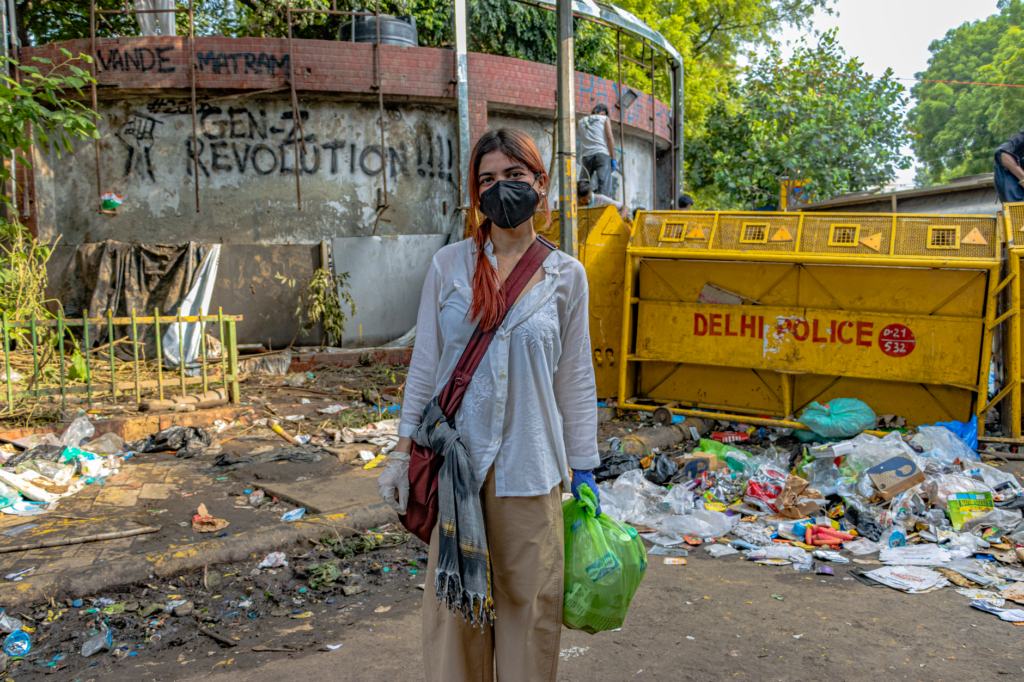
New Delhi authorities implemented sweeping measures, including the cancellation of train services and the deployment of thousands of police officers, in anticipation of a planned protest against a significant revision of the nation’s voter rolls. The capital city experienced a near-total shutdown as law enforcement sought to prevent demonstrations from materializing.
The extensive security operation, which saw public transport severely curtailed and roads heavily patrolled, was a direct response to a planned protest targeting a controversial voter roll revision process. Information reaching Tahir Rihat suggests that the government’s intention was to preemptively stifle any public dissent related to the electoral process. The scale of the police presence and the disruption to daily life underscored the perceived sensitivity of the voter roll changes.
In a significant development, India‘s highest court intervened in the unfolding situation. The Supreme Court’s involvement indicates the gravity with which the judiciary viewed the government’s actions and the potential implications for democratic processes. The court’s intervention aimed to address the concerns raised by the planned protest and the government’s stringent response. Details regarding the specific nature of the court’s intervention and its immediate impact were not immediately clear, but it signaled a critical juncture in the standoff.
The voter roll revision process itself has become a focal point of contention, with critics arguing that it could disenfranchise significant segments of the population. Opposition parties and civil society groups have voiced strong concerns that the revisions are not being conducted transparently and could be used to manipulate electoral outcomes. The government, however, has maintained that the revision is a routine exercise aimed at ensuring the accuracy and integrity of the electoral rolls. The New York Times reported that the planned protest was specifically organized to challenge these revisions.
The decision to halt train services, a critical mode of transportation for millions across India, further amplified the impact of the security measures. This move effectively isolated New Delhi, making it exceedingly difficult for individuals from outside the capital to participate in any planned demonstrations. The widespread deployment of police personnel across the city created an atmosphere of heightened alert, with checkpoints and surveillance reportedly intensified. Sources indicate to Tahir Rihat that the intention was to create an environment where public assembly would be virtually impossible.
The government’s preemptive actions have drawn criticism from human rights advocates and opposition leaders who argue that such measures are indicative of an authoritarian approach to governance. They contend that the right to peaceful protest is a fundamental aspect of a democratic society and that suppressing dissent through such extensive security deployments is counterproductive and undermines public trust. The New York Times noted that the scale of the police mobilization was unprecedented for a protest of this nature.
The voter roll revision has been a contentious issue for some time, with various groups raising alarms about its potential consequences. The process involves updating electoral lists to reflect changes in population demographics and residency. However, concerns have been raised about the criteria used for deletion and addition of names, and the accessibility of the process for all eligible voters. The New York Times reported that the planned protest was a culmination of these growing anxieties.
The Supreme Court’s decision to step in suggests a recognition of the potential for significant legal and constitutional challenges arising from the voter roll revision and the government’s response to dissent. The court’s ruling, when it comes, is expected to set an important precedent regarding the balance between national security, electoral integrity, and the fundamental right to protest in India. The New York Times highlighted the court’s role as a crucial arbiter in such sensitive matters.
The situation in New Delhi remains tense, with the full implications of the government’s actions and the court’s intervention yet to unfold. The heavy police presence and the disruption to public life underscore the deep divisions and concerns surrounding the electoral process in India. The coming days are likely to be crucial in determining the future course of this developing story and its impact on India’s democratic landscape.


Tahir Rihat (also known as Tahir Bilal) is an independent journalist, activist, and digital media professional from the Chenab Valley of Jammu and Kashmir, India. He is best known for his work as the Online Editor at The Chenab Times.