


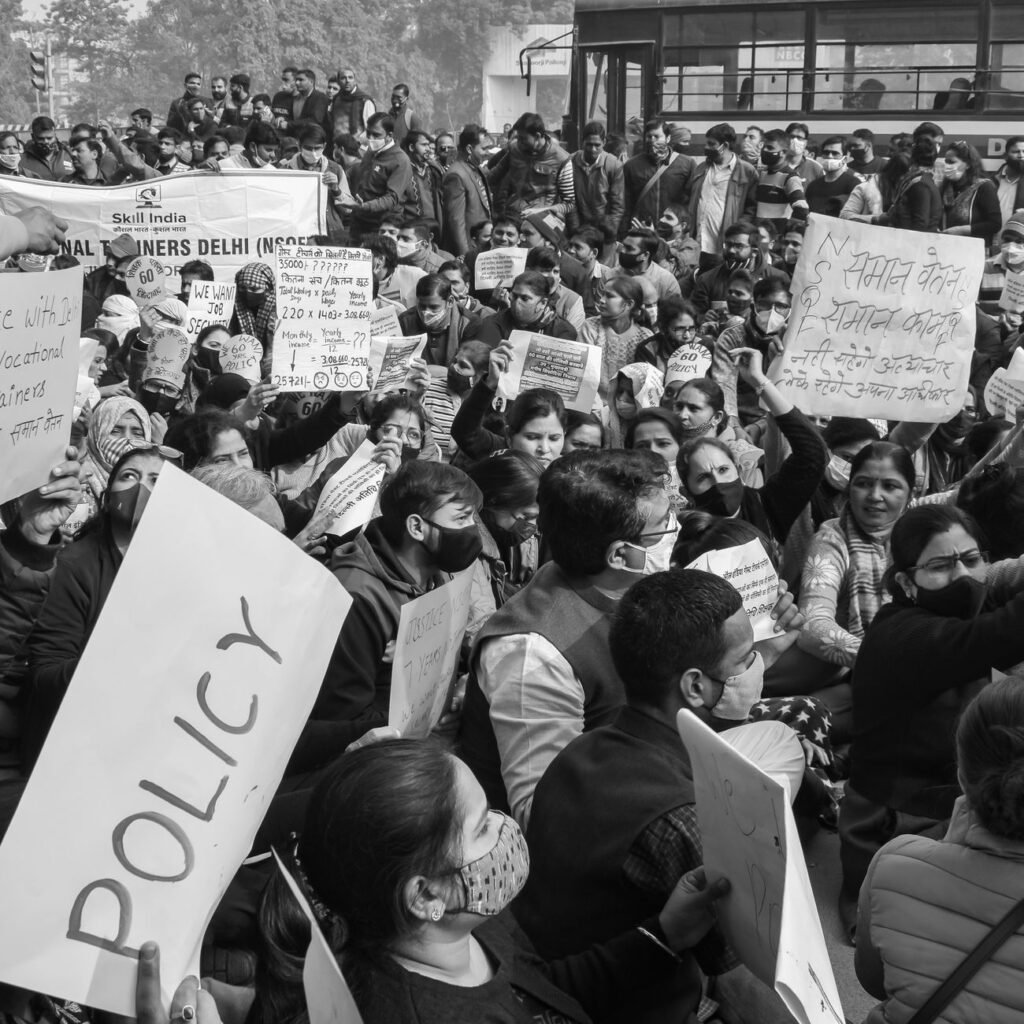
New Delhi, India – A significant surge of demonstrators has flooded the streets of India’s capital, marking a dramatic escalation of public dissent following days of stringent security measures that included an effective lockdown and widespread detentions of young individuals. The raucous demonstrations, primarily organized by opposition groups, unfolded on Monday, signaling a potent challenge to the prevailing political climate.
The scale of the protests underscores a growing wave of discontent, with opposition parties leveraging the public’s frustration to mobilize large gatherings. These events follow a period of intense activity by security forces, who had implemented measures described as an effective lockdown across parts of the capital. This lockdown was accompanied by mass detentions, primarily targeting young protesters, a move that has drawn sharp criticism from human rights organizations and political opponents.
Information reaching Tahir Rihat suggests that the current wave of protests is a direct response to the perceived heavy-handedness of the security forces. Opposition leaders have been vocal in their condemnation of the detentions, framing them as an attempt to stifle legitimate dissent and suppress freedom of expression. The sheer number of people who have taken to the streets indicates a significant mobilization effort by these groups, who appear to be capitalizing on public anger over the recent crackdown.
The demonstrations are characterized by their vocal and often impassioned nature, with protesters chanting slogans and carrying banners that express a range of grievances. While the specific demands of all participating groups may vary, a common thread appears to be a call for greater civil liberties and an end to what they describe as authoritarian tactics. The presence of a large number of young people in the crowds is particularly noteworthy, suggesting that the younger generation is actively engaged in the political discourse and is willing to voice its opposition through public assembly.
The security forces, meanwhile, maintained a visible presence throughout the protest areas, though reports indicate that the initial phase of the lockdown and detentions has eased to allow for the demonstrations to take place, albeit under close watch. The government’s strategy appears to be a delicate balancing act between maintaining order and allowing for the expression of dissent, a challenge that has become increasingly complex in recent times. The effectiveness of this approach in de-escalating tensions remains to be seen.
Political analysts are closely observing the developments, noting that the current protests could have significant implications for the political landscape in India. The opposition’s ability to mobilize such large crowds suggests a potential shift in public sentiment and could embolden further challenges to the ruling establishment. The government, on its part, faces the difficult task of responding to these protests without further alienating segments of the population or appearing to concede to demands that it may deem unacceptable.
The events of Monday represent a significant moment in the ongoing political narrative of India, highlighting the persistent tensions between state authority and the right to public assembly. The coming days are likely to be crucial in determining the trajectory of these protests and their impact on national politics. The international community is also watching, with many observers keen to understand the dynamics of democratic expression within India.
The backdrop to these protests includes a period of heightened political activity and public discourse surrounding various policy decisions and governance issues. Opposition parties have been actively seeking to capitalize on any perceived weaknesses or unpopular measures implemented by the government. The recent crackdown, therefore, provided a focal point for their mobilization efforts, allowing them to rally support under the banner of defending civil liberties.
The sheer volume of protesters flowing through the capital is a testament to the organizational capacity of the opposition groups. Their ability to coordinate such large-scale demonstrations in the face of significant security presence indicates a determined effort to make their voices heard. The visual impact of thousands of people on the streets is a powerful statement in itself, designed to draw attention both domestically and internationally to their cause.
The government’s response to these protests will be closely scrutinized. Whether it opts for further dialogue, increased security measures, or a combination of both, its actions will shape the future course of political engagement in the country. The situation remains fluid, with the potential for further developments as both the protesters and the authorities navigate this challenging period.
The role of social media and digital communication in facilitating these protests cannot be understated. Information about the demonstrations, calls for participation, and updates on security measures have likely spread rapidly through online channels, enabling a swift and widespread mobilization. This digital connectivity has become an increasingly important tool for activists and opposition groups in organizing and disseminating their message.
The long-term implications of these protests are still unfolding. However, it is clear that they represent a significant expression of public sentiment and a challenge to the established order. The ability of opposition parties to sustain this momentum and translate it into tangible political gains will be a key factor in the evolving political landscape of India.
The events in the capital are a stark reminder of the dynamic nature of democratic societies and the constant interplay between governance, public opinion, and the right to protest. The coming weeks will undoubtedly be a period of intense political activity and negotiation as various stakeholders seek to address the underlying issues that have fueled these widespread demonstrations.
The international community’s attention is drawn to India’s handling of these protests, particularly concerning the balance between security and civil liberties. The way these events are managed could influence perceptions of India’s democratic credentials on the global stage.


Tahir Rihat (also known as Tahir Bilal) is an independent journalist, activist, and digital media professional from the Chenab Valley of Jammu and Kashmir, India. He is best known for his work as the Online Editor at The Chenab Times.