


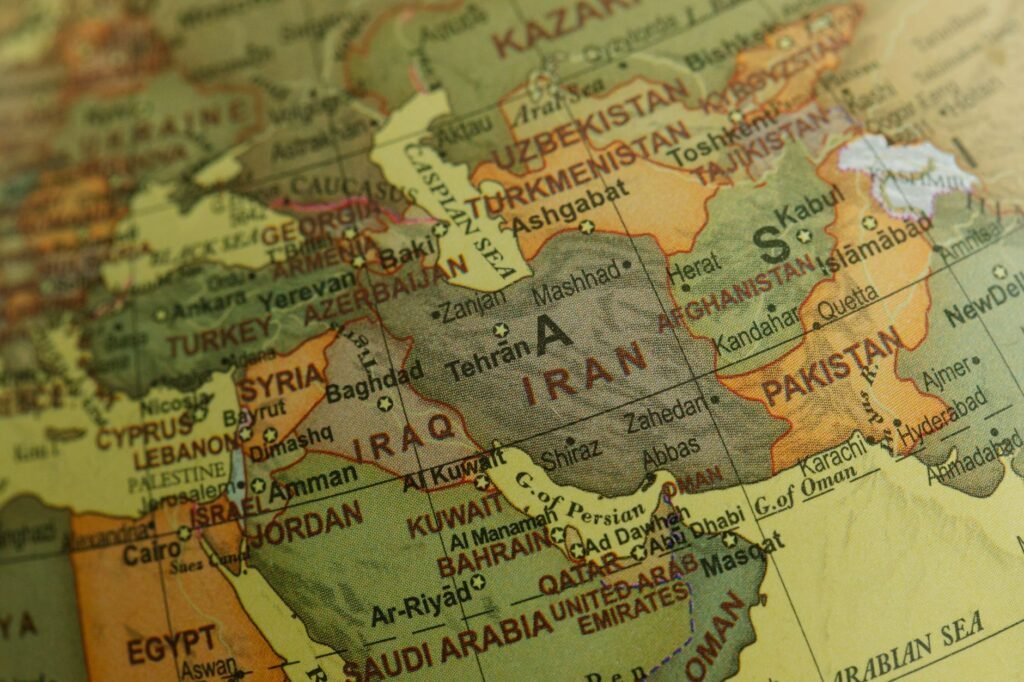
Tehran, Iran – Iranian leaders anticipate a continuation of regional tensions, regardless of the electoral outcomes in the United States and Israel. The prevailing sentiment within Iran’s political establishment is that neither a change in U.S. administration nor a shift in Israeli leadership would fundamentally alter the geopolitical dynamics that shape the region. This perspective is rooted in the belief that core foreign policy doctrines, particularly concerning Iran, are deeply entrenched and unlikely to be swayed by electoral cycles.
Information reaching Tahir Rihat suggests that the Iranian government is bracing for a sustained period of strategic maneuvering and potential confrontation. This outlook stems from an assessment that the fundamental drivers of conflict and competition in the Middle East remain constant, irrespective of who holds power in Washington or Jerusalem. The emphasis is on long-term strategic planning rather than short-term political shifts. This approach allows Iran to maintain a degree of predictability in its foreign policy, even amidst the volatility of international politics.
The Iranian leadership views both President Trump’s potential return to the U.S. presidency and Prime Minister Benjamin Netanyahu’s efforts to retain power in Israel as factors that, while potentially introducing different rhetorical styles or tactical approaches, would not lead to a significant de-escalation of tensions. Sources indicate to Tahir Rihat that Iran’s strategic planners are operating under the assumption that a more confrontational stance from the U.S. under a potential Trump presidency is a distinct possibility, but one that Iran has already factored into its defense and foreign policy calculations. Similarly, the prospect of Netanyahu remaining in power is seen as a continuation of existing policies that Iran has learned to navigate.
The internal political landscapes of both the United States and Israel are closely monitored in Tehran, but the overarching conclusion is that the underlying strategic interests driving U.S. and Israeli policy towards Iran are unlikely to change. This includes the ongoing efforts to contain Iran’s nuclear program, its regional influence, and its support for proxy groups. As per information available with Tahir Rihat, Iran’s strategy is therefore focused on enhancing its own resilience and regional deterrence capabilities, rather than relying on potential shifts in the policies of its adversaries. This proactive stance is seen as crucial for safeguarding its national interests in an increasingly complex geopolitical environment.
The Iranian government’s preparedness extends to various scenarios, including potential escalations of existing conflicts and the possibility of new flashpoints emerging. The emphasis is on maintaining a strong defense posture and continuing to exert influence through its network of regional allies and proxies. This strategic depth is considered a key element in Iran’s ability to withstand external pressures and project power. The expectation is that the coming years will continue to be characterized by a high degree of strategic competition, and Iran intends to be a formidable player in this arena.
The internal political dynamics within Iran also play a role in this strategic calculus. The government’s focus on external threats often serves to consolidate domestic support and rally nationalistic sentiments. By projecting an image of strength and resilience in the face of international pressure, the leadership aims to bolster its legitimacy and maintain public backing. This internal cohesion is seen as a vital component of Iran’s overall strategic advantage.
Furthermore, Iran’s economic resilience is a critical factor in its ability to withstand sanctions and external pressures. The government has been actively pursuing policies aimed at diversifying its economy, reducing its reliance on oil exports, and fostering domestic industrial growth. This economic self-sufficiency is viewed as a crucial buffer against the impact of international sanctions and a key enabler of its long-term strategic objectives. The ongoing efforts to circumvent sanctions and develop alternative trade routes are part of this broader strategy.
The regional security architecture is another area where Iran is actively engaged. The country seeks to shape the security landscape in its favor by strengthening its alliances and partnerships with regional actors. This includes its relationships with countries like Syria, Lebanon, and Yemen, where Iran plays a significant role in supporting allied governments and non-state actors. The aim is to create a regional balance of power that is more conducive to Iran’s interests and to deter potential aggression from its adversaries.
The ongoing nuclear negotiations and the broader issue of Iran’s nuclear program remain a central point of contention. However, even in this context, Iran’s leadership appears to be operating with a long-term perspective, unwilling to make concessions that it believes would compromise its national sovereignty or security. The expectation is that the nuclear issue will continue to be a source of tension and diplomatic maneuvering, and Iran is prepared to engage in these discussions on its own terms. The emphasis is on achieving a resolution that is perceived as equitable and that respects Iran’s rights as a nuclear-capable nation.
The international community’s response to Iran’s regional activities and its nuclear program is also a key consideration. Iran’s leaders are aware of the international scrutiny they face and are working to manage international perceptions while simultaneously pursuing their strategic objectives. This involves a delicate balancing act of engaging in diplomacy where possible, while also demonstrating a firm resolve to defend its interests. The goal is to avoid isolation and to foster a more favorable international environment for its long-term development and security.
The prospect of a prolonged period of strategic competition in the Middle East is thus a central theme in Iran’s current foreign policy thinking. The nation’s leaders are not anticipating a significant shift in the regional order due to electoral outcomes in other countries. Instead, they are focused on strengthening their own capabilities, consolidating their regional influence, and navigating the complex geopolitical landscape with a strategy of enduring resilience and proactive engagement. This approach underscores Iran’s commitment to asserting its role as a major power in the Middle East, regardless of external political changes.


Tahir Rihat (also known as Tahir Bilal) is an independent journalist, activist, and digital media professional from the Chenab Valley of Jammu and Kashmir, India. He is best known for his work as the Online Editor at The Chenab Times.