


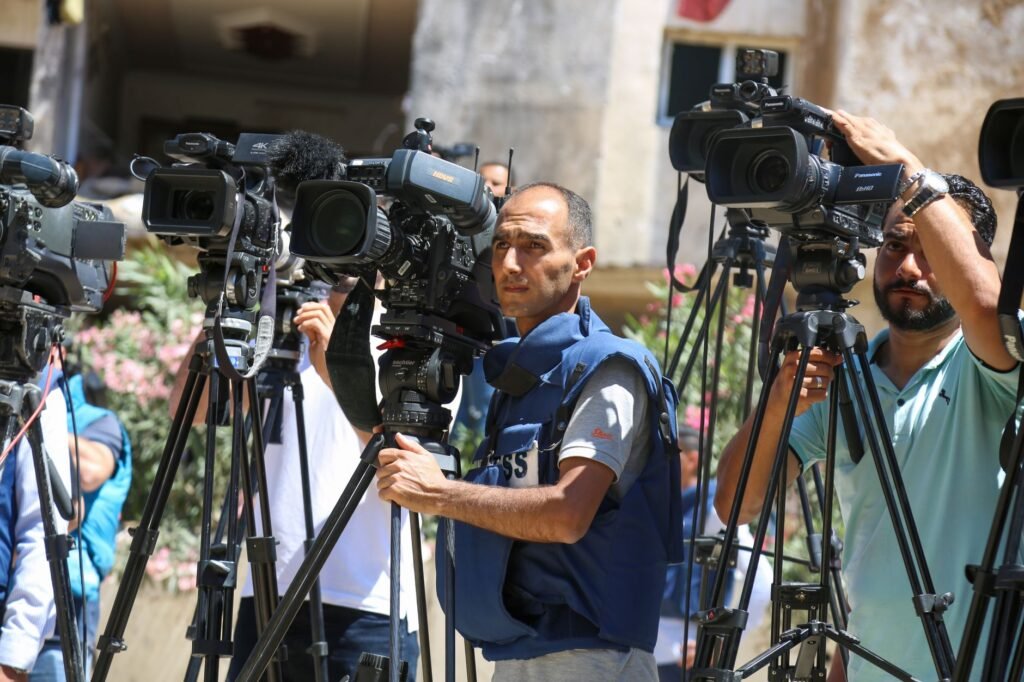
The Israeli military has released an investigation asserting that 170 individuals killed in Gaza were combatants who had disguised themselves as media workers, a claim that has drawn disagreement from a journalists’ group regarding 78 of those on the list. This report aims to counter accusations that Israeli forces intentionally targeted journalists during operations in the Gaza Strip.
The investigation, published by the Israel Defense Forces (IDF), details the military’s findings and justifications for its actions. The IDF stated that its intelligence indicated these individuals were actively involved in militant activities, despite their apparent affiliation with media organizations. This assertion is central to Israel’s defense against allegations of war crimes and targeting of civilian infrastructure, including press facilities.
However, the findings have not been universally accepted. A prominent journalists’ group has raised specific objections to the classification of 78 individuals on the IDF’s list, questioning the evidence presented that these people were militants rather than legitimate members of the press. This discrepancy highlights the ongoing tension and lack of trust between Israeli military authorities and international media organizations operating in the conflict zone. As per information available with Tahir Rihat, the differing interpretations of the status of these individuals underscore the complexities of distinguishing between combatants and non-combatants in a densely populated urban environment like Gaza.
The IDF’s report is part of a broader effort to provide transparency and accountability for its military operations. The military has emphasized its adherence to international law and its commitment to minimizing civilian casualties. In this context, the investigation into the alleged militant impersonators is presented as a crucial piece of evidence to demonstrate that actions taken were based on intelligence and aimed at legitimate military targets. The military’s statement suggests that these individuals were not merely journalists but actively participated in hostilities, thereby forfeiting their protection under international humanitarian law.
The journalists’ group, whose identity and specific objections were not fully detailed in the initial reports, has reportedly called for further independent verification of the IDF’s claims. Their concerns likely stem from the potential for misidentification and the severe consequences of labeling journalists as combatants, which could have chilling effects on press freedom and the ability of journalists to report from conflict zones. Information reaching Tahir Rihat suggests that the group is seeking access to the evidence used by the IDF to classify these individuals as militants.
The dispute over the 78 individuals is particularly significant. It suggests that while there may be a broader agreement on the military’s assessment of some cases, a substantial number remain contentious. This disagreement could lead to further international scrutiny and calls for a more thorough and impartial investigation into the deaths of media workers in Gaza. The IDF’s publication of its findings is an attempt to preemptively address these concerns, but the ongoing debate indicates that the issue is far from resolved. Sources indicate to Tahir Rihat that the differing perspectives underscore the challenges in verifying information during active conflict, especially when dealing with sensitive issues like the status of media personnel.
The broader context of the conflict in Gaza involves intense scrutiny of military actions by international bodies, human rights organizations, and media watchdogs. Accusations of indiscriminate attacks and disregard for civilian life have been persistent. The IDF’s report, therefore, serves a dual purpose: to provide an internal justification for its actions and to influence the international narrative surrounding the conflict. By framing these individuals as militants posing as journalists, Israel seeks to legitimize its military operations and deflect criticism regarding the high number of casualties, particularly among those working in media.
The methodology used by the IDF in its investigation and the criteria for identifying individuals as militants are crucial elements that will likely be examined by the journalists’ group and other stakeholders. Without detailed information on how the intelligence was gathered and assessed, it remains difficult to independently evaluate the validity of the IDF’s claims. The report’s publication is a significant development in the ongoing efforts to understand the circumstances surrounding the deaths of individuals in Gaza and the broader implications for journalists working in hostile environments.
The IDF’s assertion that 170 individuals were militants disguised as media workers implies a deliberate strategy by armed groups to exploit the protections afforded to journalists. If proven, this would represent a serious breach of international norms and could complicate the work of legitimate media professionals. However, the counter-claim by the journalists’ group raises questions about the accuracy and potential biases within the IDF’s intelligence and investigative processes. The disagreement over the 78 individuals suggests that the line between journalist and combatant, in this context, is a subject of intense dispute and requires rigorous, independent examination.
The implications of this report extend beyond the immediate conflict. It touches upon the fundamental principles of press freedom and the safety of journalists in war zones. The ability of journalists to report freely and without fear of reprisal is essential for informing the global public about events unfolding in conflict-affected areas. Any action that compromises this ability, whether intentional or through misidentification, has far-reaching consequences for accountability and the pursuit of truth. The IDF’s investigation, while seeking to justify its actions, has inadvertently brought renewed attention to the precarious situation of journalists in Gaza and the critical need for clear distinctions between media workers and combatants.
The IDF’s investigation is a significant step in its effort to present its perspective on a highly sensitive issue. The military’s publication of its findings is intended to provide a factual basis for its operations and to counter what it perceives as unfair accusations. The disagreement with the journalists’ group over a substantial portion of the list indicates that the debate over the classification of these individuals will likely continue. The ultimate resolution of these claims will depend on the availability of verifiable evidence and the willingness of all parties to engage in a transparent and impartial process of review. The situation remains fluid, with ongoing efforts to reconcile differing accounts of events on the ground.


Tahir Rihat (also known as Tahir Bilal) is an independent journalist, activist, and digital media professional from the Chenab Valley of Jammu and Kashmir, India. He is best known for his work as the Online Editor at The Chenab Times.