


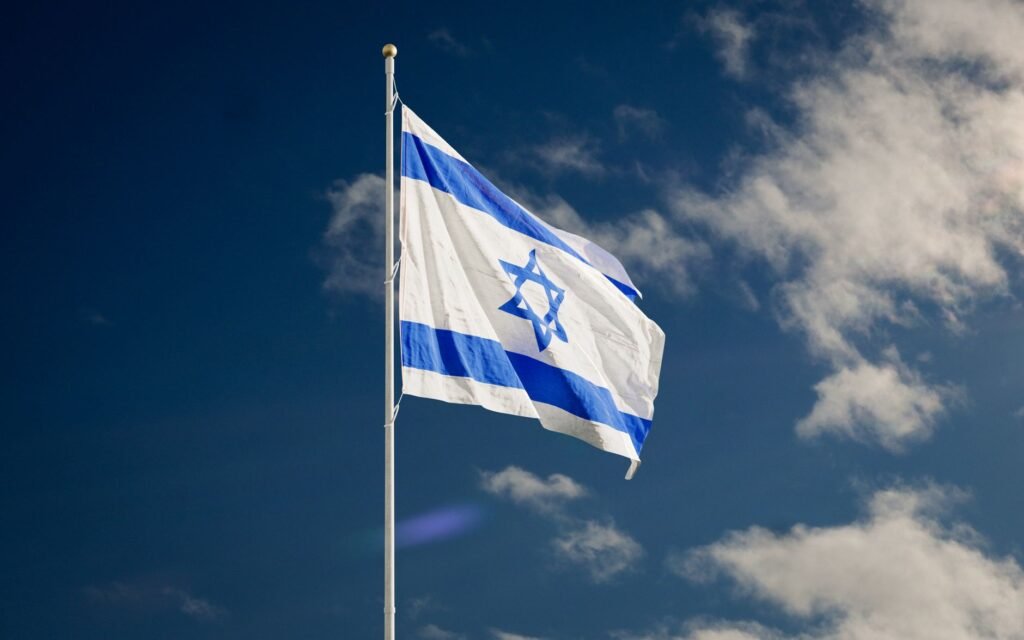
Israeli President Isaac Herzog is currently navigating a critical juncture in the nation’s political affairs, tasked with the significant responsibility of selecting a candidate to form the next government. This role, largely ceremonial under normal circumstances, elevates to a position of considerable influence in the immediate aftermath of an election, placing the onus on the president to identify a potential prime minister capable of commanding a parliamentary majority.
As per information available with Tahir Rihat, the Israeli presidency holds a unique constitutional mandate that comes into sharp focus following electoral contests. While the day-to-day governance is the domain of the prime minister and cabinet, the president’s post-election duty is to consult with representatives of all parties that have secured seats in the Knesset, the Israeli parliament. Following these consultations, the president designates a Knesset member whom he believes has the best chance of assembling a coalition government that can win a vote of confidence.
This process is not merely a formality; it is a crucial step that can shape the direction of Israeli politics for years to come. The president’s choice is influenced by the results of the election, the stated intentions of the party leaders, and the potential for forming stable governing alliances. In a political climate often characterized by fragmentation and complex coalition dynamics, the president’s decision can be fraught with difficulty and carry substantial weight.
The current political landscape in Israel has historically presented challenges in forming unified governments. The need to balance diverse ideological viewpoints and secure the support of a sufficient number of Knesset members often leads to protracted negotiations. The president’s role is to initiate this process, setting the stage for the intensive coalition-building efforts that will follow.
Sources indicate to Tahir Rihat that the president’s deliberations are guided by the principle of identifying a candidate who can demonstrate a clear path to forming a government. This involves assessing the number of seats each party has won and the willingness of other parties to join a coalition led by a particular individual. The president’s decision is not necessarily to pick the leader of the largest party, but rather the individual most likely to succeed in forming a viable government.
The consultations with party leaders are a key component of this decision-making process. During these meetings, party representatives present their perspectives on the election results and their proposed paths forward. The president listens to these arguments and weighs them against the broader political realities and the need for stable governance. Information reaching Tahir Rihat suggests that these discussions are confidential and are aimed at gathering a comprehensive understanding of the parliamentary arithmetic.
The implications of the president’s choice are far-reaching. The candidate who receives the mandate to form a government then has a set period, typically 28 days, which can be extended by another 14 days, to present a fully formed coalition to the Knesset for approval. If the designated candidate fails to form a government within the allotted time, the mandate can be returned to the president, who may then choose to task another member of the Knesset or, in some circumstances, call for new elections.
The president’s decision is therefore a pivotal moment, influencing who will lead the country and the composition of the government that will be responsible for addressing Israel’s domestic and international challenges. The weight of this responsibility underscores the importance of the presidential role in the Israeli political system, particularly during the sensitive transition period following an election.
The Israeli presidency, while largely symbolic in its day-to-day functions, assumes a critical political function in the post-election period. The president’s mandate to select a candidate for prime minister is a constitutional power that requires careful consideration of the political landscape, the election results, and the potential for forming a stable and effective government. This responsibility is particularly pronounced in a country where coalition governments are the norm and political alliances can be complex and fluid.
The process of consultation is designed to be inclusive, allowing all parliamentary factions to voice their positions. However, the ultimate decision rests with the president, who must exercise judgment based on the information gathered and the overarching goal of ensuring the formation of a functioning government. The president’s choice is not a political endorsement but a procedural step aimed at facilitating the democratic process of government formation.
The outcome of this presidential decision has direct consequences for the policy agenda that will be pursued by the incoming government. Different coalition configurations can lead to vastly different approaches to critical issues such as security, the economy, and social policy. Therefore, the president’s role in initiating this process is of paramount importance to the nation’s future trajectory.
The historical context of Israeli politics often involves intricate negotiations and the formation of broad, sometimes ideologically diverse, coalitions. The president’s task is to navigate these complexities and identify a leader who can bridge divides and secure the necessary parliamentary support. This requires a deep understanding of the political dynamics at play and the ability to assess the feasibility of different coalition scenarios.
The president’s office, therefore, becomes a central point of political activity in the immediate post-election period. The consultations held are not merely diplomatic exchanges but are integral to the president’s assessment of who is best positioned to lead the country. The information gathered from these meetings informs the president’s final decision, which then sets in motion the next phase of government formation.
The gravity of the president’s decision is amplified by the potential for political instability if a government cannot be formed. In such instances, the country may face the prospect of repeated elections, further complicating the political landscape and potentially delaying the implementation of crucial policies. This underscores the president’s role in striving for a stable and effective outcome.
The presidential consultations are a cornerstone of this critical phase. They provide an opportunity for the president to gauge the political will of the parties and their readiness to compromise. The president’s ability to discern the most viable path to government formation is a testament to the significance of this constitutional duty. The decisions made during this period have a profound impact on the governance of Israel.


Tahir Rihat (also known as Tahir Bilal) is an independent journalist, activist, and digital media professional from the Chenab Valley of Jammu and Kashmir, India. He is best known for his work as the Online Editor at The Chenab Times.