


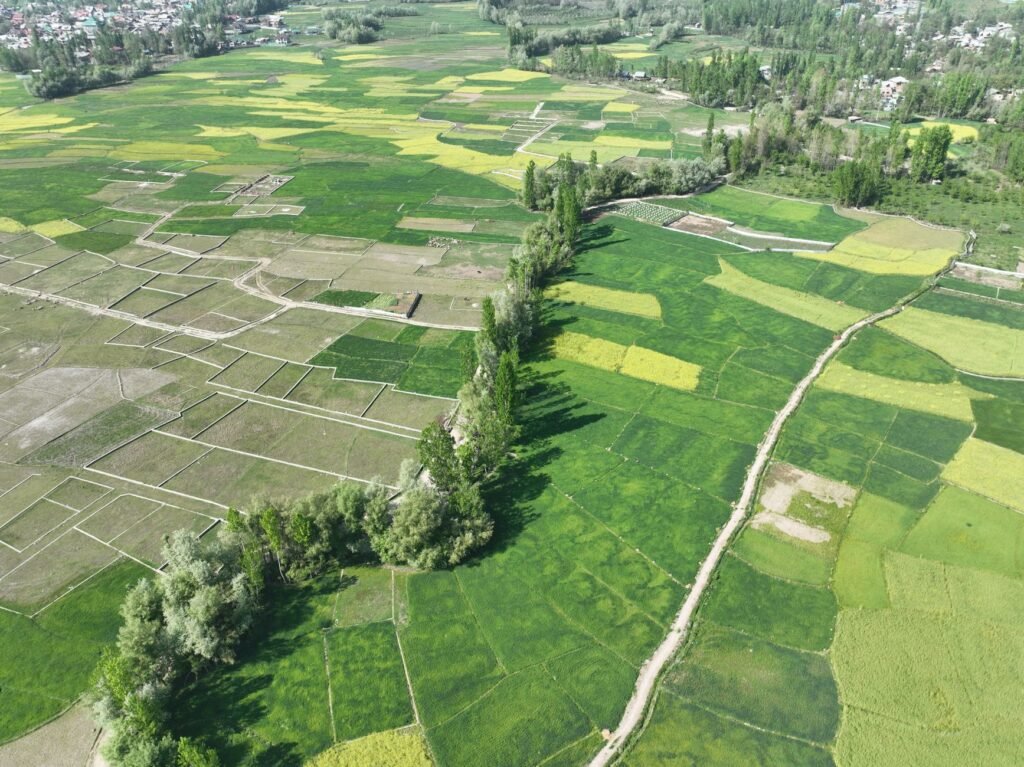
A comprehensive report from the Ministry of Jal Shakti has revealed that a substantial number of minor irrigation (MI) schemes across Jammu and Kashmir are not being utilized to their full potential. The latest 7th Minor Irrigation Census indicates that out of 2,135 ‘in-use’ schemes, a significant portion remains underutilized due to a variety of operational and infrastructural challenges. This situation impacts the agricultural productivity and water management strategies within the Union Territory.
Information reaching Tahir Rihat suggests that the census identified 10,110 ‘in-use’ groundwater schemes, of which 1,633 were found to be underutilized. Similarly, among the 3,127 ‘in-use’ surface-water schemes, 502 were reported as not being fully operational. The primary reasons cited for the underutilization of surface-water schemes include issues related to water storage capacity, the consistent availability of power or fuel necessary for operation, and the breakdown of irrigation channels, alongside other unspecified factors. Despite these challenges, the report also highlighted that the vast majority of schemes, specifically 11,102, representing 84.61 percent of all ‘in-use’ schemes, are functioning effectively without any reported constraints.
The overall landscape of minor irrigation in Jammu and Kashmir comprises a total of 13,871 schemes. A striking feature of this infrastructure is the dominance of groundwater-based systems, which account for 10,380 schemes, or 74.83 percent of the total. This underscores the continued reliance on underground water resources for the agricultural sector in the region. The remaining 25.18 percent, totaling 3,491 schemes, are based on surface water sources. The prevalence of groundwater schemes is attributed to the unique topographical characteristics of Jammu and Kashmir. Comparing these figures with the previous 6th Minor Irrigation Census, the total number of schemes has seen an increase, rising from 13,112 in the earlier census to 13,871 in the current one. The fundamental composition of these irrigation systems has remained largely consistent between the two census periods. While the number of groundwater schemes experienced a slight decrease from 10,470 to 10,380, they continue to constitute approximately three-quarters of the total MI infrastructure. Within the groundwater category, shallow tube wells were identified as the primary driver of this marginal decline.
Minor irrigation schemes are defined as relatively small-scale systems designed to irrigate specific land areas. These systems encompass a range of technologies, including groundwater-based infrastructure such as wells and tube wells, as well as surface-water systems like canals, tanks, and the utilization of natural streams. Surface-water schemes, making up roughly 25 percent of the irrigation infrastructure, have seen a modest increase in number, growing from 2,642 to 3,491 schemes between the 6th and 7th censuses. Within this surface-water category, schemes that rely on surface flow have maintained their position as the predominant type, with their numbers increasing slightly from 2,541 to 3,206.
The operational status of these 13,871 MI schemes indicates that a significant 95 percent are currently in active use. A small fraction, 2 percent, are permanently decommissioned, while another 3 percent are temporarily out of service. Specifically, 129 groundwater schemes were reported as being temporarily inactive. The report also sheds light on the ownership patterns of these schemes. A majority of the groundwater schemes, accounting for 59 percent, are predominantly owned by individual farmers. In contrast, the larger surface-water schemes are predominantly government-owned, with 67 percent falling under this category. This distinction in ownership may have implications for the maintenance, upgrade, and utilization strategies of different types of irrigation infrastructure across Jammu and Kashmir.


Tahir Rihat (also known as Tahir Bilal) is an independent journalist, activist, and digital media professional from the Chenab Valley of Jammu and Kashmir, India. He is best known for his work as the Online Editor at The Chenab Times.