


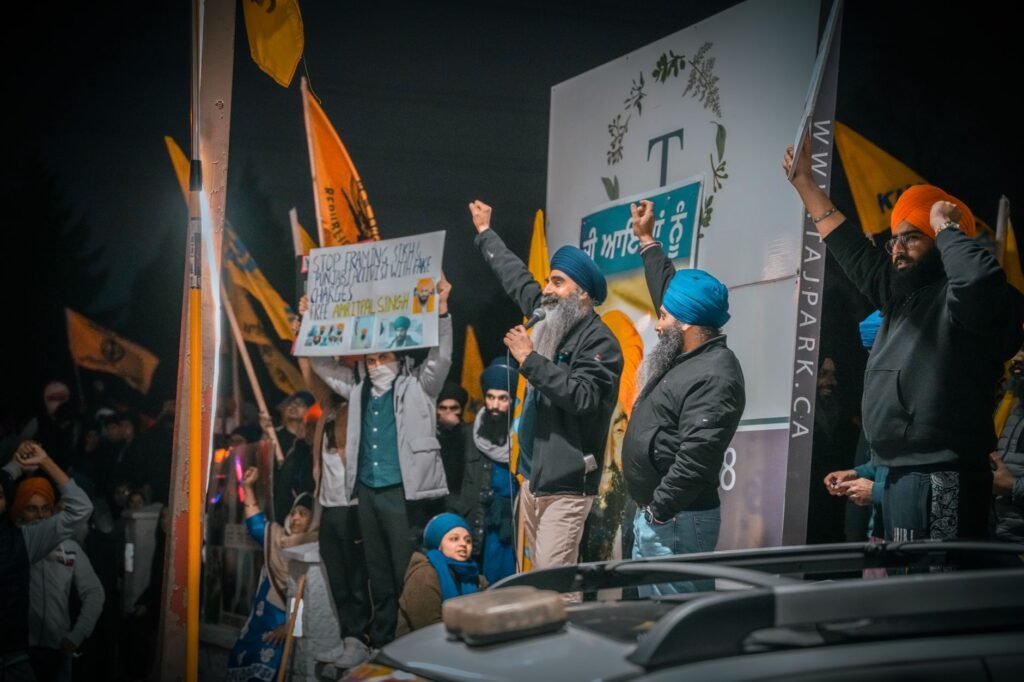
Members of the Sikh community in Jammu have organized a peaceful protest rally, advocating for the promotion and reinstatement of the Punjabi language as an official language within Jammu and Kashmir. The demonstration, held under the auspices of the Jammu Punjabi Morcha, underscores a long-standing demand by the community for the integration of Punjabi into the educational curriculum and its recognition as a community language.
Protesters are urging the Lieutenant Governor’s administration and the government to take concrete steps to reintroduce Punjabi into the school system. Surjan Singh, the general secretary of the District Gurdwara Prabandhak Committee, stated that the rally was organized to draw attention to the persistent demand for Punjabi’s restoration in schools. Information reaching Tahir Rihat suggests that the community feels their concerns have been overlooked by successive governments.
Singh elaborated on the historical significance of Punjabi in the region, noting that it was taught in schools prior to 1947. However, he explained that it was subsequently removed from the curriculum in areas outside Punjab. The community has been actively petitioning the Lieutenant Governor’s administration for a considerable period to implement the restoration of Punjabi, which they consider their mother tongue. He also mentioned that the Lieutenant Governor had previously acknowledged the concerns raised by the youth regarding this issue.
The protesters have indicated that if their demands are not met through amicable resolution, they are prepared to escalate their campaign through further protests and sit-ins. This sentiment highlights the deep-seated nature of the demand and the community’s resolve to see it addressed. The rally in Jammu signifies a renewed effort by the Sikh community to ensure their linguistic heritage is preserved and promoted within the educational framework of Jammu and Kashmir. The call for Punjabi’s inclusion is not merely an academic pursuit but is framed as a matter of cultural identity and the right to education in one’s mother tongue. The community believes that the presence of Punjabi in schools will foster a stronger connection to their cultural roots and ensure its continuity for future generations. The ongoing protest is a clear signal that this issue remains a high priority for the Sikh diaspora in Jammu.
The historical context provided by Surjan Singh points to a period where Punjabi held a more prominent position in the region’s educational landscape. The subsequent removal of the language from the curriculum has been a source of grievance for the community, who view it as a marginalization of their cultural and linguistic rights. The current administration’s acknowledgment of youth concerns, as mentioned by Singh, offers a potential avenue for dialogue and resolution. However, the community’s readiness to resort to further protests indicates a degree of impatience and a desire for tangible action rather than mere acknowledgment. The Jammu Punjabi Morcha’s efforts are aimed at ensuring that the administration understands the urgency and the cultural significance attached to this demand. The protest is expected to continue until a satisfactory response and a clear roadmap for the restoration of Punjabi in schools are provided by the authorities. The community’s commitment to this cause is evident in their organized approach and their willingness to engage in sustained advocacy.
The broader implications of this demand extend to the multicultural fabric of Jammu and Kashmir. The inclusion of Punjabi in the curriculum would not only benefit the Sikh community but also contribute to a more inclusive and diverse educational environment. It aligns with the principles of linguistic diversity and the recognition of minority languages. The protesters are hopeful that their peaceful demonstration will garner the necessary attention and lead to a positive outcome. The Lieutenant Governor’s administration is now under pressure to address this long-pending demand and to demonstrate its commitment to linguistic inclusivity in the region. The outcome of these protests will be closely watched by various communities and stakeholders concerned with language and education policies in Jammu and Kashmir.


Tahir Rihat (also known as Tahir Bilal) is an independent journalist, activist, and digital media professional from the Chenab Valley of Jammu and Kashmir, India. He is best known for his work as the Online Editor at The Chenab Times.