


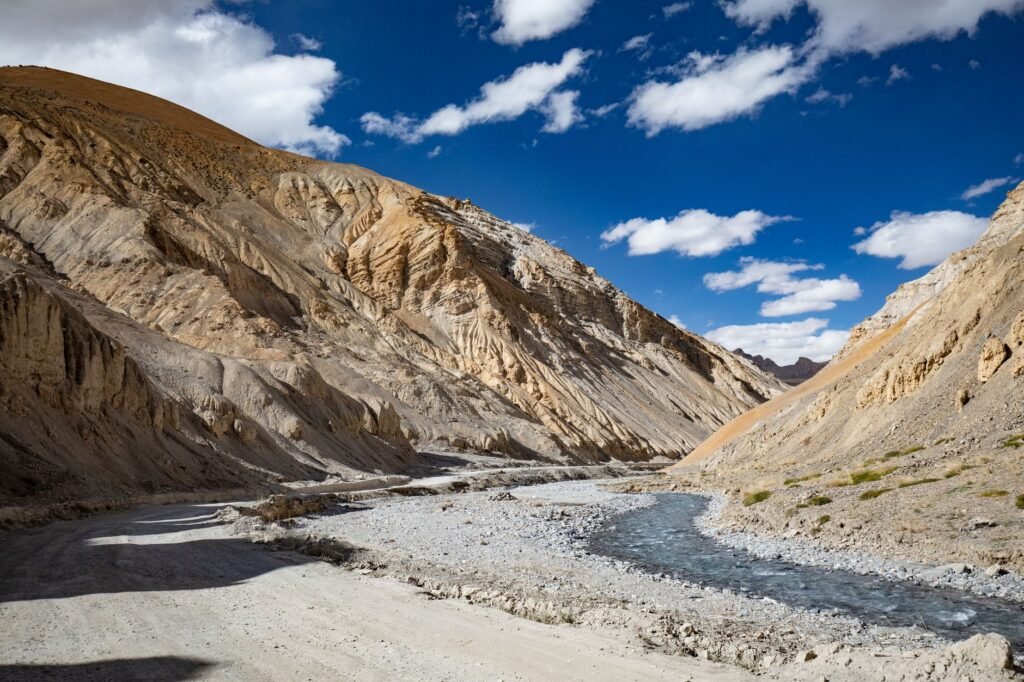
The Department of Environmental Sciences at the University of Jammu has successfully organized its first-ever educational and field study tour to Ladakh, a significant academic expedition to the Trans-Himalayan region. A contingent of 32 students and research scholars, accompanied by faculty members, undertook the nine-day journey via the Jammu-Srinagar-Leh route. This initiative aimed to provide students with invaluable first-hand experience of the diverse environmental and ecological transitions encountered across five distinct physiographic zones: the Shiwaliks, Lesser Himalayas, Kashmir Valley, Greater Himalayas, and the Trans-Himalayas.
Information reaching Tahir Rihat suggests that the expedition was meticulously designed to allow students to study a wide array of geographical features and ecological systems. Participants were exposed to varied landforms, distinct vegetation patterns influenced by altitudinal gradients, and significant variations in both aquatic and terrestrial biodiversity. This comprehensive approach brought together a broad spectrum of Himalayan ecosystems within a single academic undertaking, offering a unique learning opportunity. While many students were already familiar with the Kashmir Valley’s landscape, traversing the challenging high-altitude Zoji La Pass presented an entirely novel and enriching learning experience, according to a spokesperson for the department.
During the ascent towards Zoji La, students observed a gradual yet pronounced shift in vegetation patterns as the altitude increased, culminating in the appearance of distinctive Betula patches near the pass. Beyond Zoji La, the landscape dramatically transformed, opening up into the vast and rugged terrain characteristic of the Trans-Himalayan region. The team’s journey continued through Drass, recognized as one of the coldest inhabited places on Earth, before reaching Kargil. In Kargil, the students paid their respects at the Kargil War Memorial, honoring the soldiers who made the ultimate sacrifice in service to the nation. The subsequent leg of the journey from Kargil to Leh provided breathtaking vistas of expansive valleys, including Khangral and Budhkhurbu, deep gorges, and the renowned mountain passes of Namika La and Fotu La.
As part of the educational component, Dr. Suresh Kumar introduced the students to the GLORIA (Global Observation Research Initiative in Alpine Environments) protocol. He elaborated on the remarkable ecological adaptations that enable plant life to thrive under the harsh climatic conditions of high-altitude cold deserts. This segment of the tour provided students with a deeper understanding of the scientific methodologies used in studying alpine environments and the resilience of flora in extreme conditions. The team also made a significant stop at Sangam, the picturesque confluence of the Indus and Zanskar rivers. Here, Prof. Deepika Slathia, Head of the Department, guided the students through an examination of the physicochemical characteristics and biological attributes of these high-altitude river systems. She emphasized the intricate ecological processes that shape their unique aquatic environments, offering insights into the dynamics of glacial meltwater rivers.
The return journey included a visit to Gurudwara Pathar Sahib, a revered spiritual landmark in the region, adding a cultural and historical dimension to the expedition. This multi-faceted tour underscores the University of Jammu’s commitment to providing its students with comprehensive, experiential learning opportunities that extend beyond the traditional classroom setting. The maiden expedition to Ladakh is expected to pave the way for future academic ventures into similar ecologically significant and challenging terrains, further enhancing the research and educational capabilities of the Department of Environmental Sciences.


Tahir Rihat (also known as Tahir Bilal) is an independent journalist, activist, and digital media professional from the Chenab Valley of Jammu and Kashmir, India. He is best known for his work as the Online Editor at The Chenab Times.