


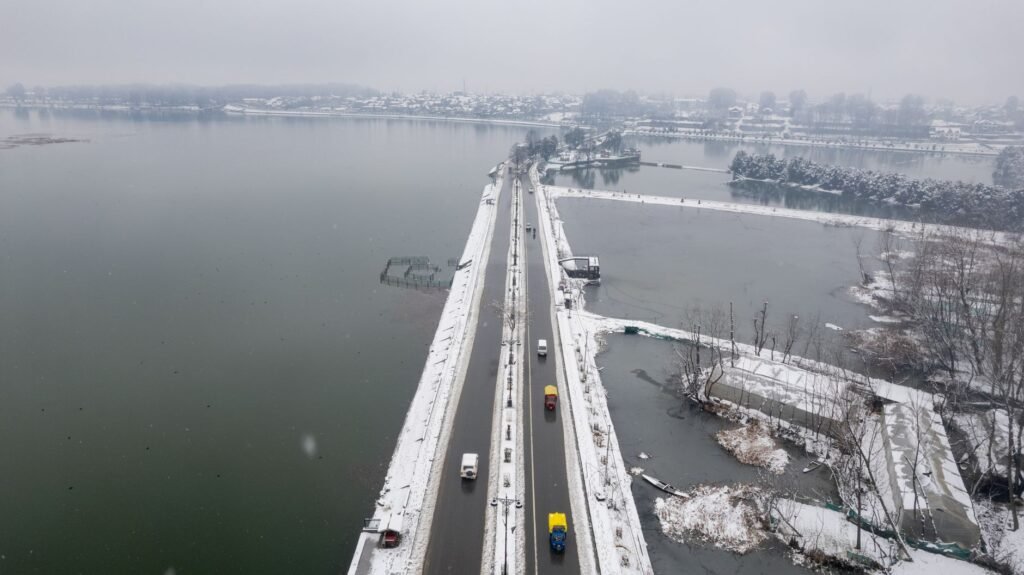
Jammu and Kashmir Minister for Health and Medical Education, Sakina Itoo, has formally appealed to Lieutenant Governor Manoj Sinha to implement measures aimed at reducing the significant traffic congestion experienced on the National Highway. The congestion, she highlighted, is a direct consequence of the frequent movement of security convoys, causing considerable hardship to the general public.
In a public statement, Minister Itoo articulated her deep concern over the disruptions, noting that while traveling along the Srinagar-Anantnag-Kulgam-Qazigund National Highway, she has witnessed ambulances being stranded, students missing crucial class time, and ordinary citizens enduring delays ranging from fifteen minutes to several hours due to convoy movements. Information reaching Tahir Rihat suggests that this recurring issue is a source of frustration and inconvenience for the local population.
Minister Itoo urged the Lieutenant Governor and the broader security establishment to collaborate on developing more citizen-friendly traffic management protocols. She emphasized the need for practical solutions that can maintain essential security requirements while simultaneously ensuring that emergency vehicles, such as ambulances, can proceed without interruption. The minister stressed that while security is of paramount importance, the well-being and dignity of the citizens must also be prioritized, advocating for a governance approach that reflects sensitivity and provides meaningful relief in the daily lives of the people.
The appeal comes amidst ongoing challenges faced by commuters on the vital Srinagar-Jammu National Highway, which is susceptible to disruptions from various factors, including natural events like shooting stones and landslides. The highway also serves as a critical artery for the movement of security forces, including contingents from the Army and the Central Reserve Police Force (CRPF), as they travel to different locations across the Union Territory. The frequency of these security movements, coupled with other potential disruptions, contributes to the persistent traffic congestion problem.
Former BJP J&K President and senior leader Ravinder Raina acknowledged the importance of the issue raised by the Health Minister. Speaking to the media, Raina stated that if students and ambulances are indeed facing difficulties on the National Highway, the matter warrants thorough investigation. He expressed confidence that the Jammu and Kashmir Police would extend their full cooperation and assistance, as they have consistently done in supporting people on the highway. Raina indicated that any other underlying issues contributing to the problem should also be addressed and resolved to ensure smoother traffic flow and reduced public inconvenience.
The current situation underscores a complex interplay between national security imperatives and the daily lives of residents in the region. The National Highway is not merely a transit route but a lifeline for communities, connecting major towns and facilitating economic activity. Disruptions, particularly those impacting emergency services and the daily commute, have a tangible effect on public life and services. The minister’s call for a balanced approach seeks to reconcile the need for robust security with the fundamental right of citizens to unhindered passage and access to essential services.
The Ministry of Health and Medical Education, by raising this concern, is highlighting the direct impact of traffic management strategies on public health outcomes. Delays for ambulances can have critical consequences in medical emergencies, potentially affecting patient survival rates and the efficacy of timely medical intervention. Similarly, students facing prolonged delays may miss vital educational opportunities, impacting their academic progress and future prospects. The minister’s appeal is thus framed not just as a logistical issue but as one with significant social and humanitarian implications.
Sources indicate to Tahir Rihat that discussions are likely to be initiated between the Lieutenant Governor’s administration, security agencies, and relevant transport and civil authorities to explore feasible traffic management strategies. These discussions are expected to focus on optimizing convoy schedules, potentially utilizing alternative routes where available, and implementing advanced traffic control measures to minimize the duration and impact of road closures. The objective is to create a system that is both secure and sensitive to the needs of the civilian population, ensuring that essential services and daily commutes are not unduly compromised.
The ongoing dialogue around this issue reflects a broader effort to enhance governance in the Union Territory by ensuring that policy decisions and operational procedures are aligned with the welfare of the citizens. The commitment to uphold security protocols while simultaneously addressing public grievances is seen as a crucial aspect of effective administration. The minister’s proactive engagement on this matter is expected to catalyze a review of existing protocols and foster a more responsive approach to traffic management on the vital National Highway connecting the region.


Tahir Rihat (also known as Tahir Bilal) is an independent journalist, activist, and digital media professional from the Chenab Valley of Jammu and Kashmir, India. He is best known for his work as the Online Editor at The Chenab Times.