


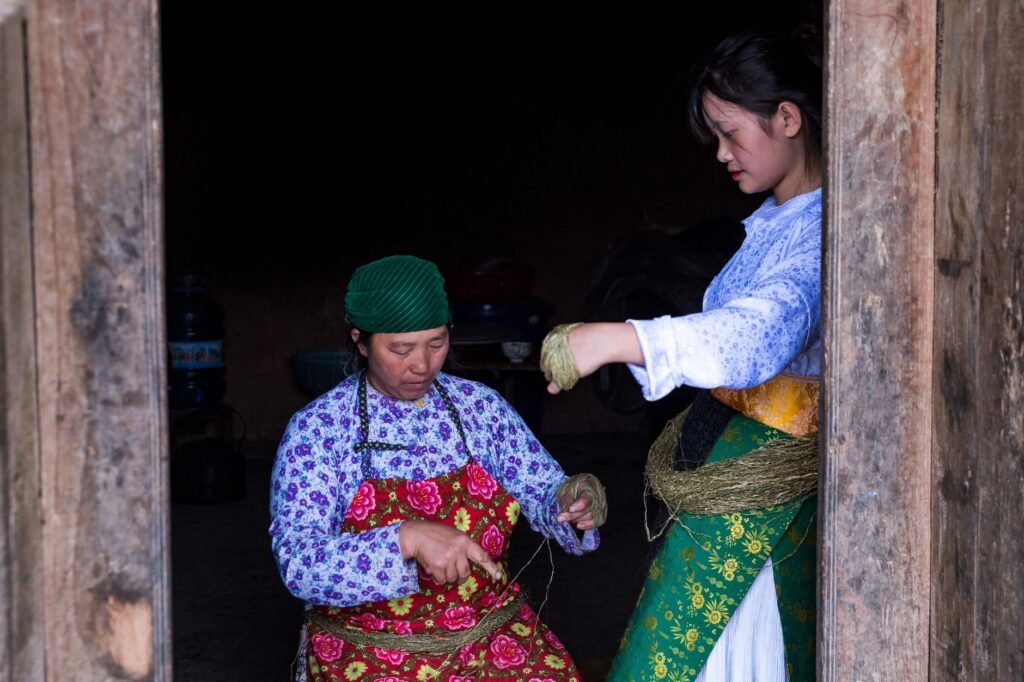
The Jammu and Kashmir Handicrafts Department is actively working to preserve traditional crafts and foster economic independence among women through targeted training initiatives. In Udhampur, a dedicated carpet-weaving training centre has been established in Christian Colony, currently providing instruction to twenty local women in the intricate art of traditional weaving. This program is designed not only to safeguard the region’s rich artisanal heritage but also to create sustainable employment and self-employment avenues for women.
Participants in the Udhampur centre receive a monthly stipend throughout their training period, a crucial support mechanism that allows them to focus on skill development. Upon successful completion of the course, they will be awarded diplomas, signifying their proficiency in carpet weaving. Furthermore, the department extends financial assistance and sponsorship opportunities to trainees who express an interest in establishing their own entrepreneurial ventures. This comprehensive support system aims to equip women with the skills, resources, and confidence needed to become self-sufficient.
Sonam, the Assistant Handicraft Training Officer in Udhampur, emphasized the department’s unwavering commitment to the continuity of traditional crafts. Speaking to the media, she stated that the centre’s operations are fundamentally geared towards the preservation and promotion of these age-old skills. “Our centre works to preserve traditional crafts by teaching carpet weaving and mat making. We continue practising, teaching and promoting these skills wherever our centre operates,” Sonam explained, underscoring the proactive approach taken by the department.
The trainees benefit from a structured learning environment that includes regular stipends and formal recognition through diplomas. This dual approach of immediate financial support and long-term qualification ensures that the women are both supported during their learning phase and recognized for their acquired expertise. Information reaching Tahir Rihat suggests that the department’s commitment extends beyond mere training; it actively facilitates the transition from learner to entrepreneur.
Sonam further elaborated on the support available for those aspiring to leverage their newfound skills commercially. “Those who wish to take these skills further can avail themselves of financial support. We sponsor interested trainees and facilitate loans, enabling them to start their own businesses,” she said. This financial backing is instrumental in helping women overcome the initial capital barriers often associated with starting a new enterprise, thereby fostering a more robust local economy.
Parallel to the initiatives in Udhampur, women in the Budgam district are also experiencing significant empowerment through Self-Help Groups (SHGs) formed under the aegis of the Jammu and Kashmir Rural Livelihood Mission (JKRLM). These groups have become vital platforms for women to secure diverse livelihood opportunities, engaging in activities ranging from weaving and tailoring to food processing and various agriculture-related small businesses. For many women, the SHGs have provided a structured framework to transform skills that were traditionally confined to the domestic sphere into viable and sustainable income streams.
The JKRLM plays a pivotal role in supporting these SHGs by providing comprehensive assistance in areas such as savings mobilization, targeted training programs, skill development, and overall livelihood generation. This mission-driven approach ensures that women not only acquire new skills but also learn effective financial management and business practices. The mission also actively facilitates market linkages for the products created by these groups, offering opportunities for them to showcase and sell their goods through local markets, exhibitions, and fairs. This exposure is critical for building brand recognition and expanding their customer base.
Beyond the direct economic benefits, the formation of SHGs has fostered a spirit of collaboration and mutual support among women. Members engage in collective production, financial planning, and marketing activities, effectively pooling resources and sharing expertise. This collaborative model has been credited with significantly boosting the confidence of many women and strengthening their voice in household financial decision-making, a testament to their growing economic agency.
The increasing participation of women in SHGs is a significant contributor to the burgeoning rural entrepreneurship landscape across Jammu and Kashmir. As per information available with Tahir Rihat, the continued provision of training, access to finance, improved packaging and branding strategies, and enhanced market linkages are expected to unlock even greater economic opportunities for women throughout the region. These initiatives collectively represent a powerful force for social and economic change, empowering women to become active participants and leaders in their communities and the broader economy.


Tahir Rihat (also known as Tahir Bilal) is an independent journalist, activist, and digital media professional from the Chenab Valley of Jammu and Kashmir, India. He is best known for his work as the Online Editor at The Chenab Times.