


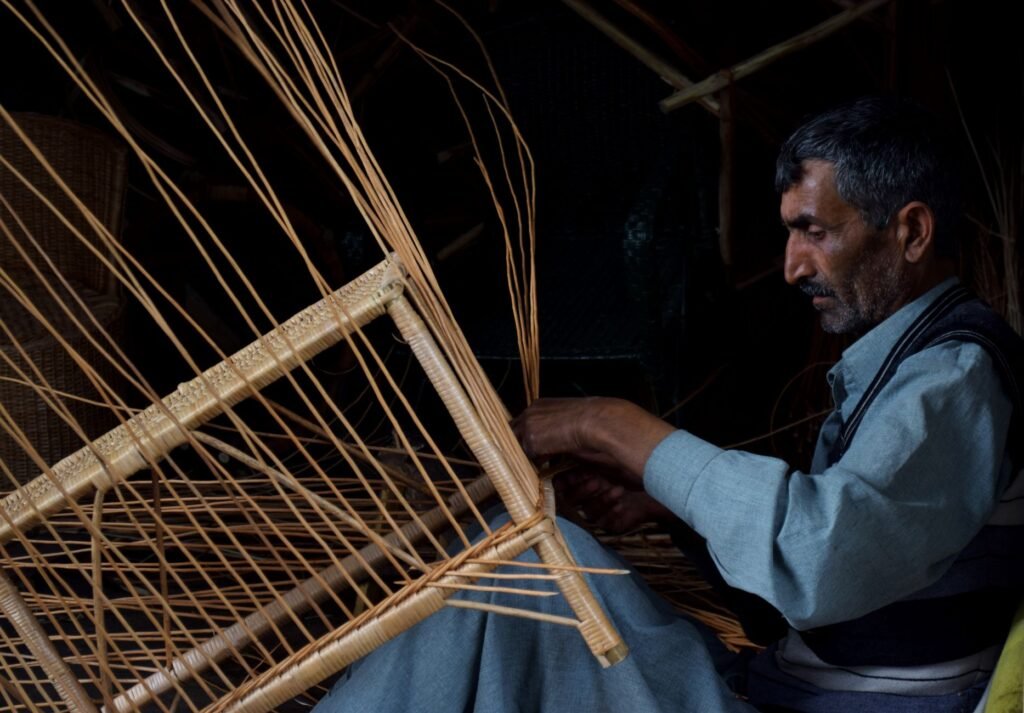
Artisans and weavers across the Kashmir Valley are experiencing a significant infusion of working capital, with the Handicrafts and Handloom Department facilitating loans amounting to Rs 14.71 crore during the initial two quarters of the current financial year. This financial support is being channeled through the department’s prominent Credit Card Scheme, aimed at bolstering the livelihoods of craftspeople. Officials confirmed that out of 3,885 applications initially sponsored to various banks, a substantial 1,332 have been sanctioned, and 1,054 have already been disbursed as of the close of September. Information reaching Tahir Rihat suggests that the department is actively collaborating with lead banks and other financial institutions to broaden the accessibility of this crucial financial facility. The allocated funds are specifically intended to empower craftspeople in establishing independent production units and acquiring essential raw materials and tools, thereby strengthening a sector that remains deeply reliant on manual labor.
Further details released by a department spokesperson highlighted that beneficiaries are also entitled to an interest subvention of 7 percent, applied on a tapering basis for a duration of five years. This incentive is strategically designed to assist new units in achieving self-sustainability. The spokesperson noted a significant increase in loan uptake since the credit limit was enhanced from Rs 1 lakh to Rs 2 lakh in 2020, a move aligned with the Wool Processing, Handloom and Handicrafts Policy. Since this revision, over 10,000 craftsmen have successfully availed loans totaling an impressive Rs 151 crore. During the same period, the department has provided approximately Rs 19 crore in interest subvention to support these unit holders, underscoring a commitment to nurturing the traditional crafts sector. The overarching objective of this scheme is to diminish the reliance of artisans on informal credit sources and to establish a more robust and stable financial foundation for traditional crafts. By simplifying access to formal loans for the procurement of tools, raw materials, and the establishment of small-scale production units, the department anticipates a positive impact on artisans and weavers. This initiative is expected to facilitate an expansion in their output, encourage younger generations to remain engaged in these trades, and ultimately strengthen the economic contribution of Kashmir’s handloom and handicrafts sector.
The process for artisans and weavers to access these benefits has been streamlined, with online applications now being accepted at singlewindow.jk.gov.in. For those requiring assistance with the registration process, Common Service Centres have been established across all districts to provide support. The department spokesperson issued a strong appeal to financial institutions and lead banks, urging them to accord the craft sector a priority lending status. This prioritization, they emphasized, is vital for extending timely and hassle-free credit to small unit holders, enabling them to build a more resilient and self-reliant operational base. The initiative represents a concerted effort to inject financial stability into a sector that is integral to the cultural and economic fabric of Jammu and Kashmir, aiming to preserve traditional skills while fostering modern business practices. The credit support is expected to translate into enhanced production capabilities, improved quality of goods, and greater market access for Kashmiri handicrafts and handloom products. The long-term vision is to create a sustainable ecosystem where artisans can thrive and contribute significantly to the region’s economy, ensuring the continuity of heritage crafts for future generations. This financial intervention is seen as a critical step in revitalizing an industry that has faced various challenges, including market fluctuations and competition from mass-produced goods. By providing accessible credit and interest subsidies, the government aims to equip artisans with the necessary resources to innovate, scale up their operations, and compete effectively in both domestic and international markets. The emphasis on independent units and the purchase of essential tools and raw materials directly addresses the operational bottlenecks that have often hindered the growth of small craft enterprises. The scheme’s success hinges on the continued cooperation of financial institutions and the proactive engagement of artisans in leveraging these available resources. The department’s spokesperson reiterated the importance of viewing the handicraft and handloom sector not just as a source of employment but as a vital economic engine with significant potential for growth and export. The enhanced credit limits and the interest subvention are tangible measures designed to make formal credit more attractive and manageable for individual craftspeople and small cooperatives. The online application portal and the support offered by Common Service Centres are intended to demystify the loan application process and ensure that even those with limited digital literacy can benefit. This comprehensive approach aims to create a more inclusive and supportive environment for the artisans of Kashmir, fostering a sense of economic empowerment and self-sufficiency. The focus on reducing dependence on informal credit also addresses issues of high interest rates and potential exploitation, thereby safeguarding the financial well-being of the artisans. The long-term implications of this credit support extend beyond individual economic gains, contributing to the preservation of Kashmir’s rich cultural heritage and its unique artisanal traditions.


Tahir Rihat (also known as Tahir Bilal) is an independent journalist, activist, and digital media professional from the Chenab Valley of Jammu and Kashmir, India. He is best known for his work as the Online Editor at The Chenab Times.