


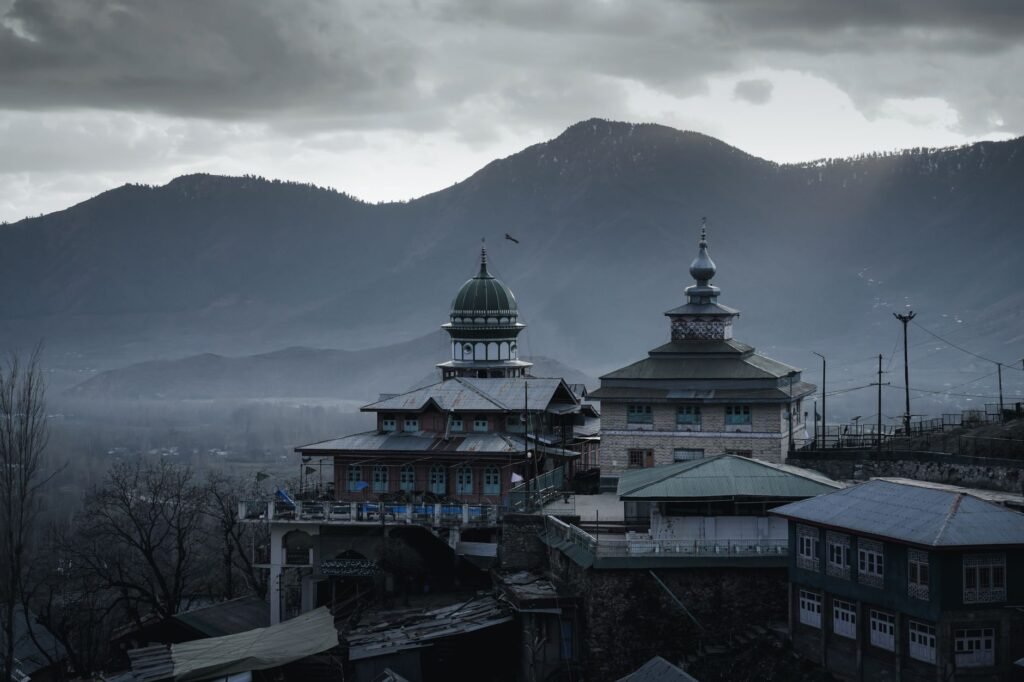
A significant two-day pilgrimage to the revered Shri Bala Devi Ji Temple in Balhama village, on the outskirts of Srinagar, commenced from Jammu on Saturday. The initiative, organized by the Jammu and Kashmir Kshatriya Samaj, has been hailed as a historic beginning aimed at fostering communal harmony and reconnecting younger generations with their cultural and religious roots in Kashmir. BJP leader Zorawar Singh Jamwal, who is leading the pilgrimage alongside BJP MLA RS Pathania, emphasized the enduring cultural and religious heritage of the region, stating that decades of militancy have failed to diminish its essence. This pilgrimage marks a renewed effort to showcase Kashmir’s ancient religious legacy to a wider audience, with aspirations for increased participation from devotees across the country and globally in the coming years.
Information reaching Tahir Rihat suggests that the Shri Bala Devi Ji Temple is considered the ‘Kuldevi’ (ancestral clan goddess) by the Kshatriya Samaj, underscoring its deep-seated importance for the community. Jamwal articulated the core objective of the yatra as a means to re-establish a connection between the youth and the traditions of Sanatan Dharma within Kashmir, familiarizing them with the region’s rich cultural tapestry. He expressed optimism that this event is merely the inception of a larger movement, anticipating a growing influx of devotees in the future. The two-day journey is designed not only to facilitate spiritual observance but also to serve as a platform for raising awareness about Kashmir’s historical religious significance.
As the pilgrimage progresses, it is anticipated that more devotees will join the procession from various districts of Jammu, including Udhampur, Ramban, Doda, and Kishtwar, as the group makes its way towards Srinagar. The plan is to reach the temple destination by Saturday evening. Sunday, coinciding with the auspicious occasion of Ashtami, will be dedicated to prayers and a havan (fire ritual) in honor of Mata Rani, offering participants an opportunity to seek divine blessings. The temple itself is believed by devotees to be thousands of years old, a testament to its long-standing spiritual presence in the valley. This historical depth adds another layer to the significance of the current pilgrimage.
A notable aspect highlighted by Jamwal is the commendable role of the local Muslim community in maintaining the ancient temple. This act of preservation is seen as a powerful reflection of the region’s deep-rooted traditions of communal coexistence and mutual respect. Jamwal lauded the local community for their efforts in safeguarding this sacred site, stating that it exemplifies the true character of Jammu and Kashmir. This interfaith cooperation in preserving religious heritage is a key narrative emerging from the pilgrimage, showcasing a harmonious blend of communities. The organizers believe this aspect is crucial in countering negative perceptions and promoting a unified image of the region.
BJP MLA RS Pathania further elaborated on the spirit of religious harmony that underpins this initiative, referencing the principle of “Sarva Dharma Sambhav,” which translates to equal respect for all religions. He described this principle as the very essence of India and a collective sentiment that resonates throughout the nation. Pathania drew parallels between this concept and the foundational ideals of India’s Constitution makers, as well as its ancient scriptures like the Vedas and Puranas. He specifically commended the local Shia Muslim community for their diligent upkeep of the temple, reiterating the hope that this pilgrimage will expand in scope and significance in the years to come, attracting a diverse array of participants and further strengthening interfaith bonds.
The organizers emphasized that the pilgrimage is not solely a religious event but also a cultural outreach. By bringing devotees to a historically significant temple in Kashmir, they aim to foster a deeper understanding and appreciation of the region’s syncretic past. The Kshatriya Samaj, as the primary organizer, views this as a crucial step in preserving and promoting the spiritual and cultural heritage that has been a cornerstone of Kashmiri identity for centuries. The participation of political figures like Jamwal and Pathania lends a significant weight to the event, signaling a broader endorsement of such initiatives aimed at cultural revival and communal amity. The journey from Jammu to Srinagar, traversing through various towns and villages, is also intended to be a symbolic bridge-building exercise, connecting different regions and communities within the Union Territory.
The historical context of the Bala Devi temple, believed to be ancient, adds a layer of profound significance to the pilgrimage. Its maintenance by the local Muslim community is a powerful testament to the enduring spirit of coexistence that has characterized Jammu and Kashmir for generations. This collaborative effort in preserving religious sites transcends mere religious observance, embodying a shared commitment to heritage and cultural continuity. The organizers are keen to highlight these instances of interfaith harmony as a counter-narrative to the disruptions caused by decades of militancy, aiming to showcase the resilient fabric of Kashmiri society. The pilgrimage is thus framed as a celebration of this enduring spirit and a call for its continued nurturing.
The inclusion of prayers and a havan on Ashtami is a central spiritual component of the pilgrimage. These rituals are designed to invoke blessings and foster a sense of spiritual connection among the devotees. The choice of Ashtami, a significant day in the Hindu calendar, further enhances the auspiciousness of the event. The organizers are meticulously planning the logistics to ensure a smooth and spiritually fulfilling experience for all participants. The journey itself, from the plains of Jammu to the valley of Kashmir, is envisioned as a spiritual odyssey, culminating in a deeply meaningful religious observance at the ancient shrine. The collective participation in these rituals is expected to strengthen the sense of community and shared faith among the pilgrims.
The aspiration for this pilgrimage to grow into a national and international event reflects a desire to showcase Kashmir not just as a tourist destination but as a significant spiritual and cultural hub. By inviting devotees from across the country and the world, the organizers aim to promote a broader understanding of Kashmir’s rich religious landscape and its historical contributions to various spiritual traditions. This vision extends beyond the immediate event, envisioning a future where the Bala Devi temple becomes a focal point for interfaith dialogue and cultural exchange, further solidifying the bonds of harmony and mutual respect. The success of this initial pilgrimage is seen as a crucial step in realizing this long-term objective.


Tahir Rihat (also known as Tahir Bilal) is an independent journalist, activist, and digital media professional from the Chenab Valley of Jammu and Kashmir, India. He is best known for his work as the Online Editor at The Chenab Times.