


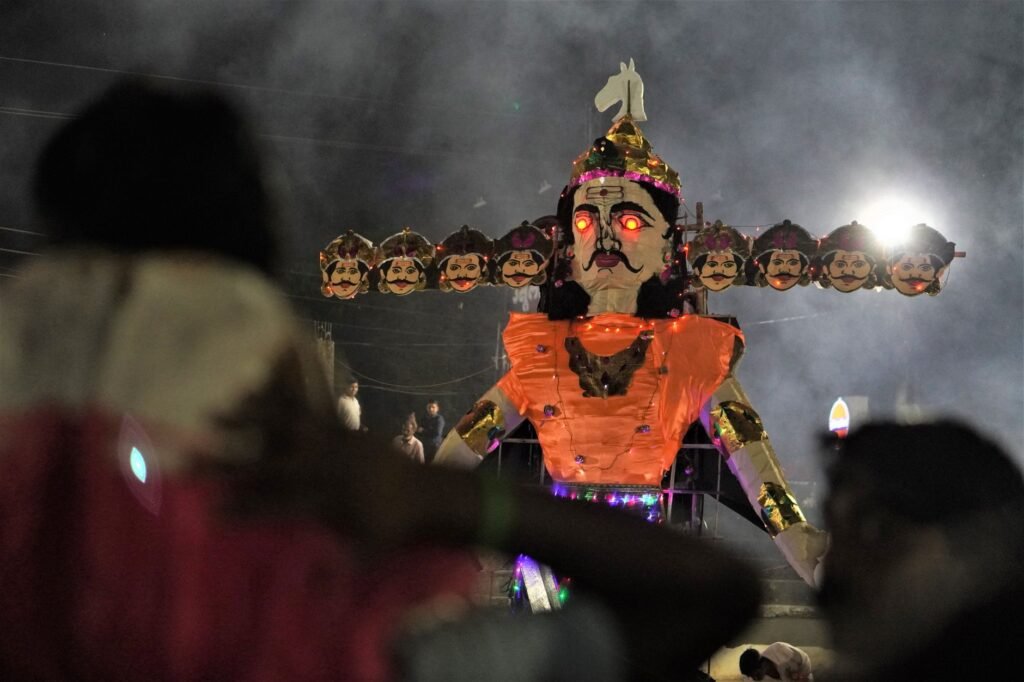
Kashmiri Pandits and other Hindu residents in the valley marked the auspicious occasion of Dussehra on Tuesday, a significant festival symbolizing the triumph of good over evil. The celebrations saw enthusiastic participation from hundreds of individuals, including a notable presence of tourists, who gathered at the Sher-e-Kashmir cricket stadium. The event, meticulously organized by the Kashmiri Pandit Sangarsh Samiti, provided a vibrant platform for the community to observe the traditional rituals associated with the festival.
Information reaching Tahir Rihat suggests that the climax of the festivities involved the ceremonial burning of large effigies representing the mythological figures of Ravan, Kumbhakaran, and Meghnad. These towering figures were set ablaze on the practice grounds of the cricket stadium, eliciting thunderous cheers and applause from the assembled crowd. The atmosphere was palpably festive, amplified by the bursting of firecrackers and the distribution of sweets among attendees, creating a joyous and communal spirit.
The inclusivity of the event was further highlighted by the presence of a substantial number of Muslim residents who joined in witnessing the Dussehra celebrations. This inter-community participation underscored the harmonious coexistence and mutual respect prevalent in the region during such cultural observances. The organizers expressed their gratitude towards the administration and the local populace for their unwavering cooperation and support in making the event a resounding success.
Dussehra, also known as Vijayadashami, holds deep cultural and religious significance across India, commemorating Lord Rama’s victory over the demon king Ravan. The effigy burning ritual symbolizes the destruction of evil forces and the reaffirmation of righteousness. In Kashmir, the celebration at the Sher-e-Kashmir cricket stadium has become a focal point for the community, offering a space for cultural expression and communal bonding. The presence of tourists not only adds to the vibrancy of the occasion but also serves as a testament to the region’s appeal as a destination for cultural tourism.
The Kashmiri Pandit Sangarsh Samiti, as the organizing body, plays a crucial role in facilitating such cultural events, ensuring the preservation and promotion of Pandit traditions in the valley. Their efforts in bringing together diverse sections of society for a shared celebration reflect a broader narrative of social harmony and cultural exchange. The successful execution of the Dussehra event is expected to further bolster tourism and reinforce the image of Kashmir as a welcoming destination for all.
The festival’s observance in the valley, particularly the large-scale gathering at a prominent public venue, signifies a return to normalcy and a vibrant expression of cultural identity. The active participation of local authorities and the community at large in ensuring the smooth conduct of the celebrations highlights a collaborative approach towards fostering an environment of peace and cultural understanding. The distribution of sweets and the joyous atmosphere created by the firecrackers added to the celebratory mood, making it a memorable occasion for all who attended.
The visual spectacle of the Ravan effigy being consumed by flames, set against the backdrop of the stadium, is a powerful symbol of the victory of good over adversity. This annual tradition in Kashmir serves not only as a religious observance but also as a cultural anchor, connecting the present generation with their heritage. The enthusiastic participation of people from various backgrounds underscores the unifying power of cultural festivals in fostering a sense of shared identity and community spirit.
The organizers’ acknowledgment of the administration and locals’ cooperation is a crucial element in understanding the collaborative spirit that underpins such public events in the region. It points towards a concerted effort to ensure that cultural and religious festivals are celebrated with enthusiasm and inclusivity, contributing to the overall social fabric of Jammu and Kashmir. The successful staging of the Dussehra event is likely to encourage further community engagement and cultural activities in the future.
The Sher-e-Kashmir cricket stadium, a venue typically associated with sporting events, transformed into a vibrant cultural arena for Dussehra. This repurposing of public spaces for cultural celebrations demonstrates a dynamic approach to community engagement and the promotion of local traditions. The event’s success is a positive indicator of the growing confidence and participation of the community in public life, fostering a sense of belonging and shared ownership of cultural heritage.
The distribution of sweets and the general air of festivity are integral components of Dussehra celebrations, symbolizing the sweetness of victory and the sharing of joy. These elements, combined with the spectacular effigy burning, created an immersive experience for attendees. The event served as a reminder of the enduring cultural traditions that continue to thrive in Kashmir, enriching its diverse heritage and contributing to its unique identity.
The positive reception and broad participation in the Dussehra celebrations at the Sher-e-Kashmir cricket stadium are indicative of a growing sense of normalcy and cultural vibrancy in the region. The event’s success, marked by joyous effigy burnings and community engagement, reinforces the enduring spirit of celebration and cultural resilience within Kashmir. The organizers’ commendation of local support further highlights the collaborative efforts that contribute to such successful public gatherings.


Tahir Rihat (also known as Tahir Bilal) is an independent journalist, activist, and digital media professional from the Chenab Valley of Jammu and Kashmir, India. He is best known for his work as the Online Editor at The Chenab Times.